Week 8
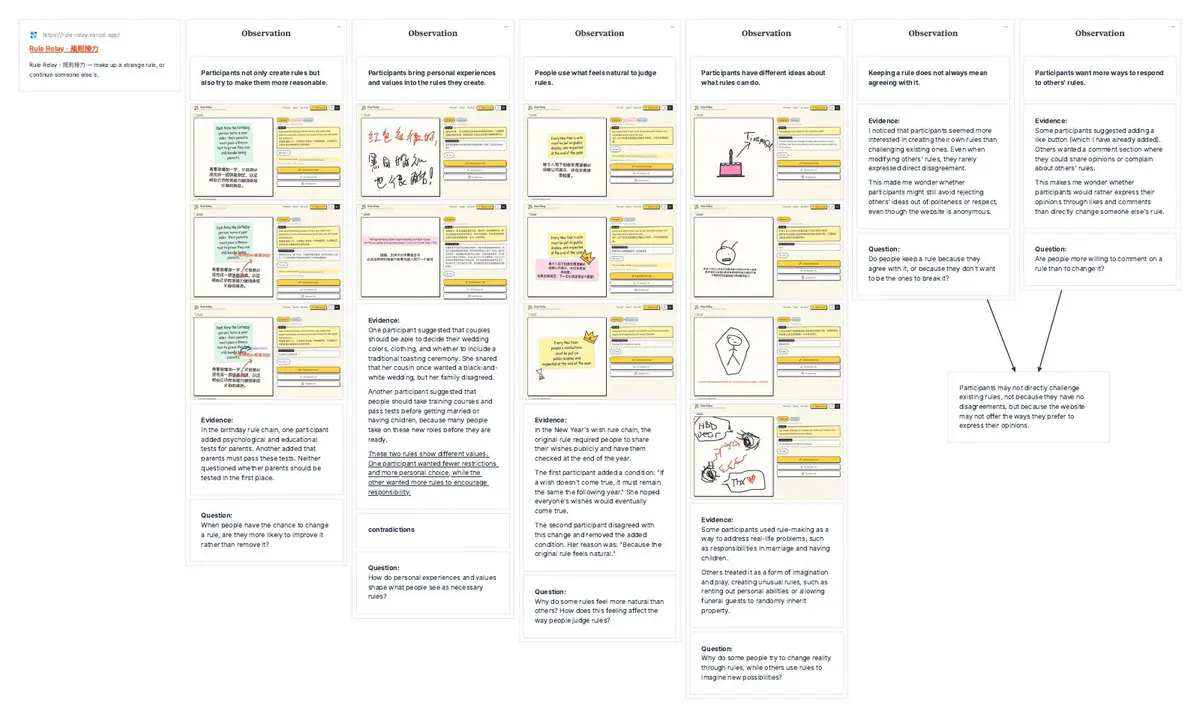
Through my research so far, I have gradually realized that some social rules may persist over time and become increasingly rigid, not only because people repeatedly follow them, but also because people continually find reasonable explanations for them. Even when the original reasons for creating these rules have become unclear, these new explanations may help people continue to accept and maintain them. What surprised me was that in Rule Relay, when participants had the opportunity to modify existing rules, they added new conditions to make the rules seem more reasonable. This made me wonder whether changing a rule and maintaining it are necessarily opposite actions. Sometimes, people may appear to be adjusting a rule while unintentionally helping it continue to exist. At the same time, through my earlier design experiments and reading, I also began to notice that repetition may gradually make certain rules feel familiar or even natural. But does familiarity necessarily mean agreement? When the original reasons behind a rule are no longer clear, will people still actively look for new explanations to justify it? These findings have also changed how I think about design interventions. I began to realize that the value of design does not necessarily lie in encouraging people to resist or break rules. Even when participants choose to accept a rule that has no clear justification, or actively provide explanations for it, their responses may help me understand how people contribute to the rationalization and maintenance of rules through their own judgments and actions. I hope to use design to make this process more visible, rather than expecting participants to respond in a particular way.
Week 7
Through this experiment, I noticed that participants had different approaches to creating and changing rules. First, when participants changed rules made by others, they often tried to make them more reasonable rather than reject them. For example, one participant added mental health and education tests to a rule about parents taking fitness tests, while another added that parents must pass these tests. Second, participants brought their personal experiences and values into the rules they created. One participant wanted couples to have more freedom in planning their weddings, while another suggested mandatory training and tests before marriage or having children. One wanted fewer restrictions, while the other wanted more rules. Third, I noticed that people sometimes use what feels "natural" to judge rules. In the New Year's wish rule chain, one participant removed a condition added by someone else because she felt the original rule was more natural. This made me wonder why some rules feel more natural than others. Fourth, participants had different ideas about rule-making. Some used it to address real-life problems, while others treated it as a game and created strange or imaginative rules. Finally, what surprised me was that participants seemed more interested in creating their own rules than directly challenging others' rules. Some also suggested adding like and comment features so they could share their opinions. This made me wonder whether participants avoided disagreeing with others out of politeness, or whether the website simply did not offer the ways they preferred to express themselves. These observations made me realize that people can understand and judge the same rule in very different ways. I became more curious about how people decide whether a rule is reasonable or worth keeping, and how these different views shape the way rules change as they are passed on.
Week 5
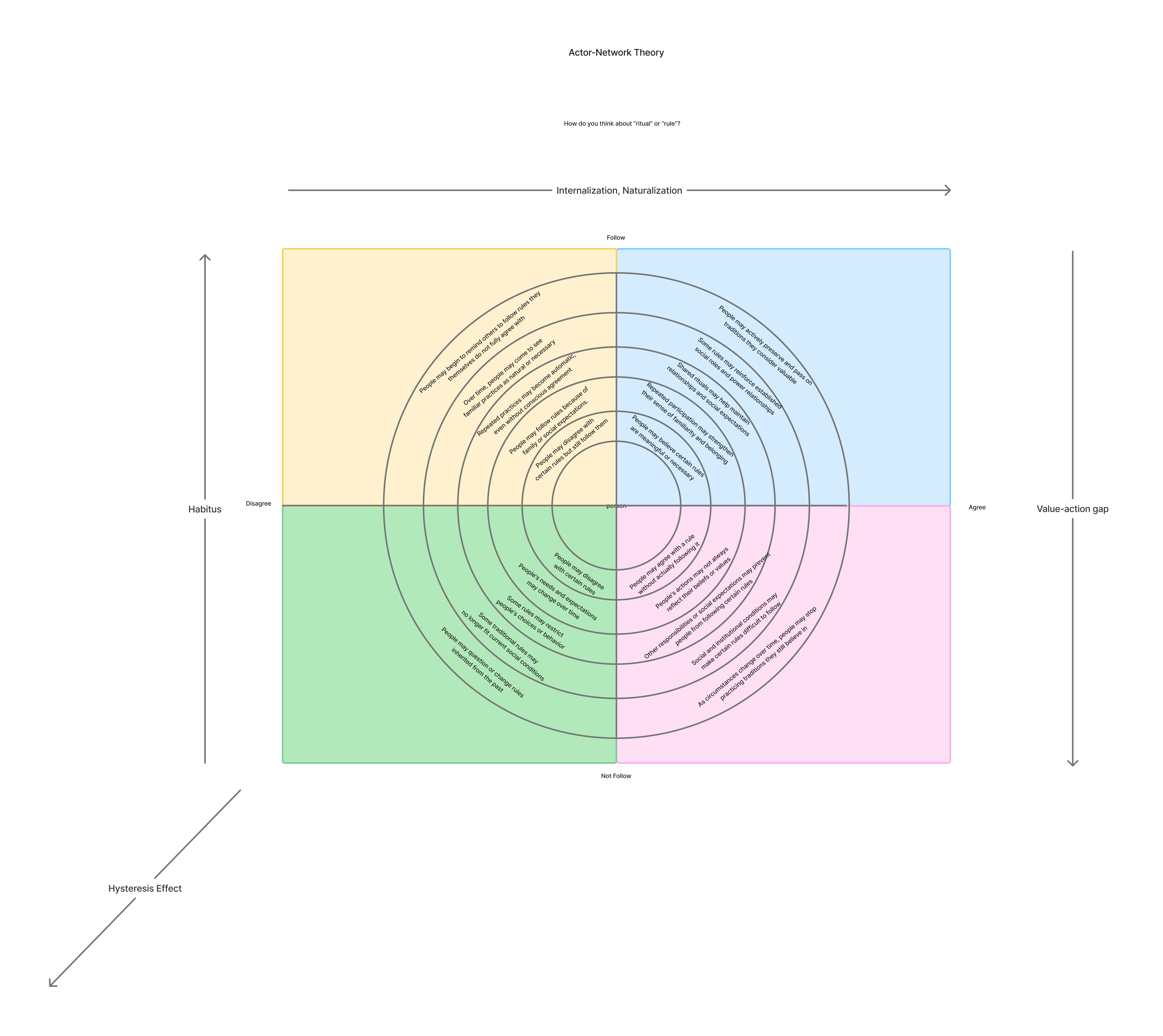
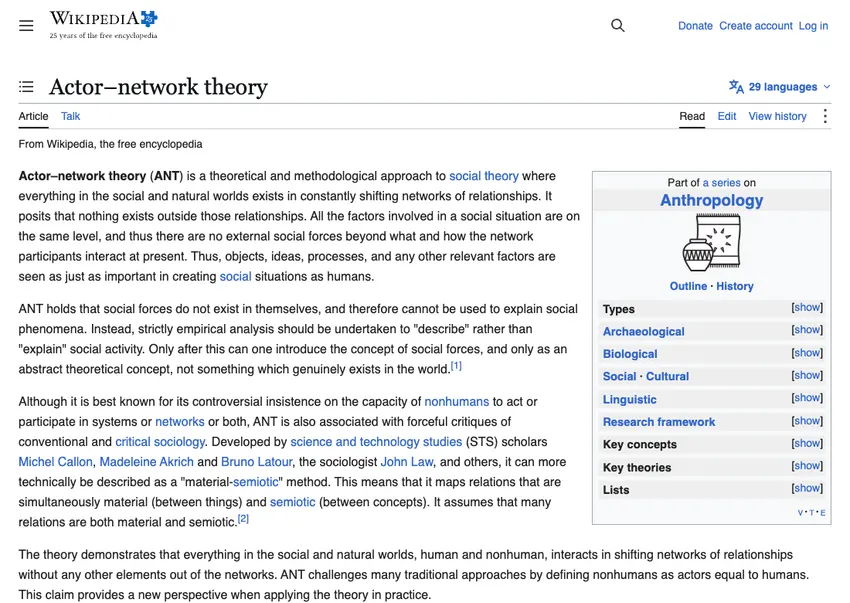
Through my research so far, I have started to see ritual less as an isolated behavior and more as something maintained by a network of people, objects and spaces. Actor–Network Theory helped me think about how nonhuman elements can also participate in shaping behavior, rather than treating people as the only active agents. I was also interested in the idea of discipline operating through space and at different scales. It made me think about how ritual may be embedded not only in explicit rules, but also in spatial arrangements and environments that quietly guide people toward certain behaviors. I also think it would be useful to look more closely at the etymology, word roots, and most basic meanings of terms like ritual and rule in both English and Chinese. Starting from these fundamental definitions may help me distinguish the relationships between these concepts more clearly and possibly reveal new directions for my research.
Week 4
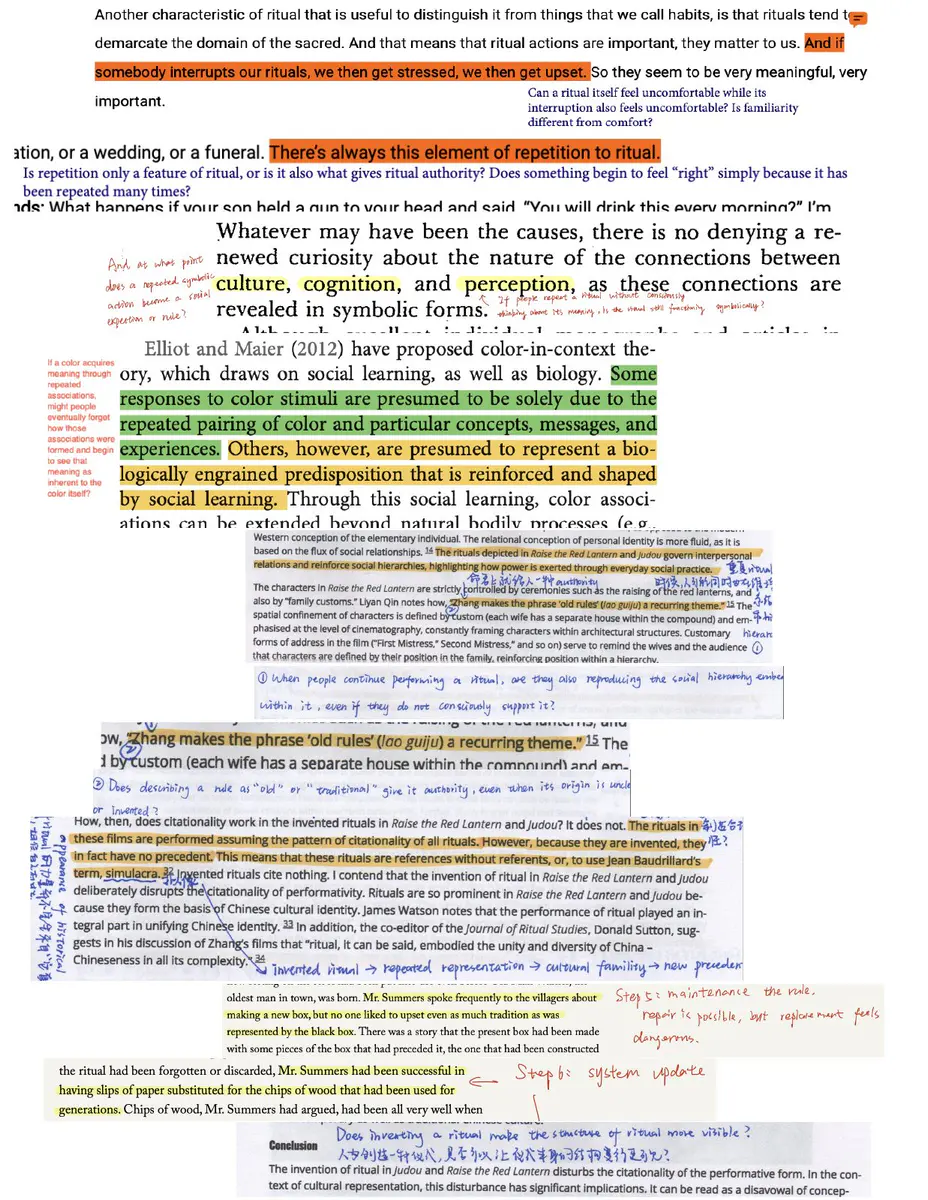
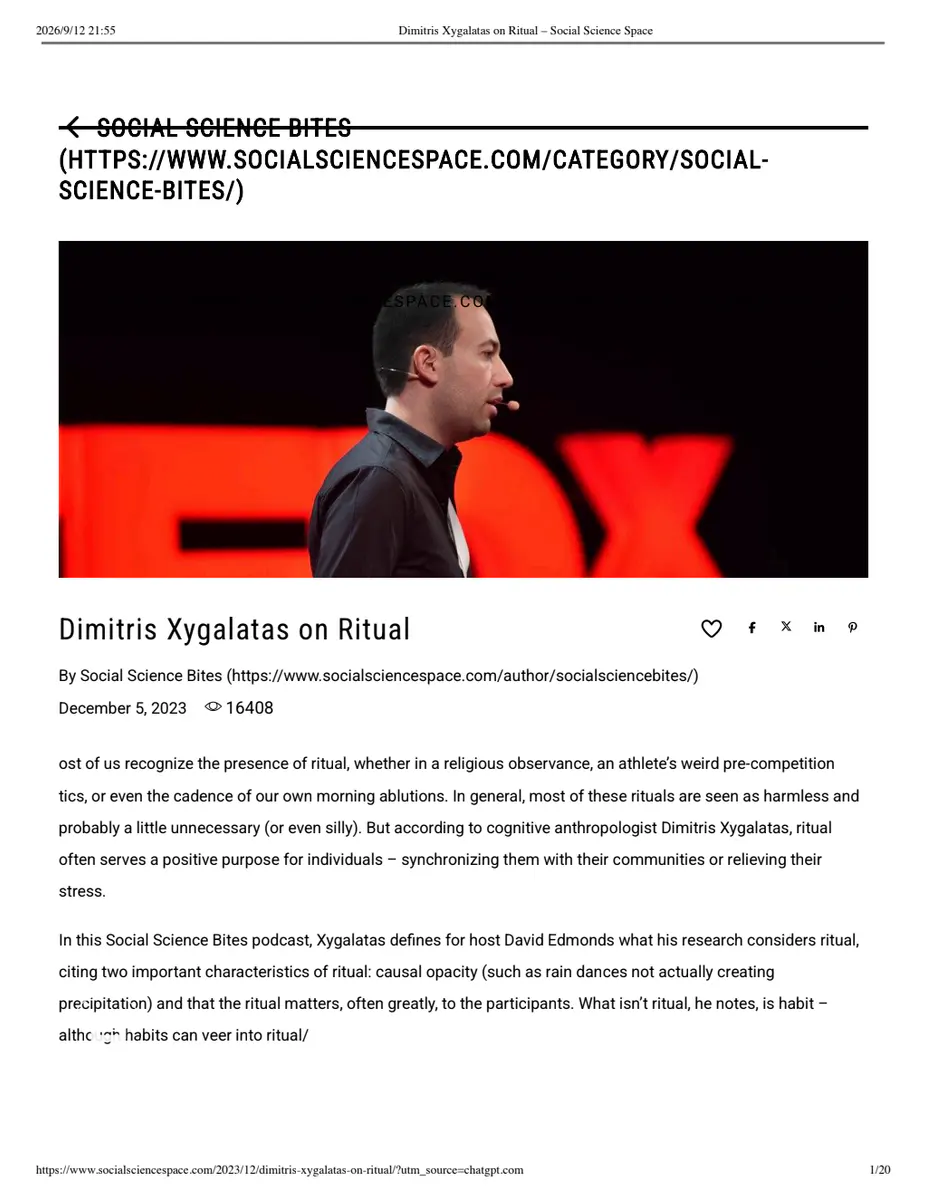
Through my research so far, I have realized that the reasons people continue rules or rituals they do not like may be more complicated than I initially expected. Collecting examples from other people gave me many new perspectives, but also a strong sense of recognition because some of their experiences resonated with my own. I noticed that people may continue a practice not because they fully believe in or enjoy it, but because of relationships, familiarity, social roles, or expectations from others. My reading on performativity and citation also made me rethink how the meaning and authority of a ritual are formed. A ritual can repeatedly cite and reenact earlier practices, and that repetition can help build its meaning and authority over time. What surprised me was the discussion of denaturalization. The article suggests that the idea of denaturalization, which is common in Western poststructuralist theory, needs to be reconsidered when applied in a Chinese context. This made me pay more attention to the cultural background of theory itself. I am now also asking whether the theories we use to understand ritual still work in the same way when they move across different cultural contexts.
Week 3
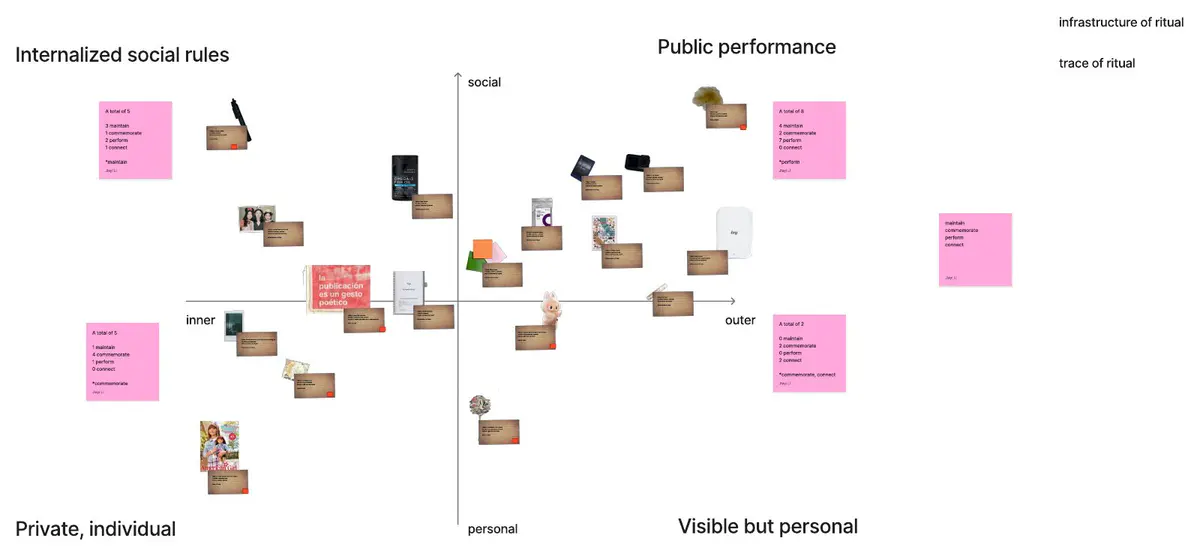
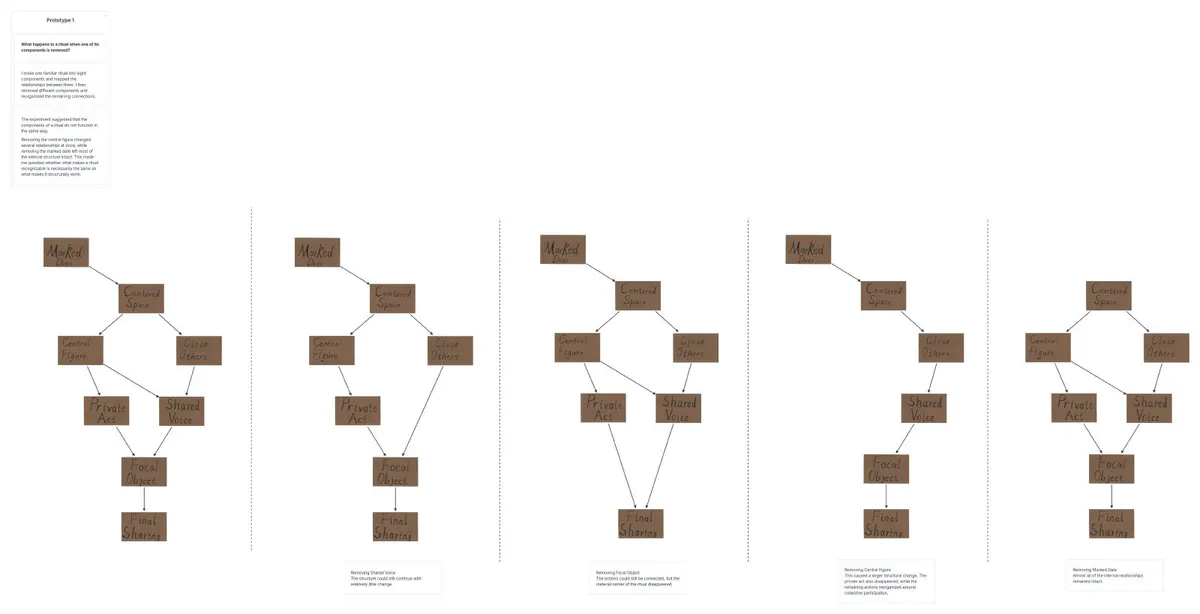
One thing I noticed through the prototypes was a tension between abstraction and recognizability. The more I reduced a ritual into general structures, the easier it became to compare with other cases, but the harder it became to tell what ritual I was actually looking at. I was also surprised by how easily features I initially associated with ritual appeared in ordinary activities. In the final visual prototype, Wedding and Graduation produced different distributions of symbols, but without the labels I could not confidently identify either one. That failure became useful evidence for me: comparison can reveal patterns, but abstraction can also erase the specific context that makes those patterns meaningful.
Week 2
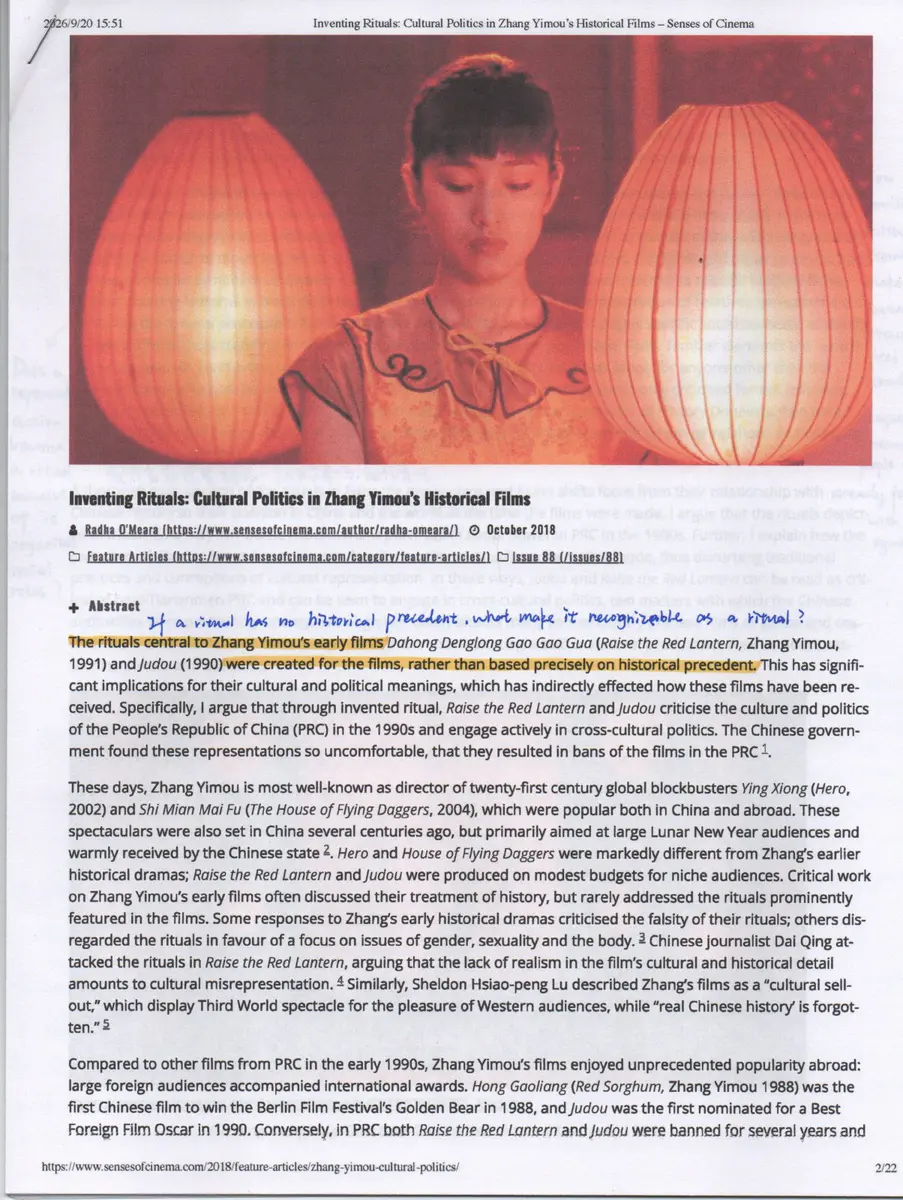
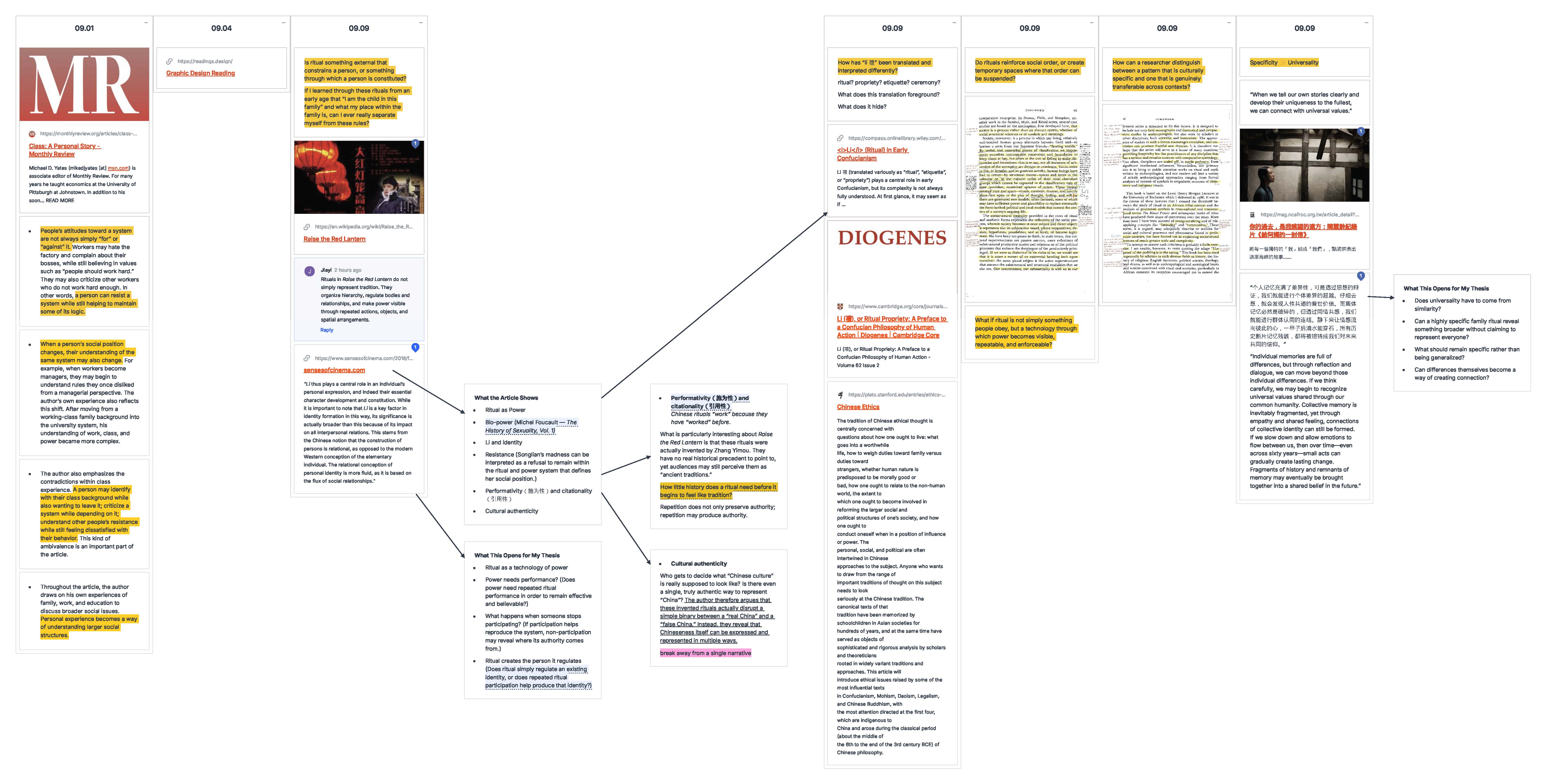
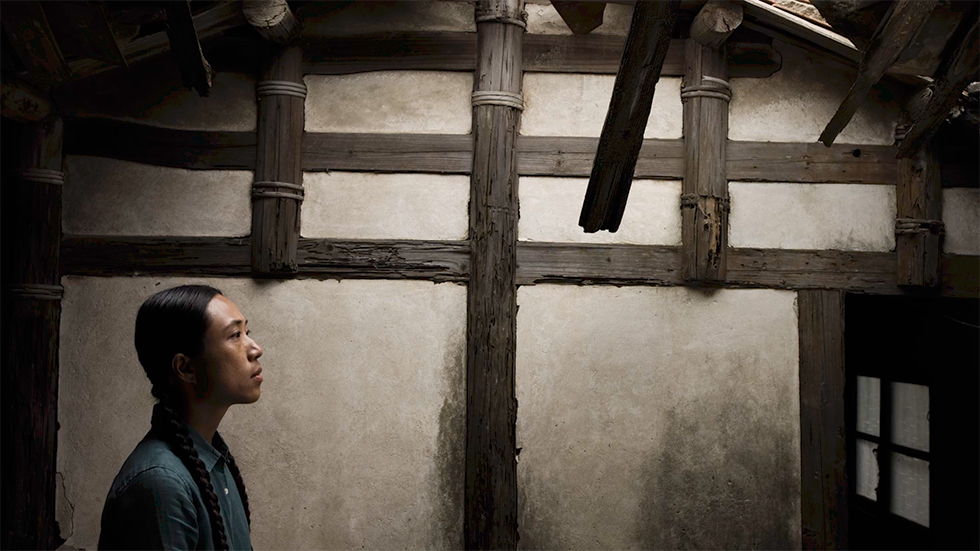
I began to rethink the relationship between ritual and identity. I had often understood ritual as an external set of rules, but through my research on li and Zhang Yimou’s Raise the Red Lantern, I started to consider whether ritual can also shape a person’s identity and position within a family. For example, someone may not simply follow certain rules because they are “the child” in the family. Repeatedly performing those rules may also teach and reinforce what that role means. Another idea that surprised me was that tradition does not always have to be historically inherited. Some rituals in Raise the Red Lantern were invented, yet they still feel convincingly traditional. This made me wonder whether repetition itself can gradually produce a sense of tradition and authority. I also began to rethink the relationship between specificity and universality. In A Letter to A’ma, Chen Hui-ling emphasizes that individual memories can remain different while still creating connection through understanding and empathy. This made me realize that I may not need to reduce different family stories into one common pattern before they can speak to broader questions.
Week 1
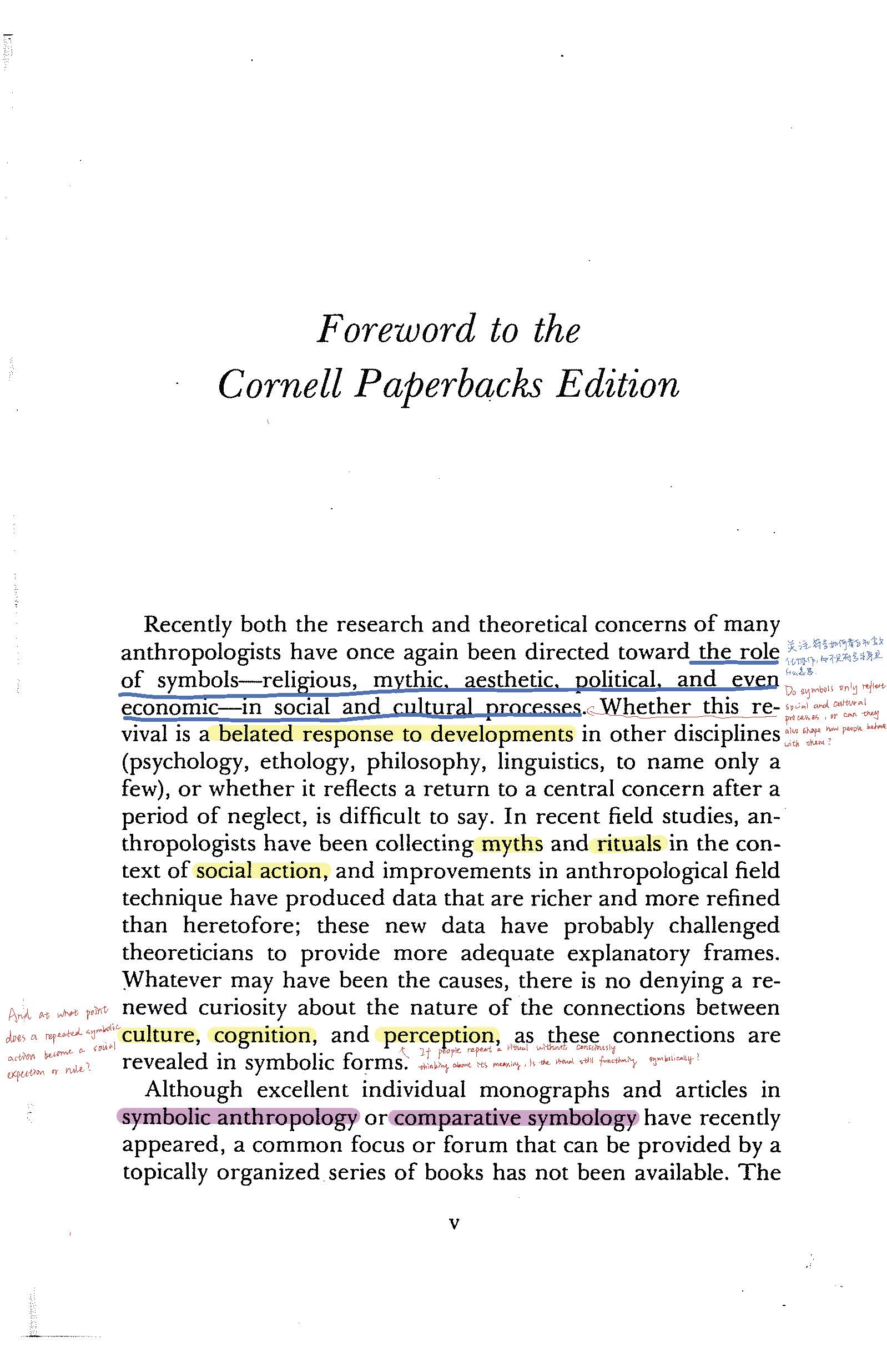
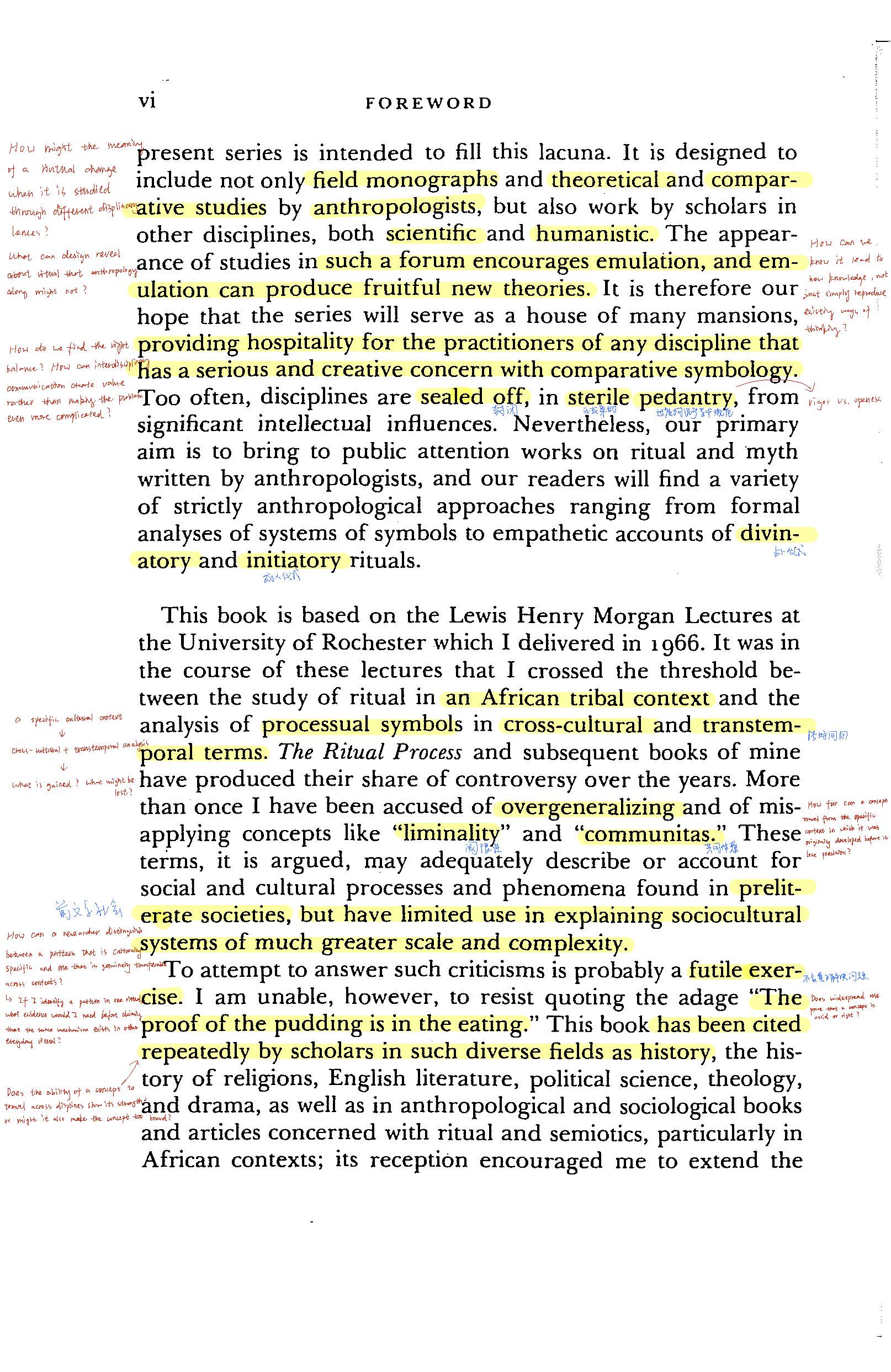
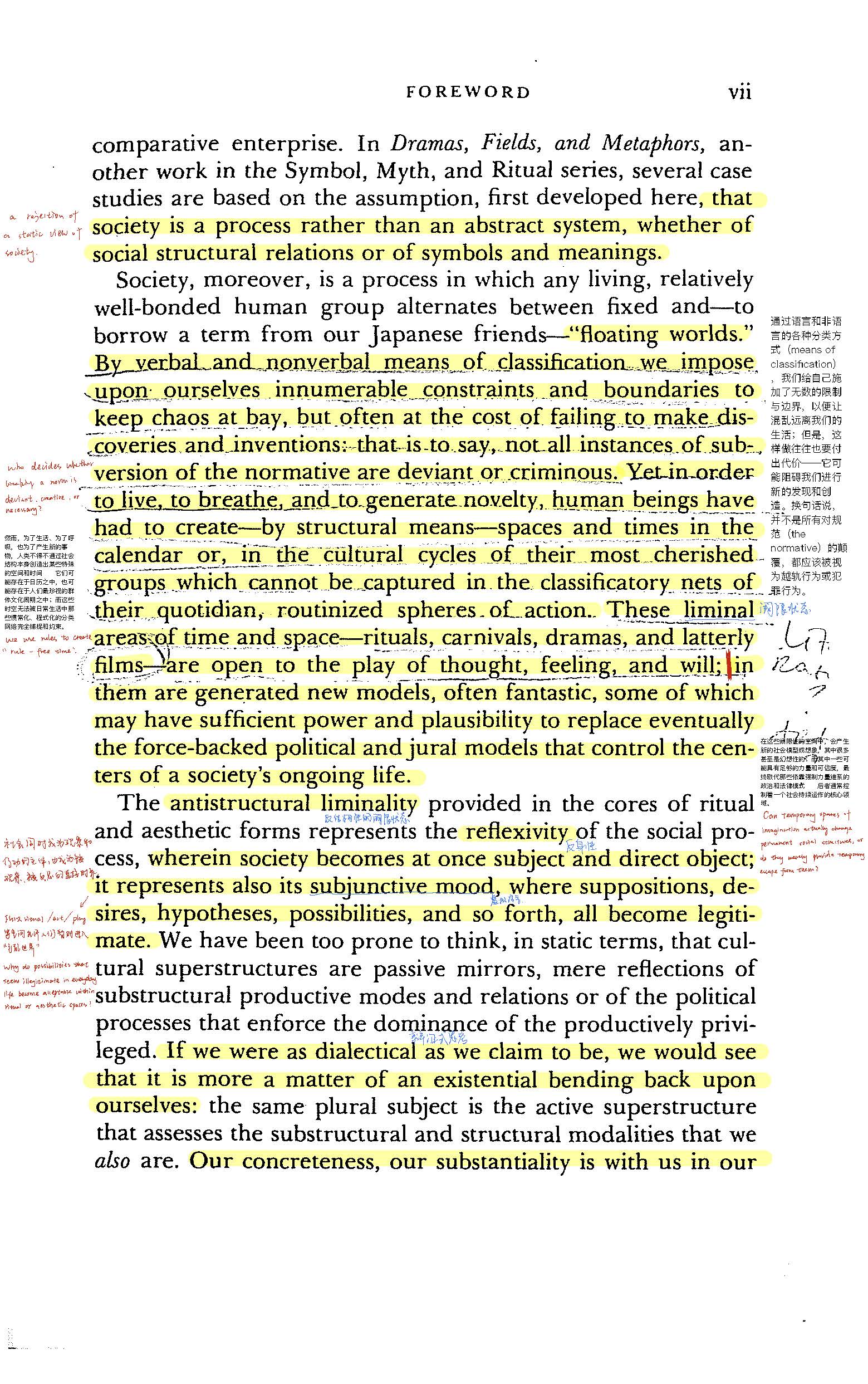
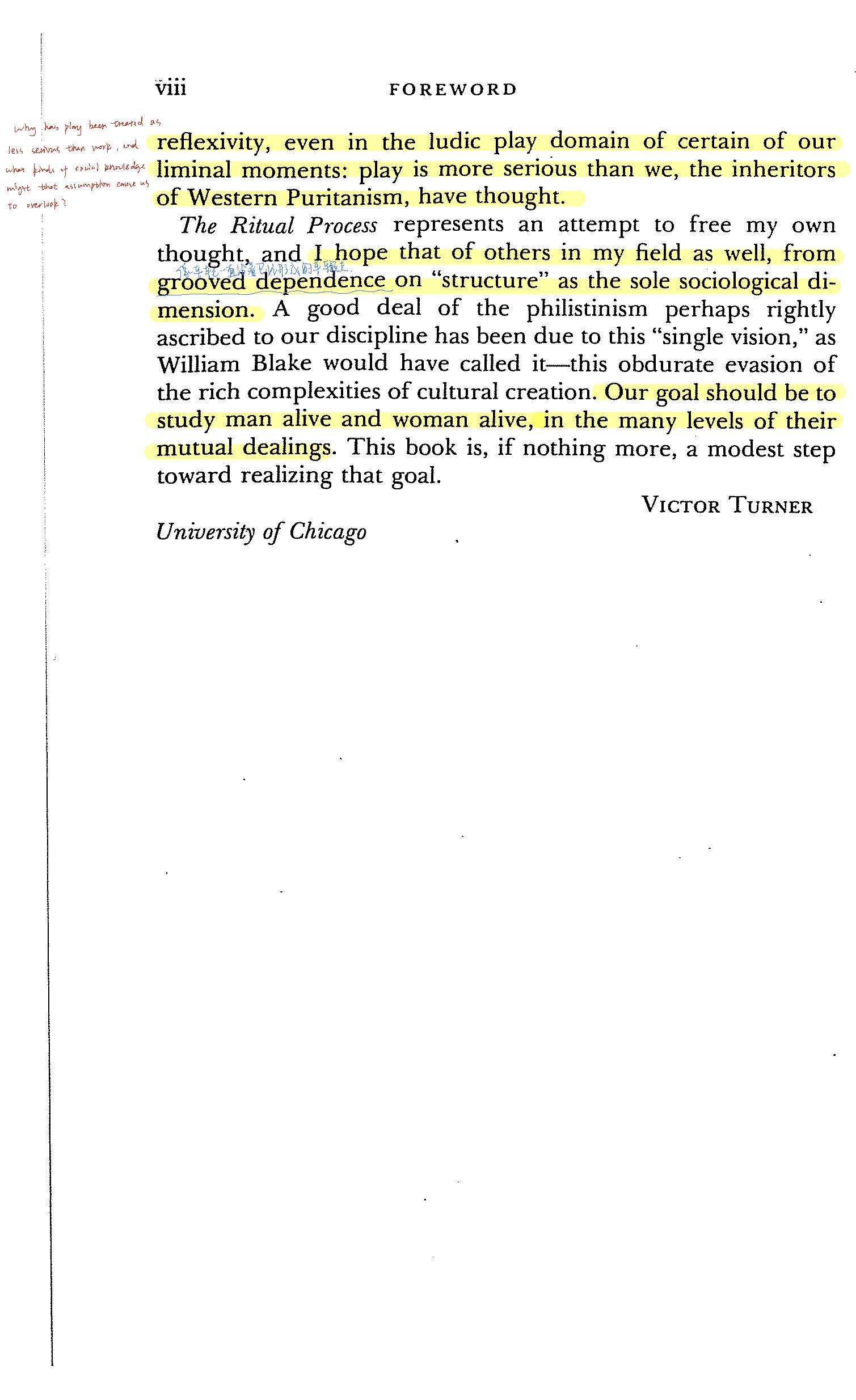
This week I read the foreword of The Ritual Process: Structure and Anti-Structure. The author understands society as a process rather than a static system, and he suggests that rituals can create temporary spaces where fixed classifications and boundaries in everyday life become less stable. What surprised me is that I had been thinking about how rituals might be broken, but I had not considered that ritual itself could also become a space for breaking or questioning existing structures.
Weel 6: Provotype
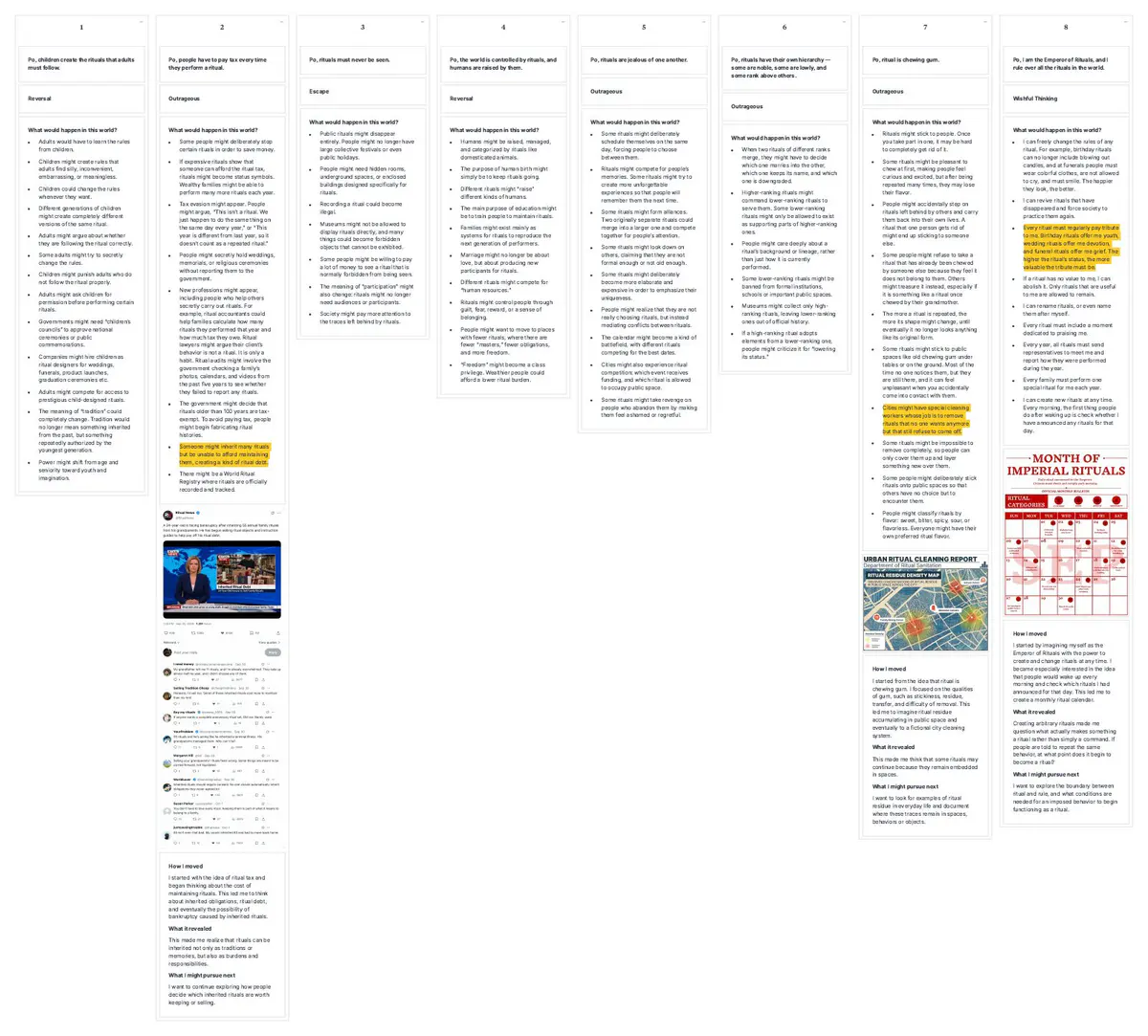
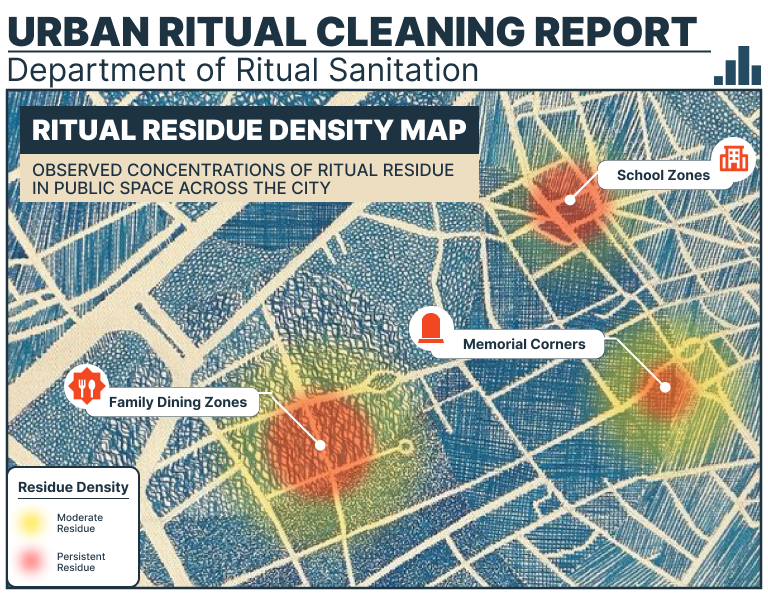
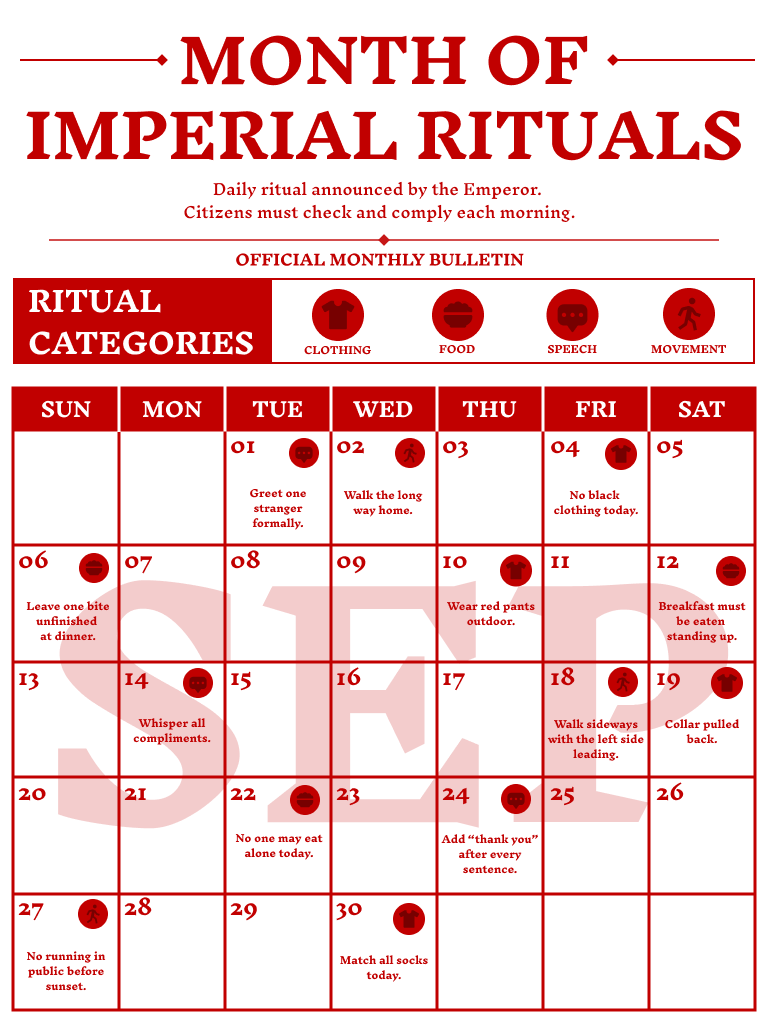
This week, through three prototypes, I began to see more clearly how people decide whether rules and rituals are something they “should” follow.
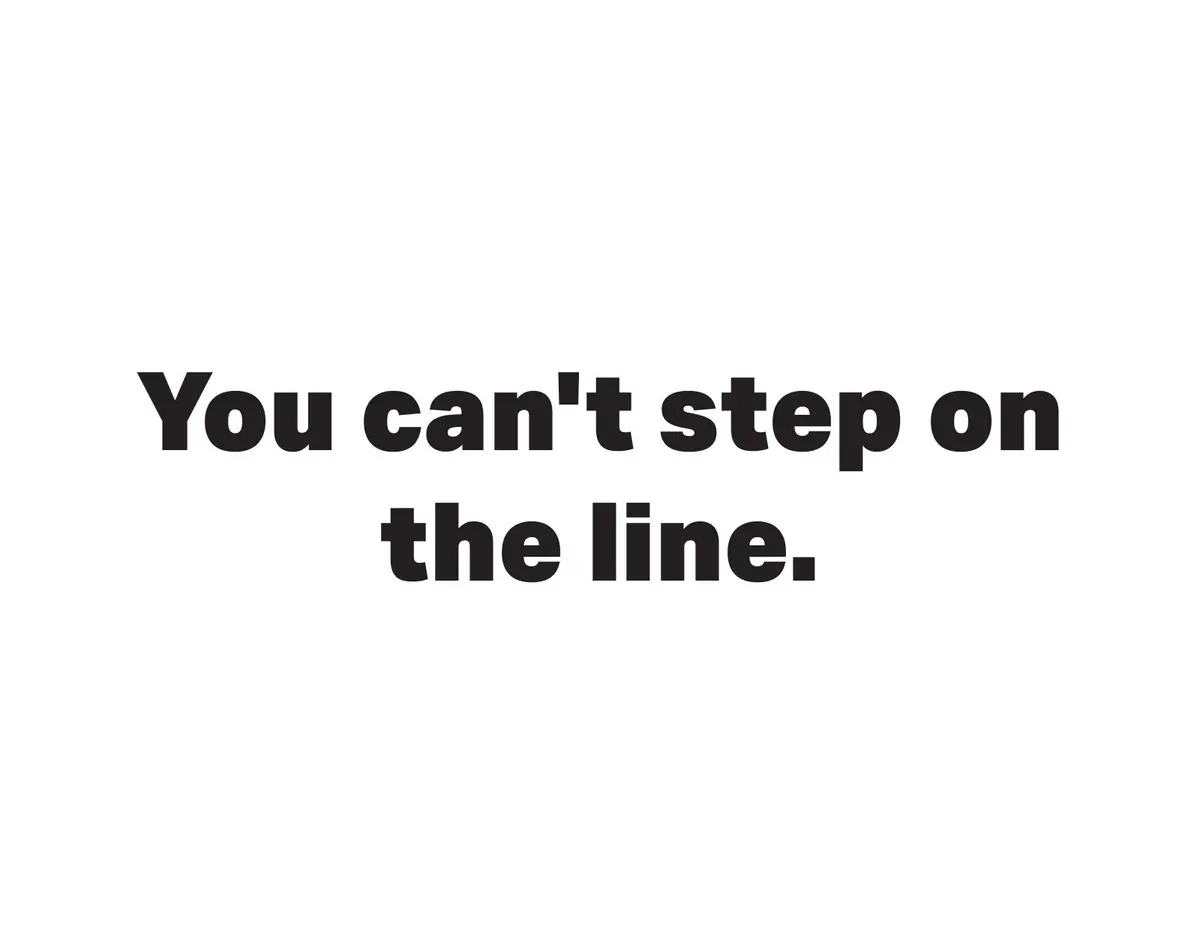
The first prototype was a simple rule with no explanation: “Do not step on the line.” The two participants responded very differently. One looked for clues and tried to understand why the line could not be crossed, while the other simply avoided it and assumed there must be a reason behind the rule. More interestingly, when the first participant learned that the rule had been made by a child, she began to treat it as something more playful and open to challenge, and even said she might deliberately step on the line to tease the child. This made me notice that people do not judge whether to follow a rule based only on the rule itself. They also consider where the authority behind the rule comes from, and whether that authority should be taken seriously.
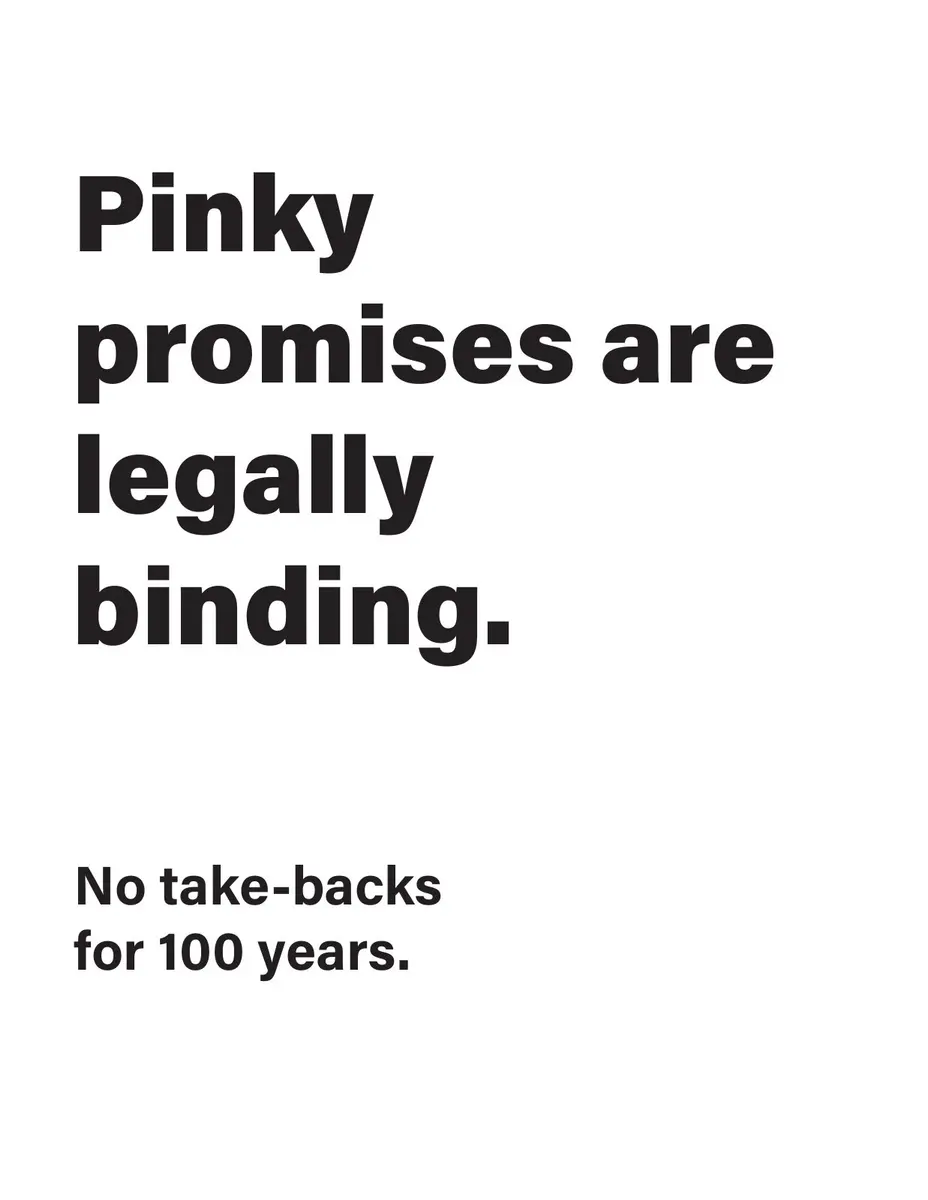
The second prototype turned rules and common phrases from children’s games into rules that would have real consequences. Participant A said that if these rules actually worked, people would become much more careful about what they say and do. At the same time, they might actively look for loopholes or ways to use the rules to achieve their own goals. Participant B said that she would simply follow the rules. This made me realize that once rules begin to produce real consequences, people can quickly start treating something that originally seemed like a joke as a system that needs to be taken seriously. The authority of a rule may come from whether it can actually affect us.
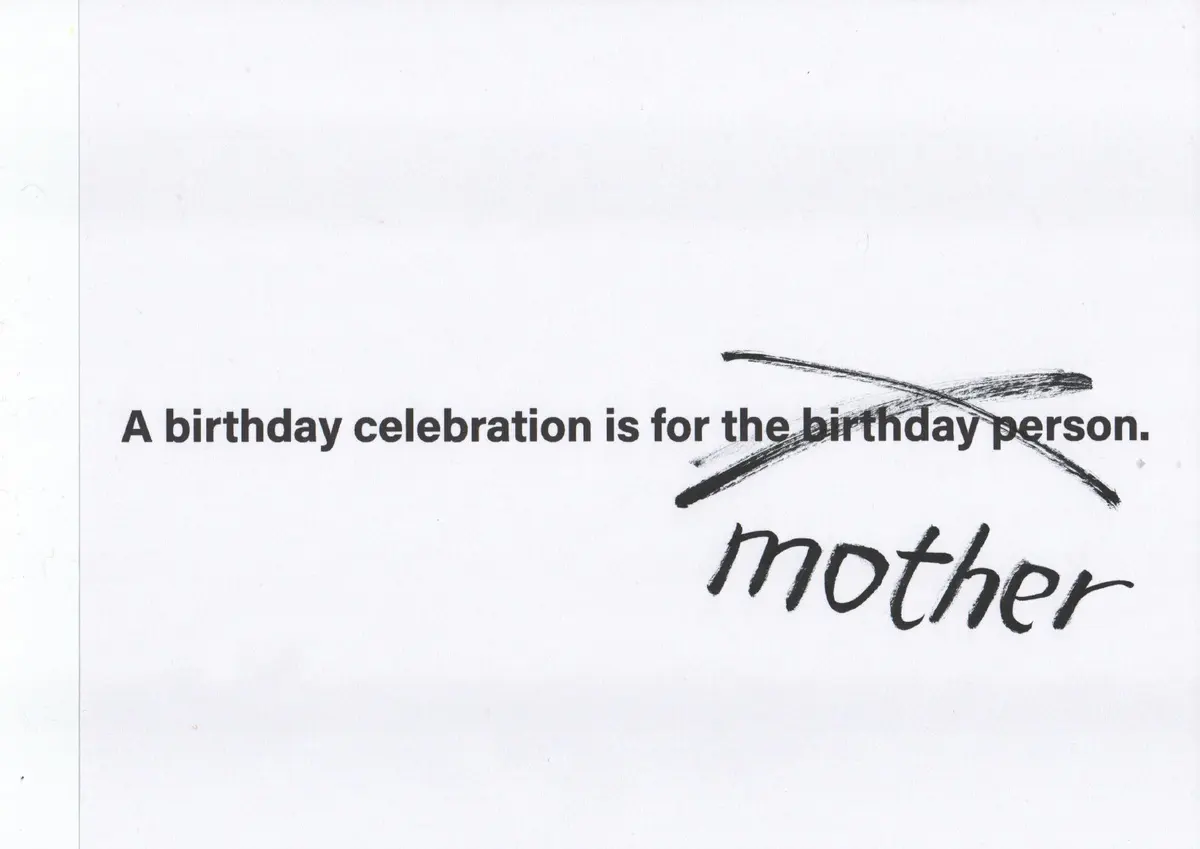
The third prototype changed the usual “main person” of several rituals. I noticed that participants tried to judge whether the new person could still be connected to the original meaning of the ritual. Participant A reimagined “a wedding for an ex-partner” as “a funeral for a relationship that had already ended.” In other words, when one replacement did not make sense to her, she looked for another ritual that could reorganize the meaning in a more fitting way. Participant B showed a strong sense of boundaries around these changes. She could accept shifting some attention in a birthday celebration toward the mother, but strongly rejected making freshmen the focus of a graduation ceremony, making ex-partners the focus of a wedding, or holding a funeral for someone who was still alive. This made me start to think that rituals may also help people maintain an order between roles, relationships, and life stages. When those positions are misplaced, brought forward, or exchanged, people immediately feel that something is “wrong.”
What surprised me most was that the participants did not simply respond with “I like it” or “I don’t like it.” They actively looked for reasons behind rules, judged who had the right to make them, searched for loopholes in the system, or moved the meaning of one ritual into another. These prototypes helped reveal ways of judging that people may not normally state explicitly.