Week 5

Questions this week
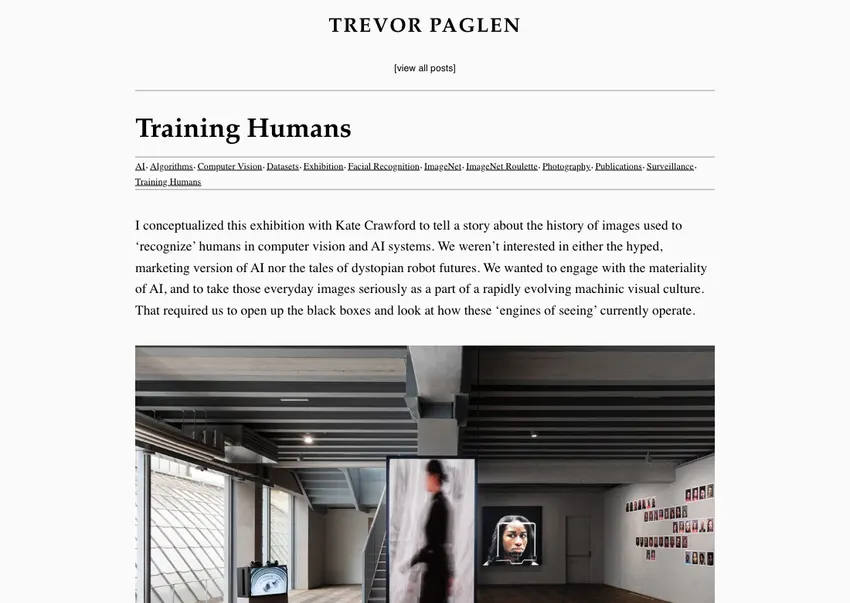
This week I kept coming back to the idea that the loop is grey. It is never fully good or fully bad. So the real question is how we choose what works for us inside it. Reading Bhandari and Bimo and looking at these works pushed that question in a few directions. - If the algorithm shows me "repackaged" versions of myself, am I making myself or just watching a reflection of what I already liked? - When does being understood by the feed turn into being boxed in by it? - Can I work with the algorithm on purpose, the way users comment or like to stay on a certain "side," and still keep my own creative voice? - What happens to meaning when content has no context? If "the TikTok is the message," where does the maker go? - In Nosedive, the rating becomes the person. How close are likes and views to doing the same thing to designers? - Hito Steyerl and Zach Blas both look at hiding from the system. Is opting out the only way to protect yourself, or can you stay visible and still keep something private? - Lauren McCarthy put herself in the role of the smart home assistant. What does it feel like to be the one watching instead of the one being watched? - Paglen and Crawford show how machines are trained to label people. Who decides the categories I get sorted into, and can I refuse them? - Nam June Paik's TV Buddha watches itself forever. Is endless scrolling a kind of meditation, or a trap that only looks calm? - If the loop will always be there, what would "thriving" in it actually look like for a designer day to day?
Research discoveries
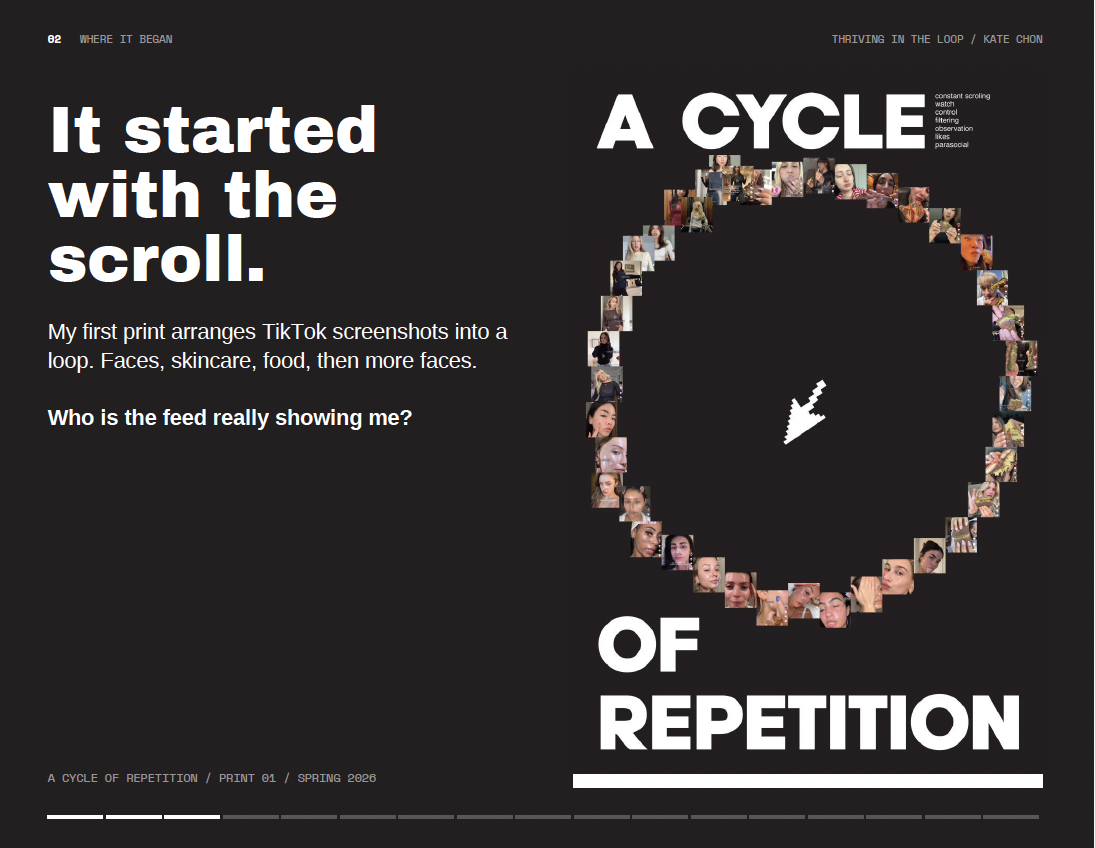
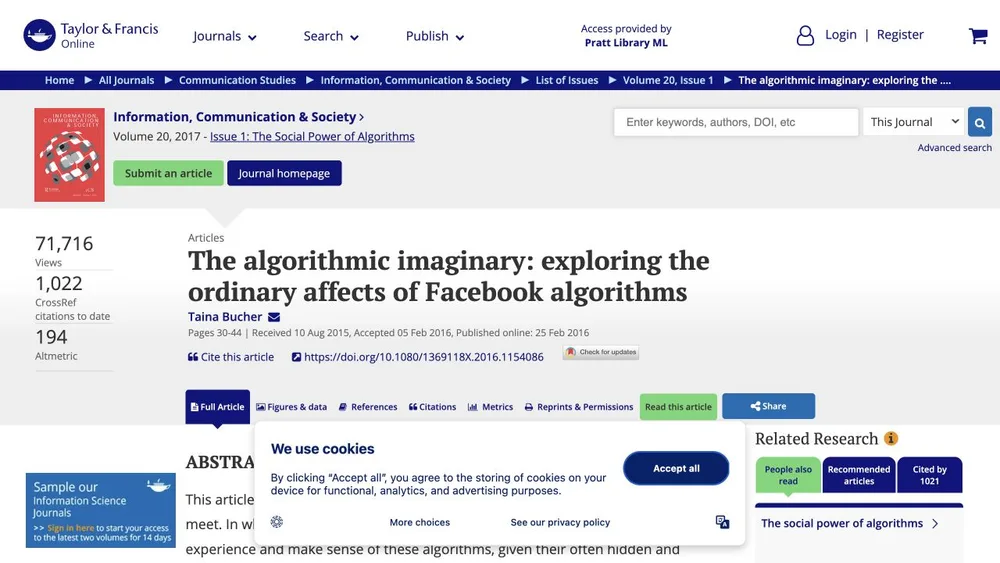
So far I've been looking at the loop from a few angles. The readings, the artists, and my own scrolling all point to the same thing. The loop is not one thing. It is made of smaller parts like behavior, voice, and taste, and each part can pull me in a good, bad, or neutral direction. What I've noticed: - When I collected screenshots for my poster, the same faces, gestures, and trends kept repeating. I didn't search for any of it. The feed kept handing it back to me until it felt normal. - Bhandari and Bimo describe the "algorithmized self." On TikTok, people mostly interact with the algorithm, not with other people. We shape ourselves by reacting to versions of ourselves that the feed reflects back. - Artists like Hito Steyerl and Zach Blas respond by hiding from the system. Nam June Paik and Lauren McCarthy respond by watching it closely. That range helped me see that resistance is not the only option. What I've realized: - Crit helped me separate my terms. Influence is the force. The loop is the dynamic, a continuous action that keeps repeating. Thriving is my objective. - The loop is composed of parts like behavior, voice, and taste. Because the action repeats, it slowly shapes each one. What I watch changes how I act, and over time it changes my voice and my taste too. - I don't want my thesis to be anti-algorithm. My position is closer to pro. The loop is always going to be there, so the more useful question is how to use it without losing yourself. What surprised me: - The TikTok design pushes people to create, but most participants in the study saw themselves as viewers. People don't always do what the platform wants. - Users knew their data was being collected and saw it as a fair trade for a good feed. They only felt uneasy when it became "too accurate" and started showing people who looked and acted like them. - People use likes and comments less to connect and more to steer the algorithm. That made me realize we already negotiate with the loop every day, often without thinking about it. Where I'm going next: - Looking closer at the continuous action and breaking it apart into what it is made of. - Mapping what is good, bad, or neutral about each part and what it influences. I want to ask what is positive inside the good and the bad, and build a scale instead of treating it as one or the other. - Defining what thriving means for me. Right now it is still thrive = ?, and I want to fill that in through my own experience. - Exploring the pros and looking at all the possibilities through case studies. - Backing up why my position is pro. That means looking at the full range, from people who resist the loop to people who fully embrace it, and showing where thriving fits.
Other work
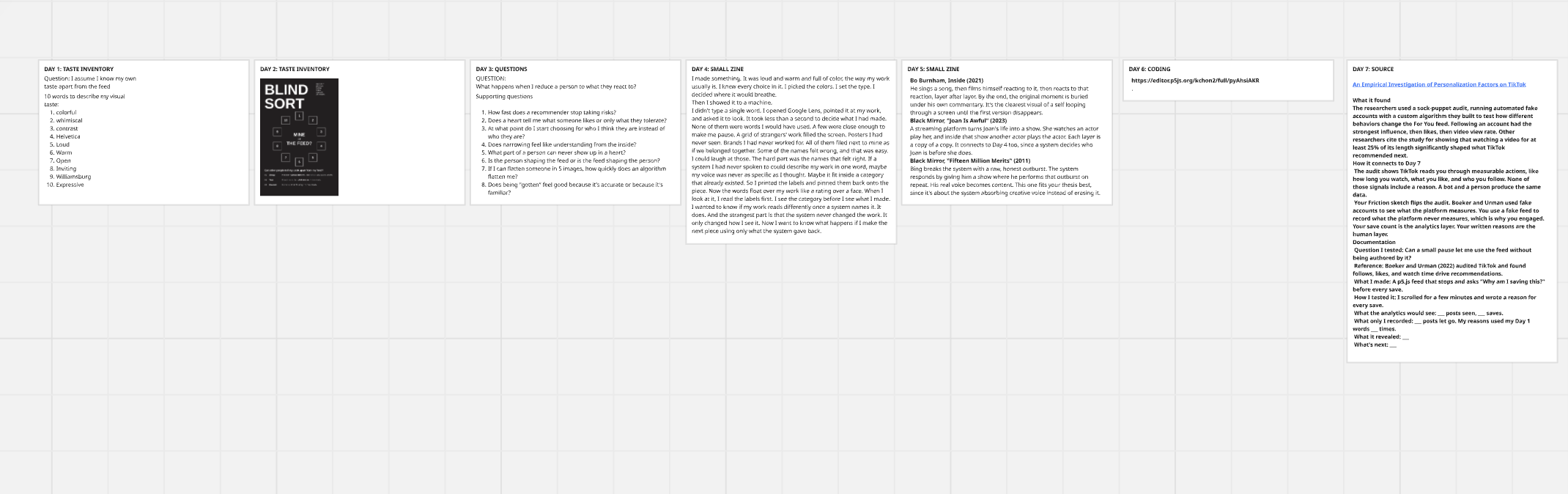
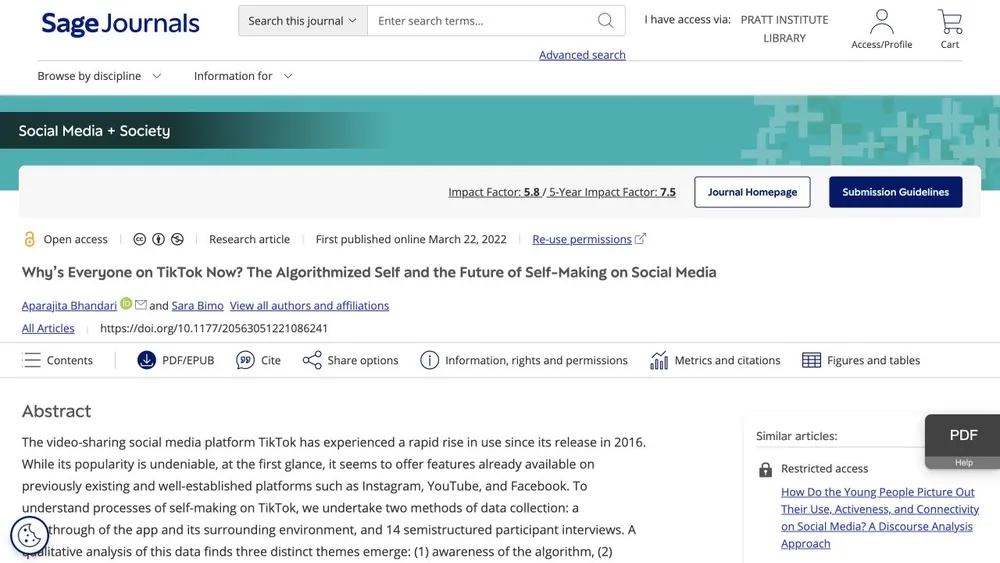
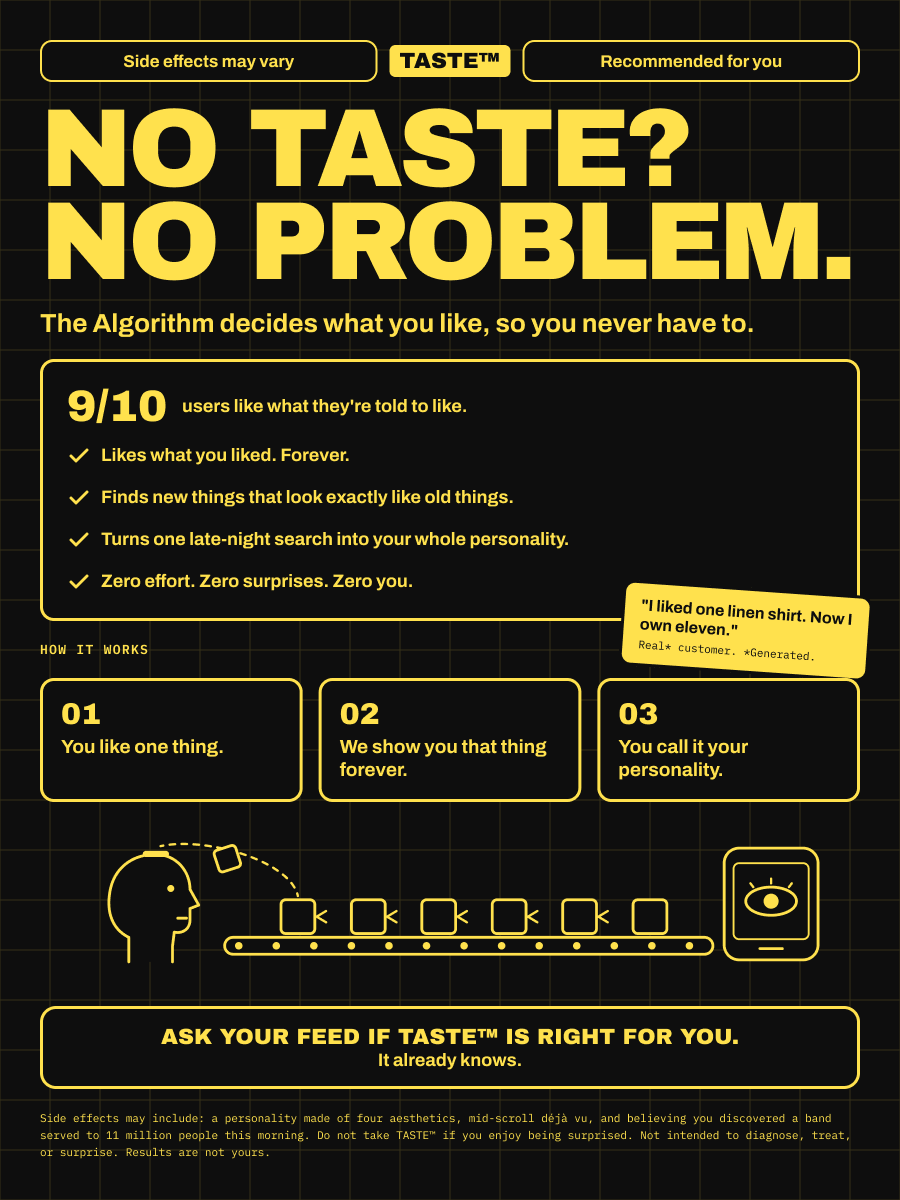
This week I spent a lot of time with the poster, A Cycle of Repetition. I collected screenshots from my own feed and arranged them in a circle around a single cursor. I wanted it to feel like the loop itself. The faces, gestures, and trends start to blur together the longer you look. Along the side I listed words that kept coming up for me while scrolling, like constant scrolling, watch, control, filtering, observation, likes, and parasocial. Making it helped me see how much of my feed repeats without me choosing it. I also read Why's Everyone on TikTok Now? by Bhandari and Bimo and highlighted the parts that connect to my thesis. The idea of the algorithmized self stuck with me the most. It gave me language for something I had felt but couldn't name. Alongside the reading, I started building a collection of references. I looked at Black Mirror's Nosedive, Hito Steyerl's How Not to Be Seen, Lauren McCarthy's LAUREN, Zach Blas's Facial Weaponization Suite, Trevor Paglen and Kate Crawford's Training Humans, and Nam June Paik's TV Buddha. Each one looks at being watched, rated, or reflected back in a different way. Putting them side by side showed me the range of ways artists respond to systems like this. I also took time to process my crit feedback. Separating influence, the loop, and thriving gave my thinking more structure. It also made me realize I need to define thriving for myself before I can build the rest of the thesis around it.
Other questions or notes
:)