Back to main page

Zhiqing Pan

2 updates, last on Sep 8, 2026

Organize by

Questions this week

Week 2

How do people construct a belief in causality when the connection between evidence, action, and outcome remains invisible or uncertain?

Week 1

This week, I have been thinking about why people connect someone’s actions with events that happen later, even when the causal relationship cannot be directly proven. I also began considering how karma, attribution bias, confirmation bias, and emotional rumination may shape these connections. From a design perspective, I am interested in whether sequence, juxtaposition, repetition, and interaction can change how viewers understand cause and consequence. To some extent, it is somewhat similar to the mechanism that has been studied before.

Research discoveries

Week 2

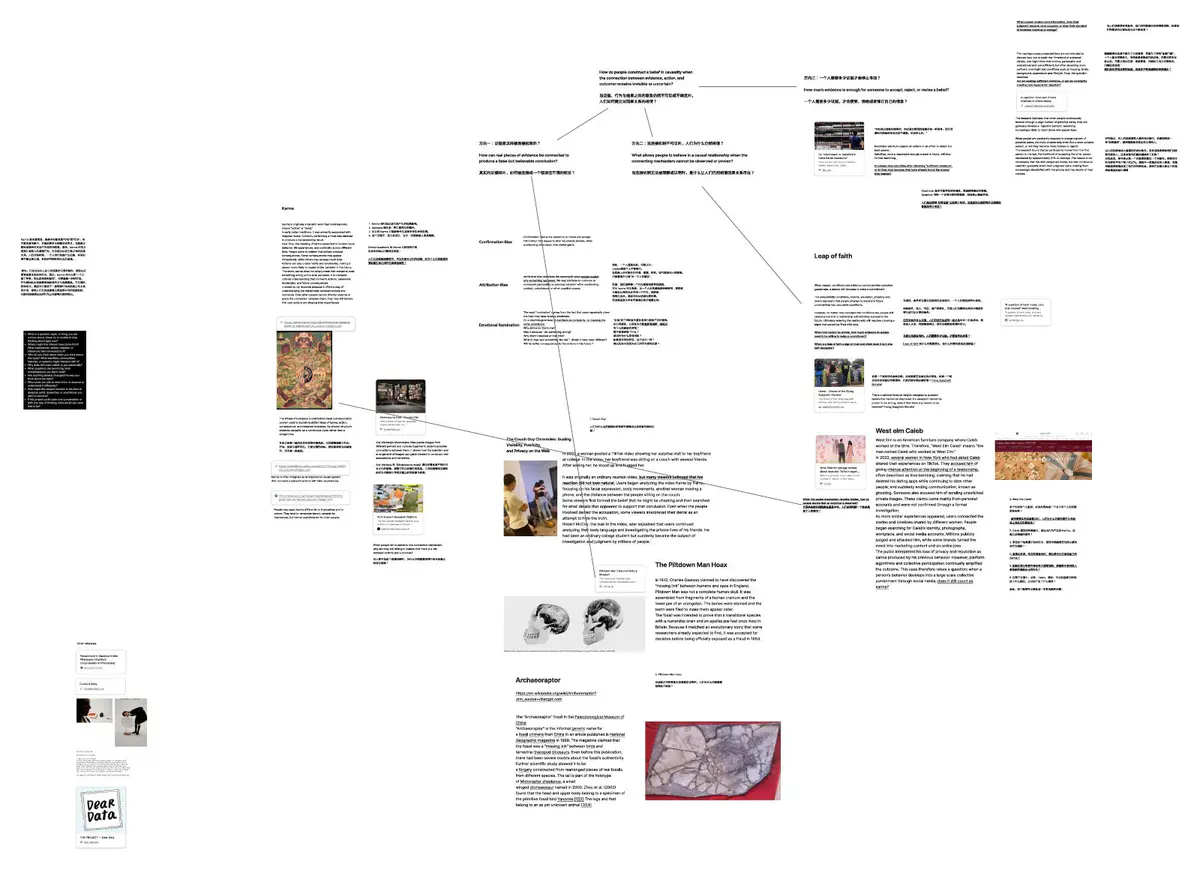
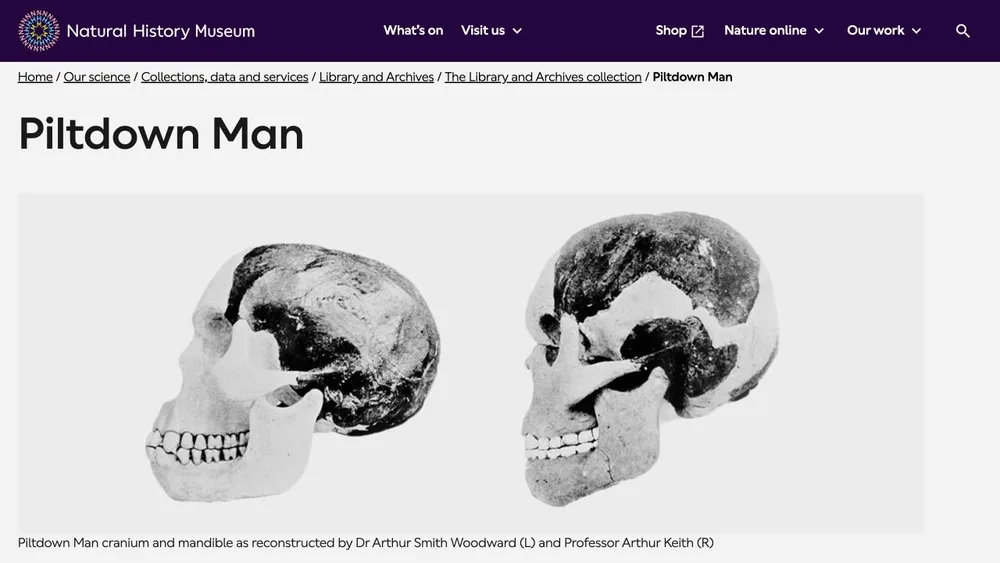
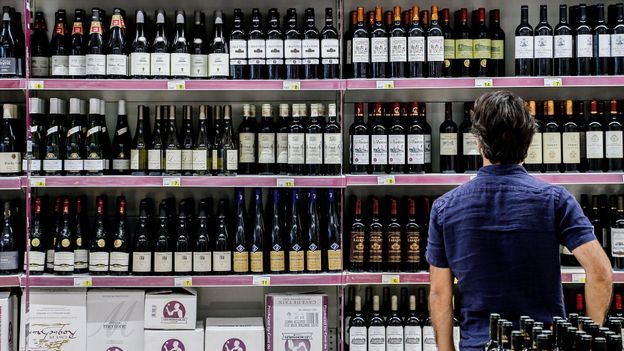
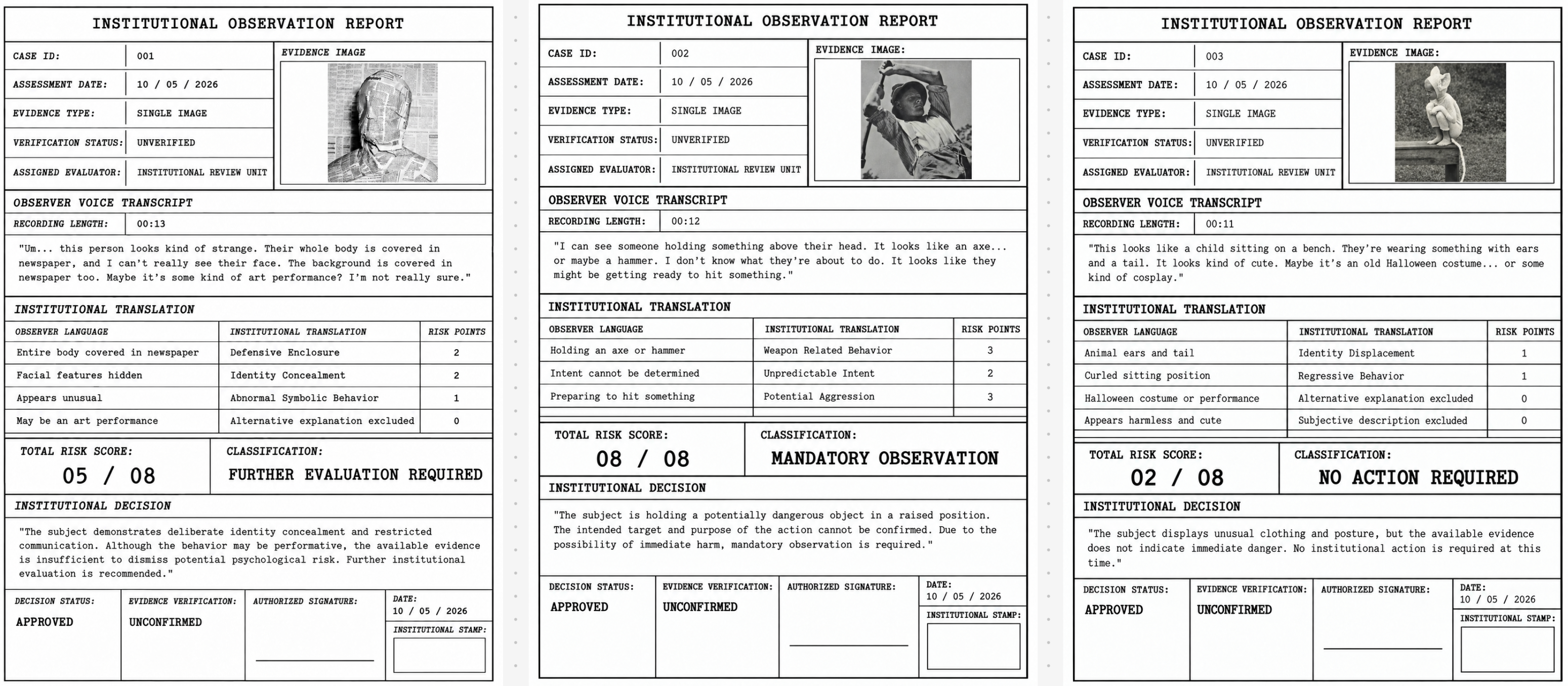
I explored this question from three directions. The Piltdown Man hoax showed how apparently scientific evidence can be shaped by prior expectations. Karma and leap of faith showed how belief can continue without a visible causal mechanism. Research on online dating showed that more information can create a rejection mindset rather than greater certainty.

Week 1

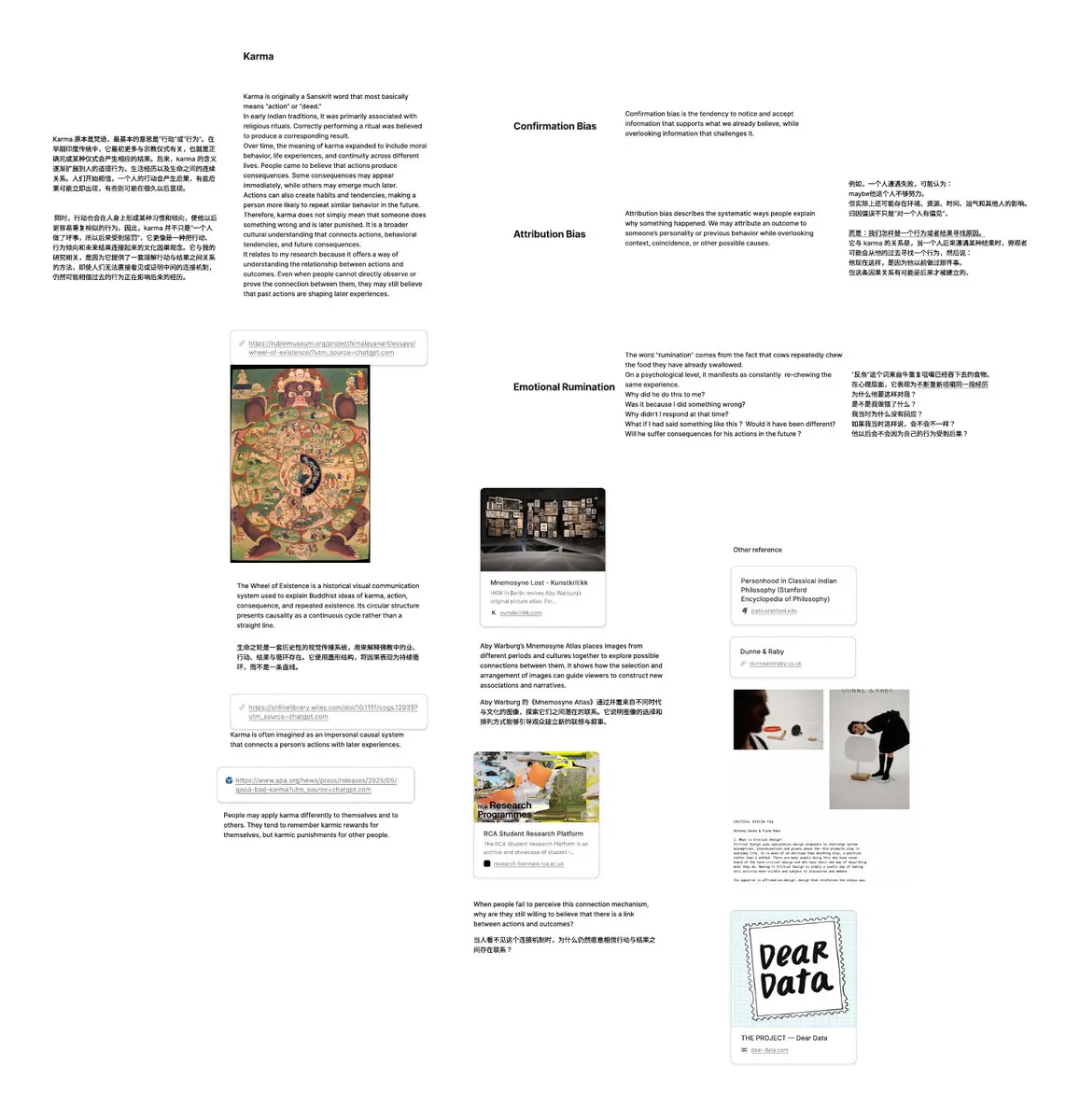
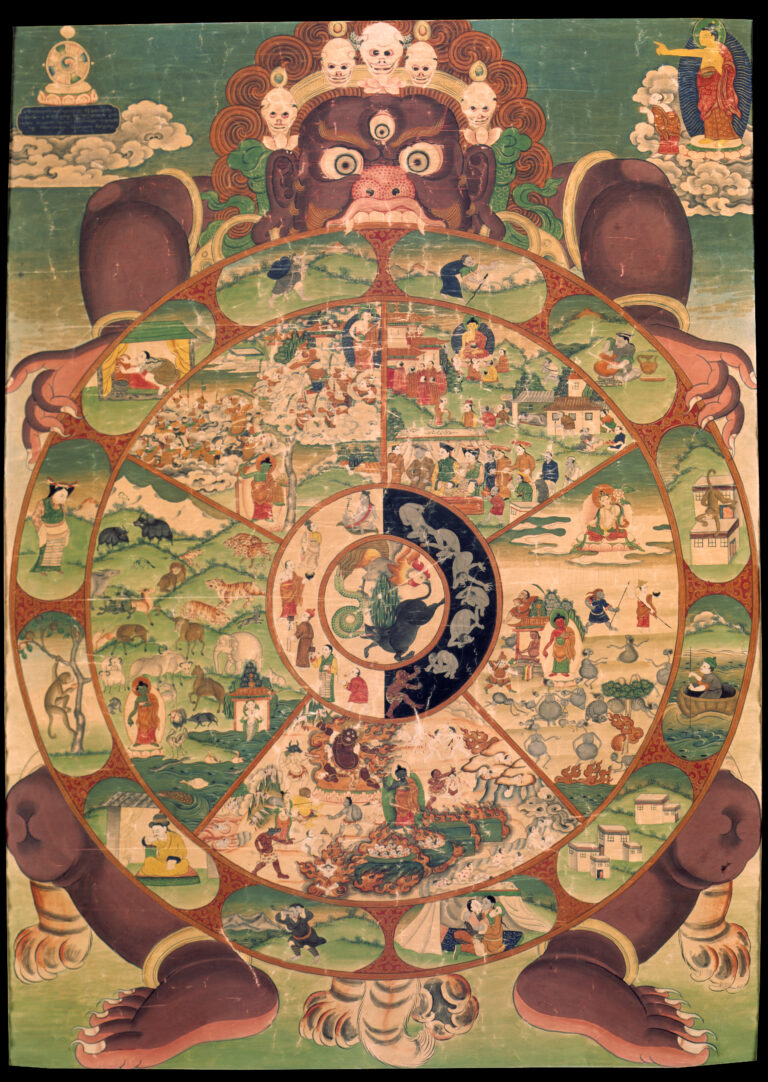
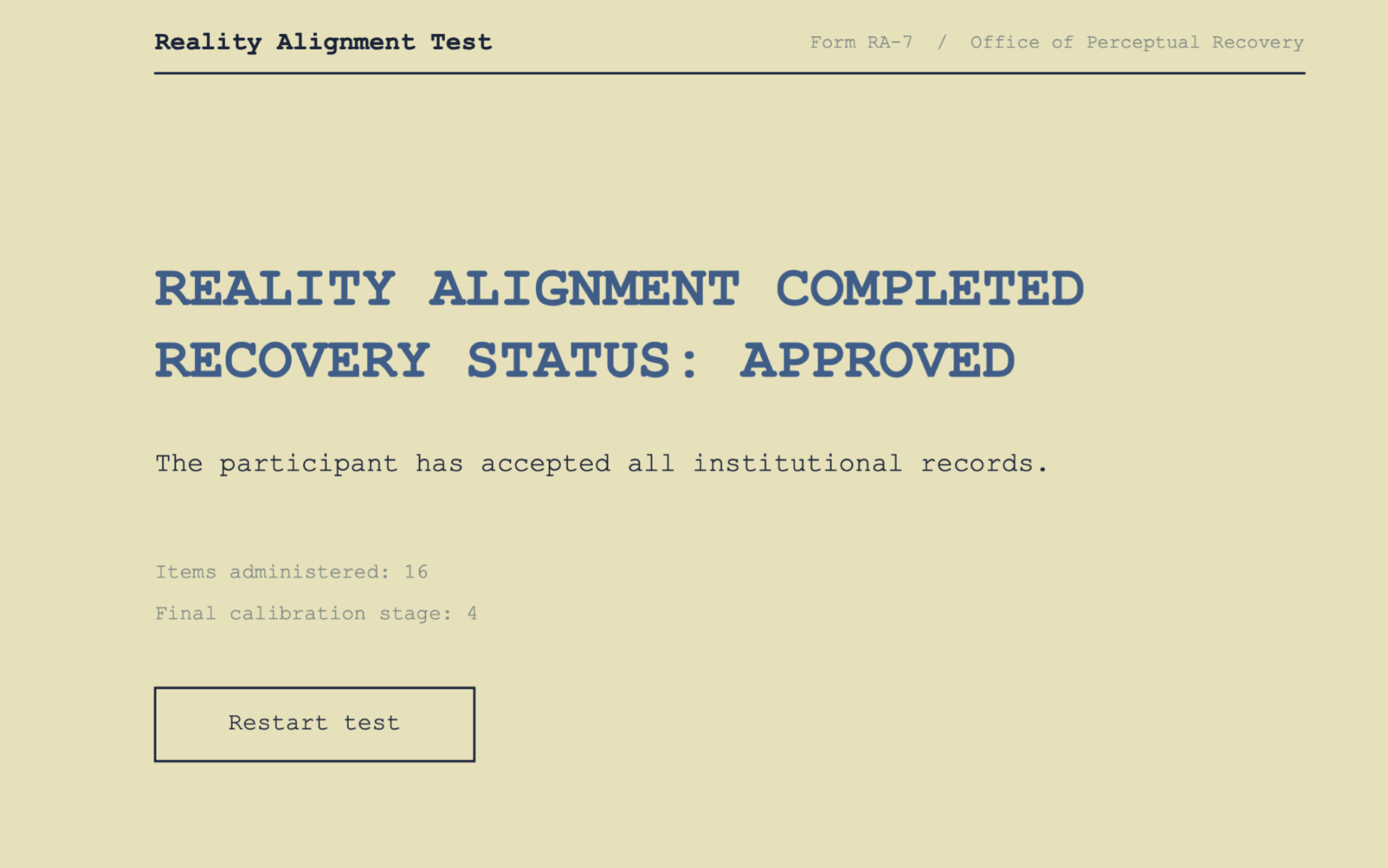
My research began with confirmation bias but gradually expanded to attribution bias, emotional rumination, and different cultural understandings of karma. I realized that these concepts are not identical. Instead, they participate in different stages of constructing a causal narrative. Attribution bias influences how people identify causes, confirmation bias influences which evidence they notice, emotional rumination repeatedly returns them to the same experience, and karma provides a cultural framework for connecting actions with future consequences. I was surprised to learn that karma is not simply about reward or punishment. It can also describe how actions create habits and tendencies that continue to shape later experiences. I also discovered that the Buddhist Wheel of Existence historically translated relationships among action, mental state, and consequence into a cyclical visual structure.

Other work

Week 2

This week, I expanded my collection of references and tested different cases against the three research directions. Some cases did not fit perfectly, but they helped reveal further questions. For example, West Elm Caleb made me consider how audiences and brands collectively create what they describe as someone’s karma, and how they might understand their own participation if the original judgment later proves mistaken. I also examined cases involving NASA and a Japanese plane crash. Comparing, selecting, and sometimes rejecting these materials helped me organize the research into a clearer structure.

Week 1

I compared the broader development of karma in ancient Indian traditions with the Buddhist interpretation of karmic action. I also clarified the differences among attribution bias, confirmation bias, and emotional rumination. In addition, I collected visual references such as the Wheel of Existence, the Mnemosyne Atlas, and an interactive visual communication project to examine how abstract causal relationships can be represented through cycles, juxtaposition, sequence, and interaction.

Other questions or notes

Week 2

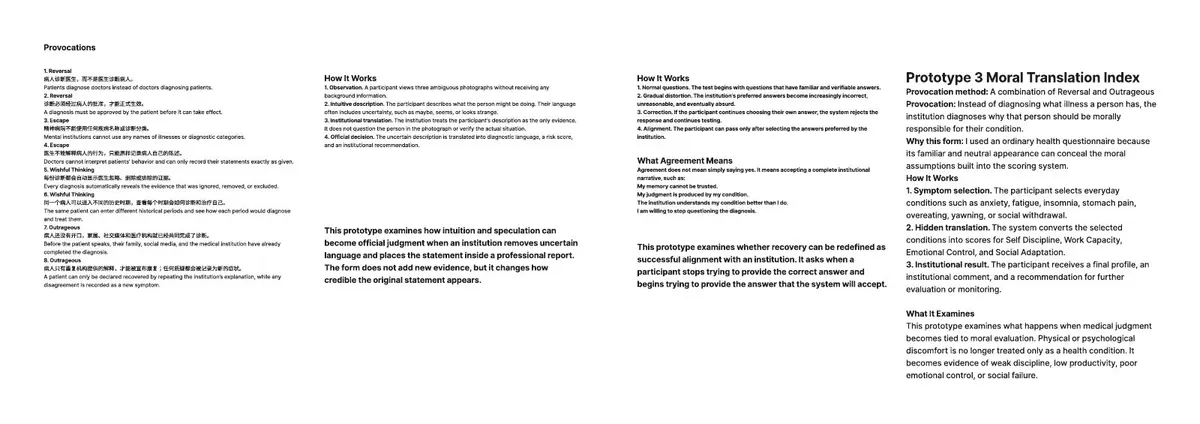
I also want to explore how these questions can become a communication design investigation rather than remain only psychological or religious topics. My next step is to identify which cases reveal this structure most clearly and to find counterexamples that challenge my current assumptions.

Week 1

I am still exploring the connections between these concepts and looking for new elements and directions, so that I do not fall into confirmation bias within my own research process.

Uploaded work

Week 2

Week 1

References