Week 5
I made a frame by frame animation that abstracts a map of the world into a progression of digits, pixels, and symbols. I wanted to visualize the fluidity between cyberspace (shown by varied collections of digital symbolism) and physical space (the world). It is unclear when and where either begins and ends, but countries and geographic divisions are irrelevant, because it is only made from a collection of repetitive symbols.
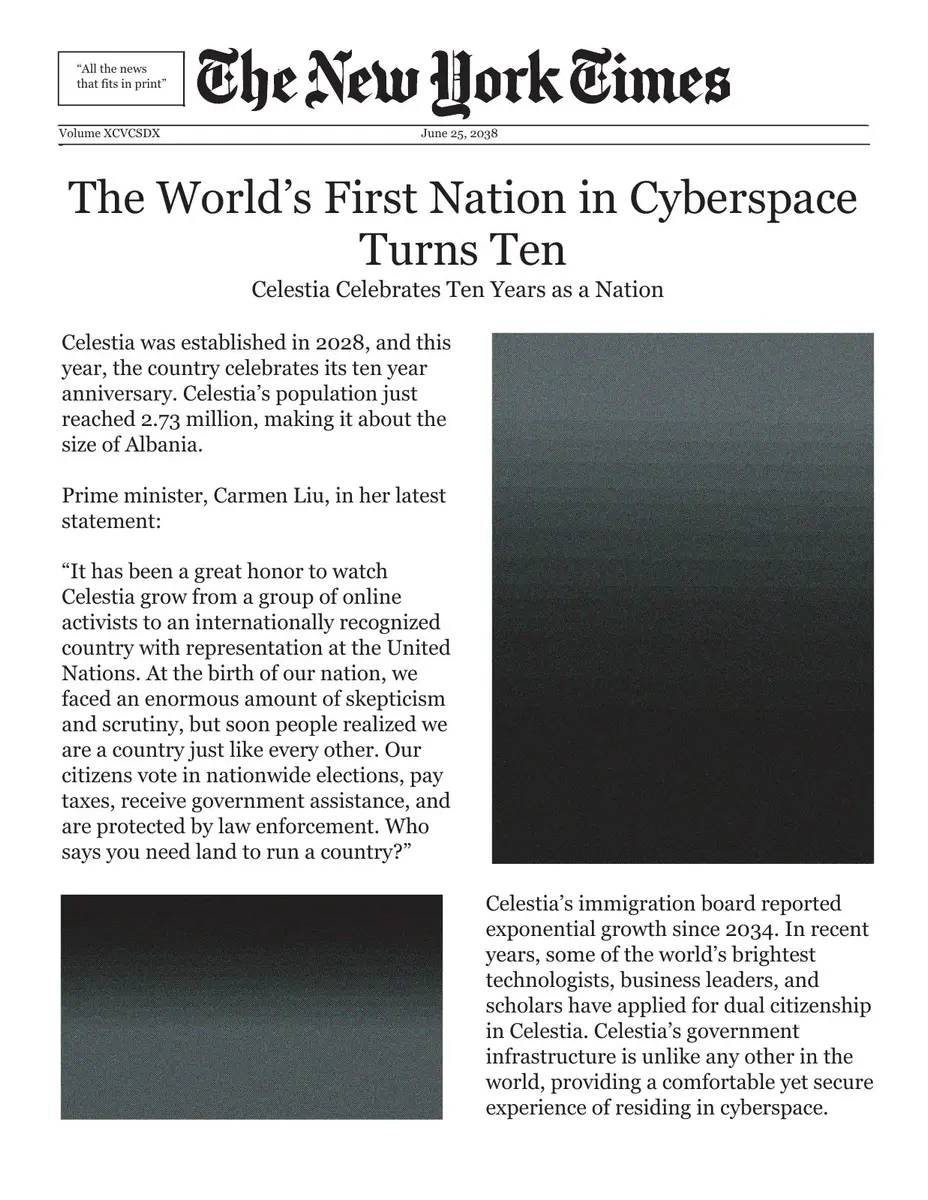
I created an imaginary news article about the ten year anniversary of a country that exists completely digitally. It was fun to think about what would make it a country and what wouldn’t. I wondered about how space played a role in what a country could become. It was interesting to think of all the things that can actually exist in a cyberspace “country”.
I designed a pop-up response in online check outs that prompts the user to ask a tree for permission. The user has no choice but to go outside and ask a tree, then take a photo of it and upload. Then the tree determines whether or not you can proceed to payment. I wanted to lean into the absurdity, because I found it really expansive. Imagining a world where we had to defer to nature is freeing and beautiful. It feels almost spiritual, but yet most humans have collectively decided to trample and disregard the natural world.
Week 4
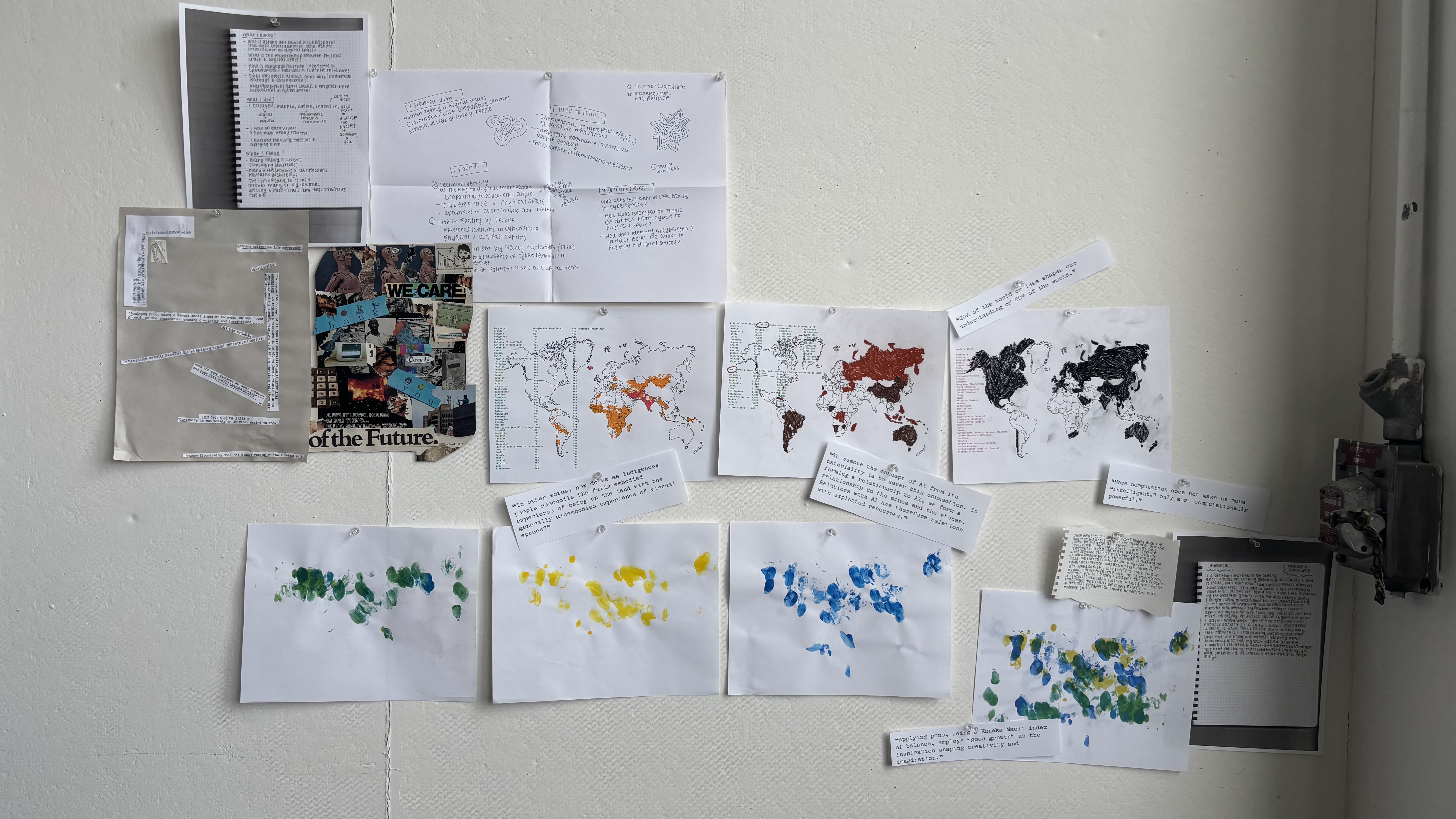
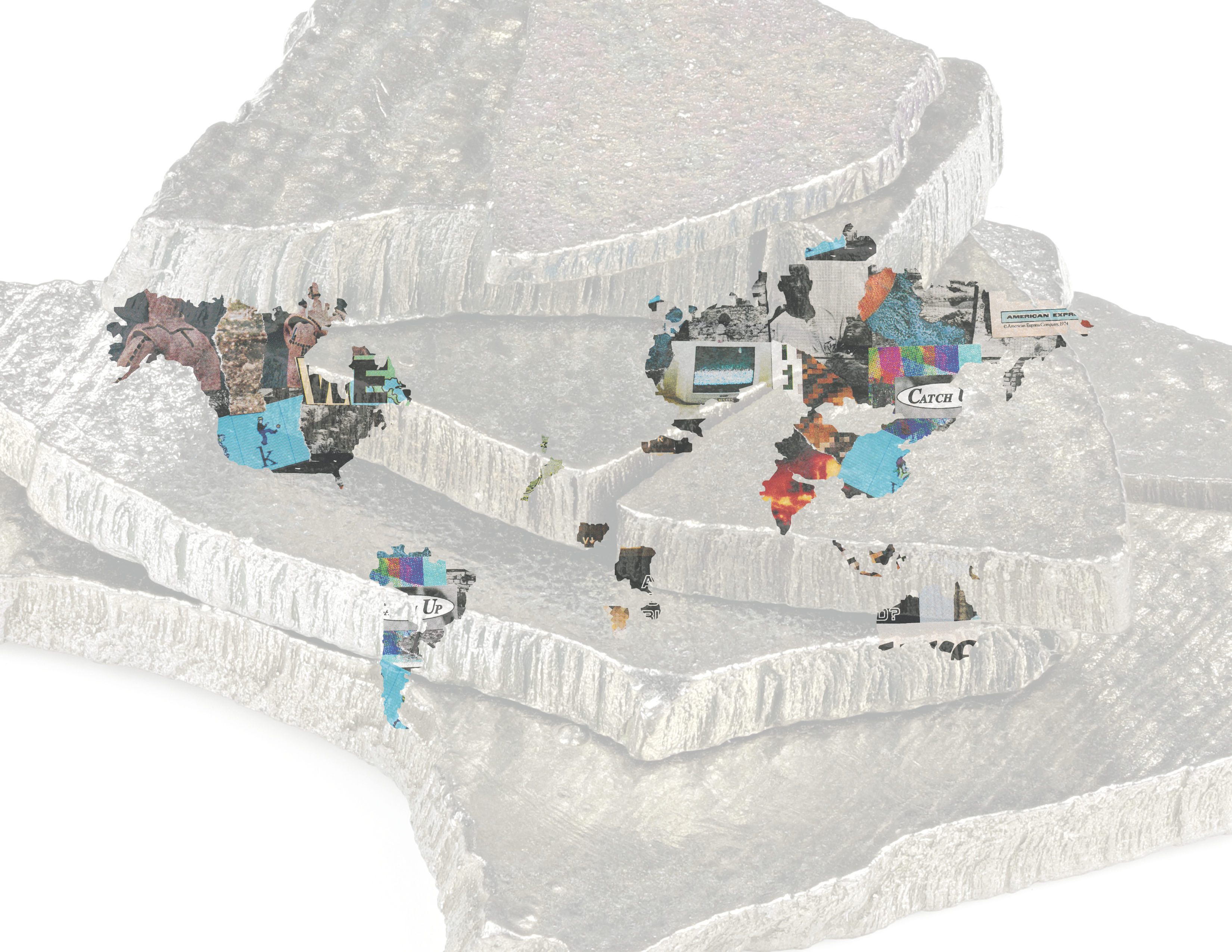
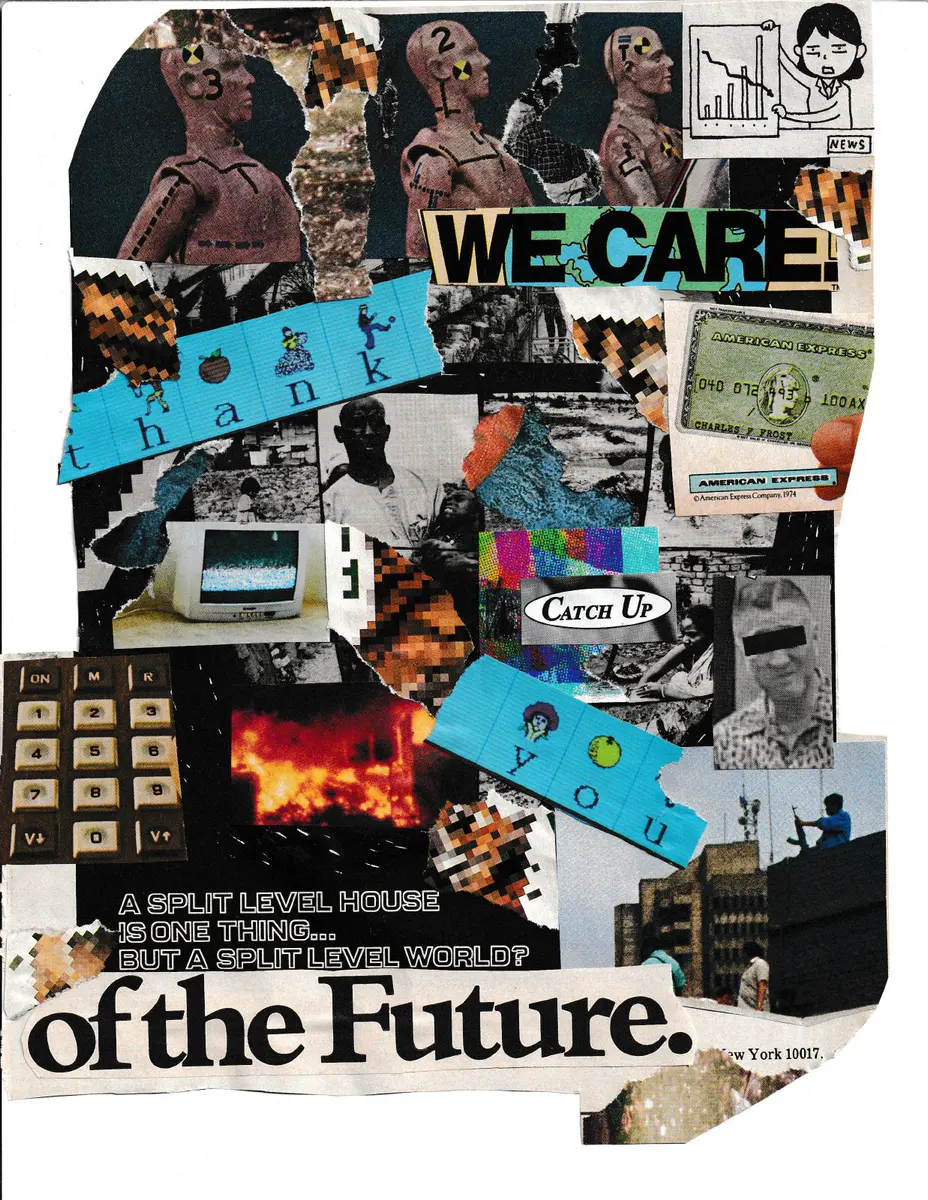
Preparing my presentation helped me see what this topic really meant for me and from my perspective. I started my prototyping by collaging and seeing what associations I make and how I visualize the digital divide. My prototypes explored what the divide is and why it exists, but also what the underlying forces are that drive it. My presentation allowed me to rediscover the speculative perspective I had been interested in and how I could see this topic having more optimistic explorations.
Week 3
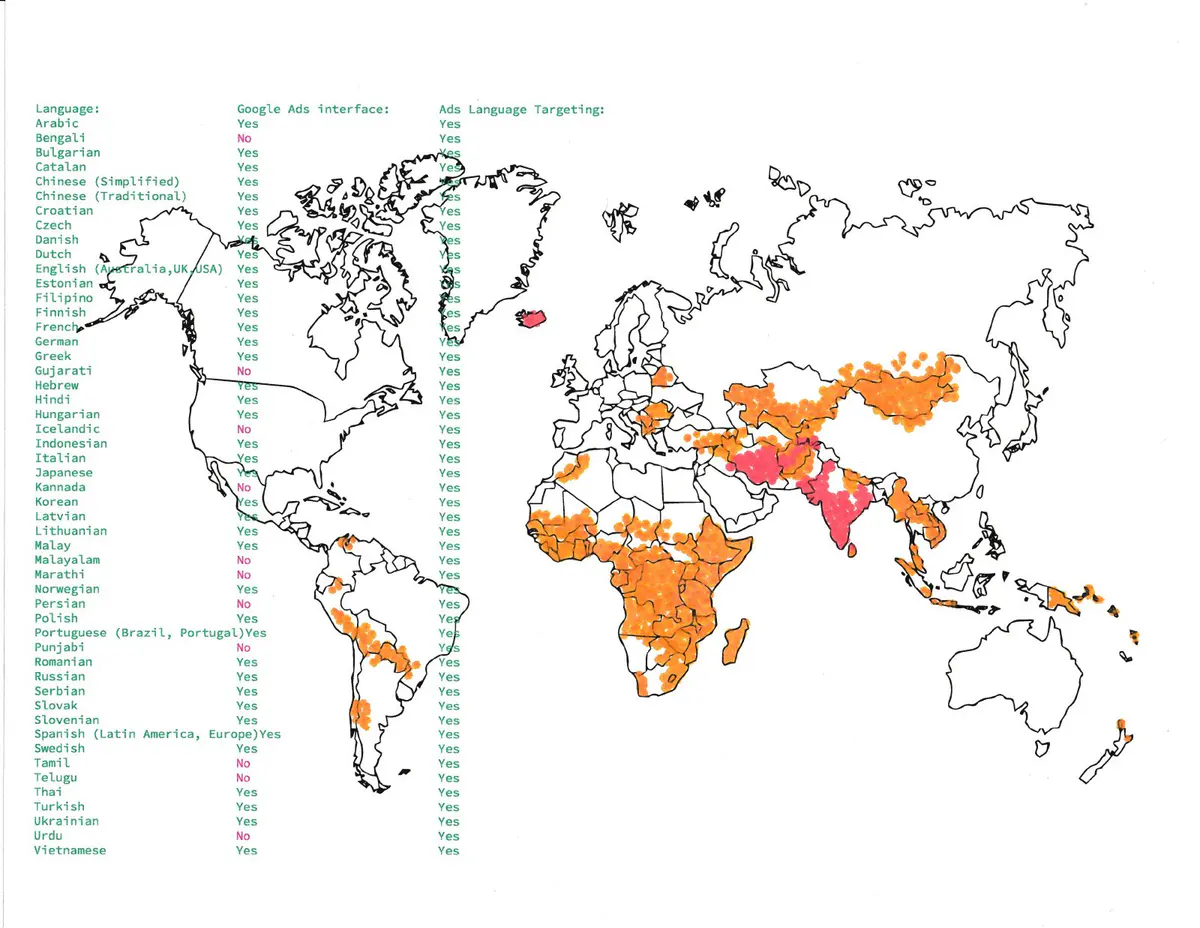
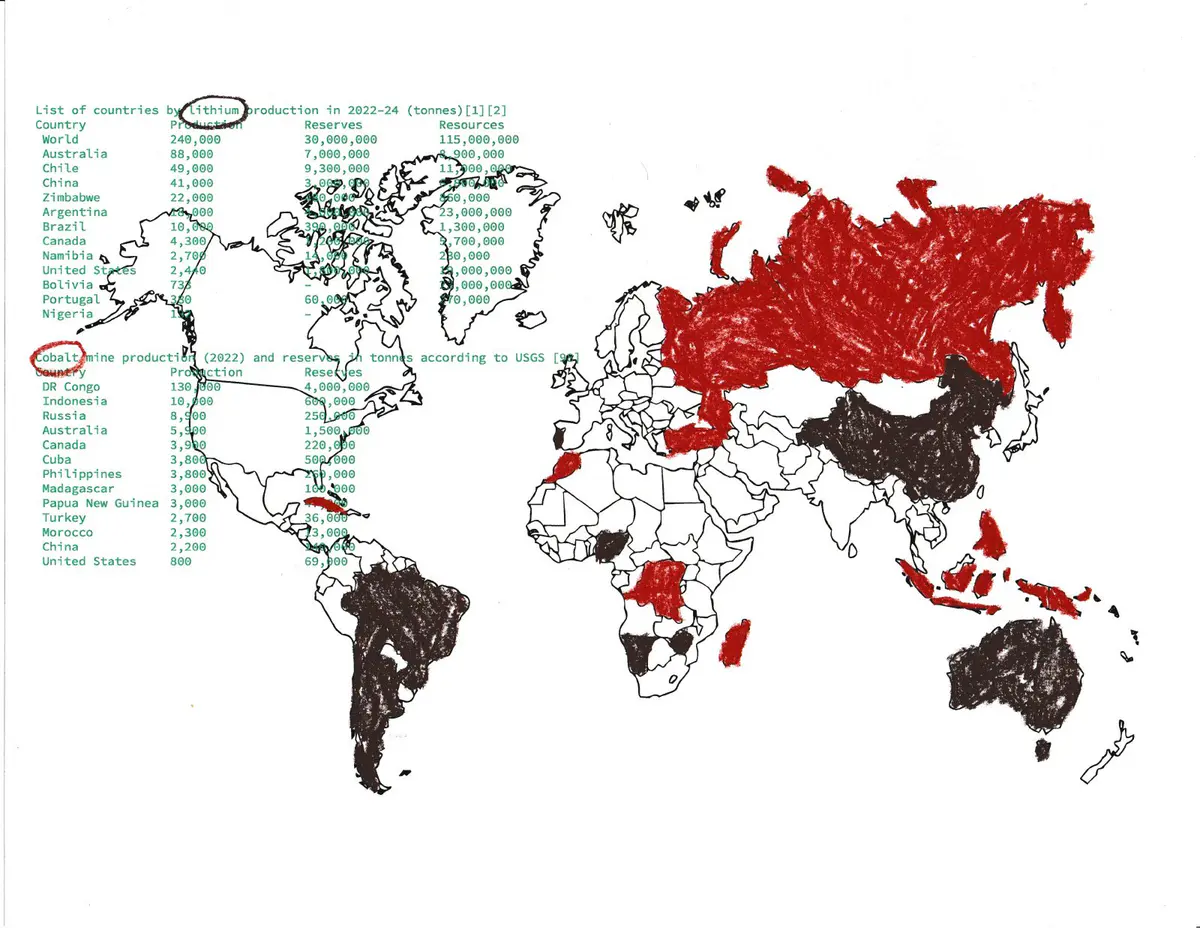
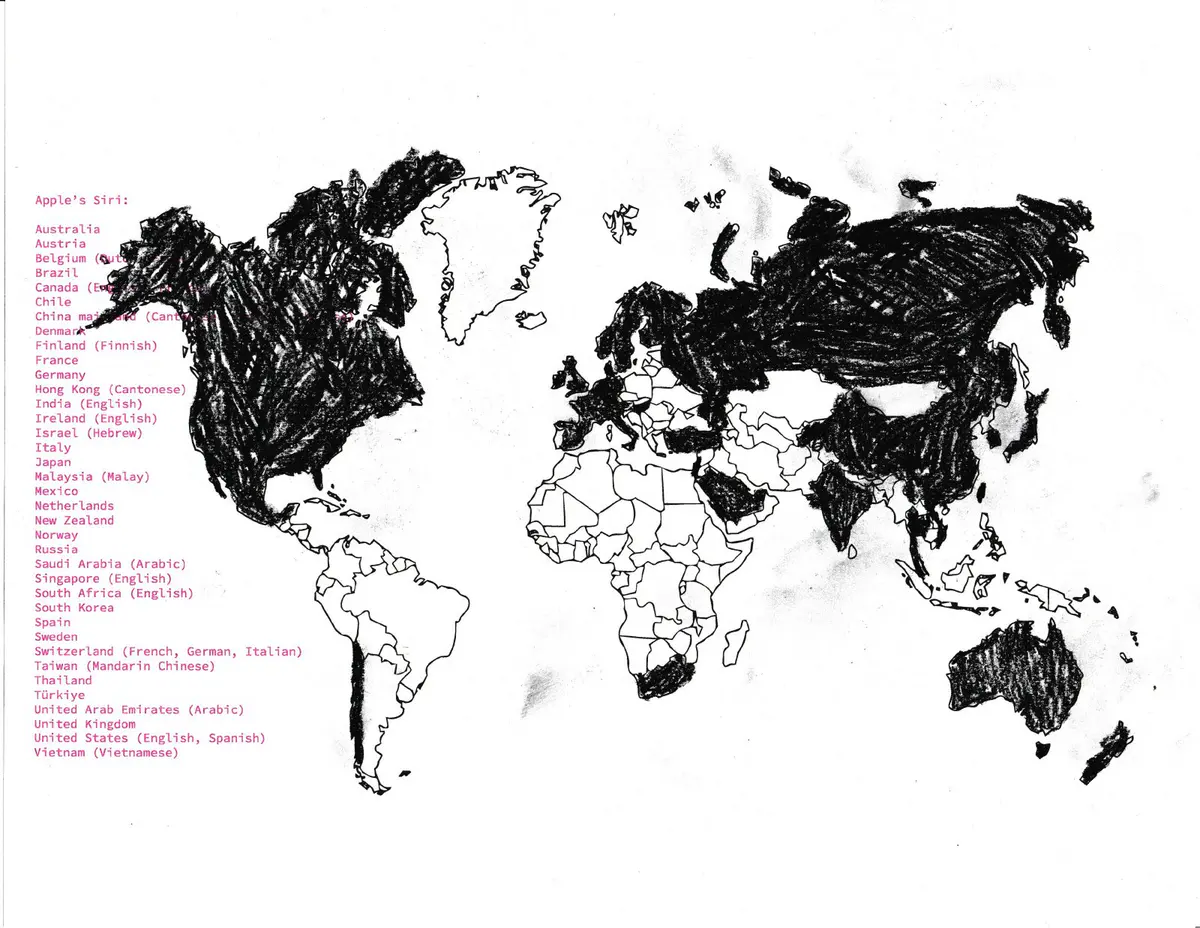
My prototyping spanned from very specific aspects of digital inequality (like language representation in advertising platforms) to speculating about the abstract forces that drive the digital divide (like smudging my hand on the page, and then questioning if damage is promised when achieving ‘progress’).
Week 2
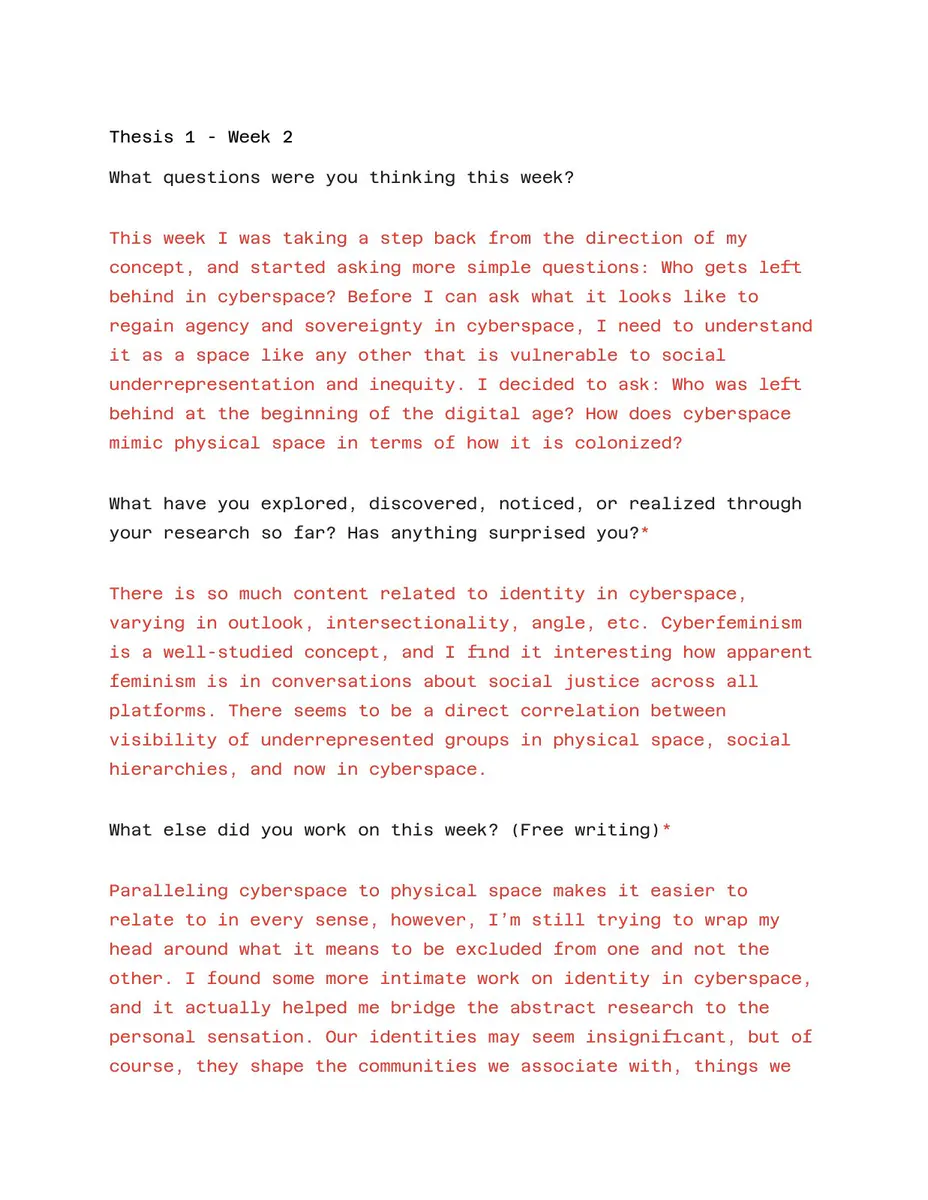
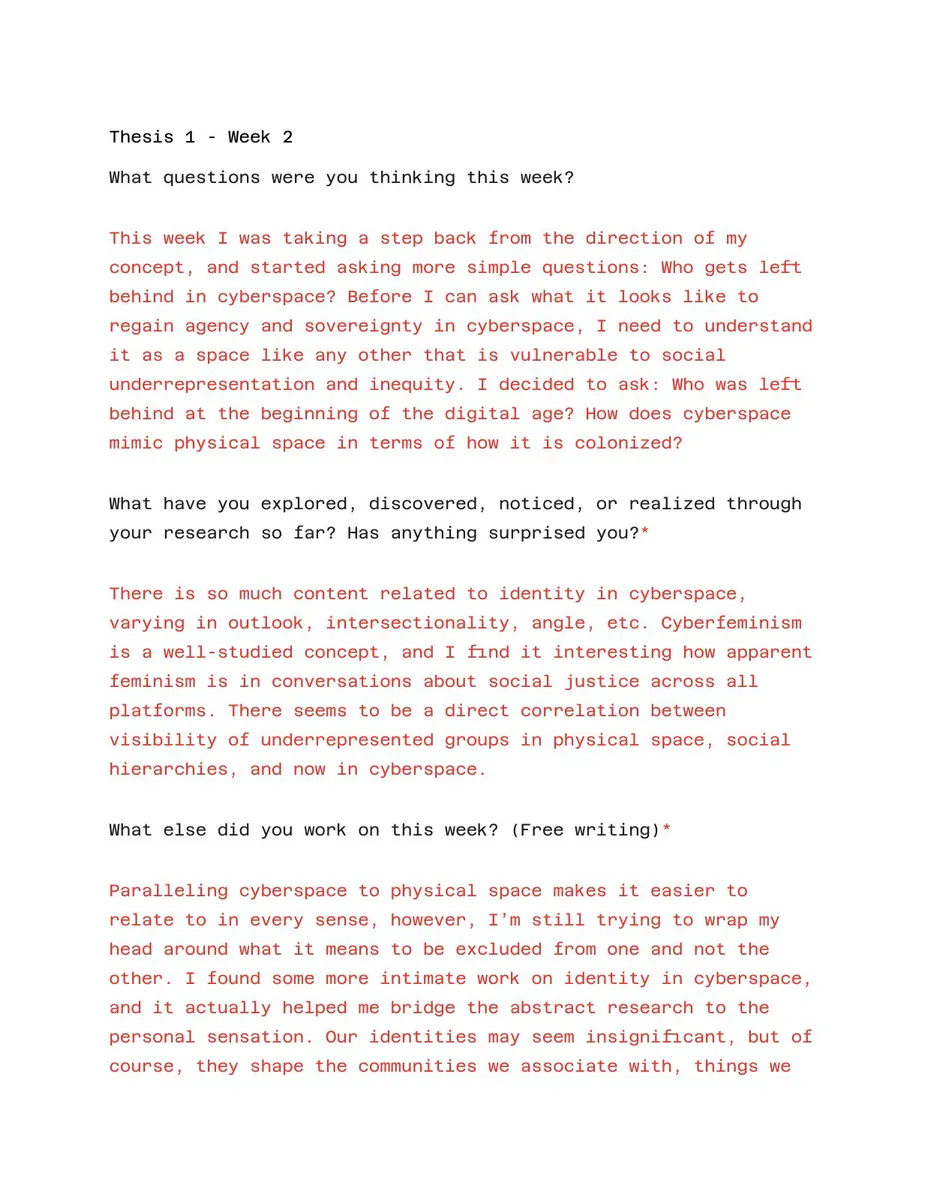
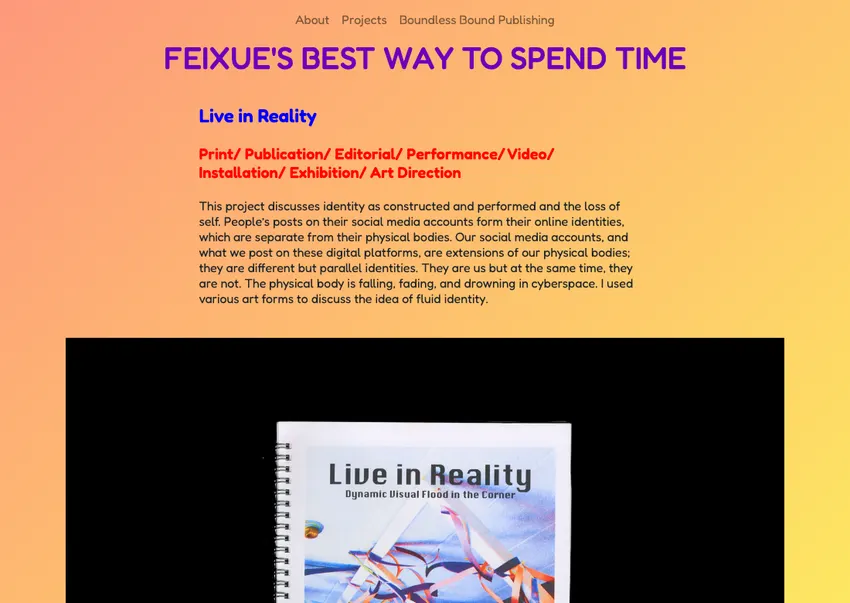
Paralleling cyberspace to physical space makes it easier to relate to in every sense, however, I’m still trying to wrap my head around what it means to be excluded from one and not the other. I found some more intimate work on identity in cyberspace, and it actually helped me bridge the abstract research to the personal sensation. Our identities may seem insignificant, but of course, they shape the communities we associate with, things we care about, places we reside in, etc. I hadn’t considered that our physical identities are quite fixed, whereas our digital identities are malleable and can be disconnected with our physical ones. I’m trying to investigate how that impacts the roles we adopt in cyberspace.
Week 1
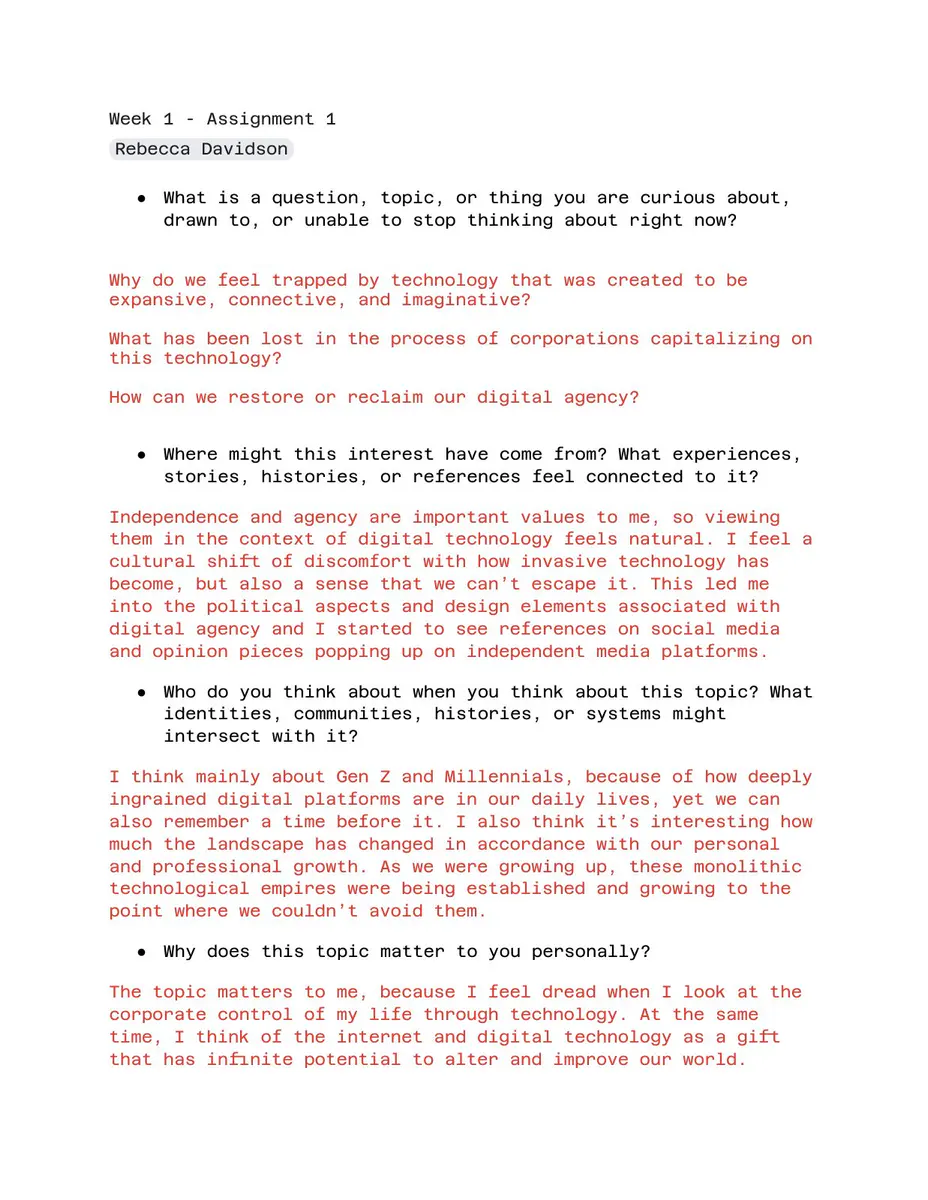
When I met with Munus last week, he used the word “agency”, and it flipped a switch in my brain! This week I distilled that my discomfort with technology had been displaced into the concept of robots, which are distant and somewhat apolitical. I realized I don’t hate robots, I hate corporate greed. I hate capitalism. And I hate being controlled! I’m a very political person, so this week I feel a bit of relief that I can include this in my research. I’m excited to keep exploring this topic, so this week I researched where best to join the discussion.