Week 5
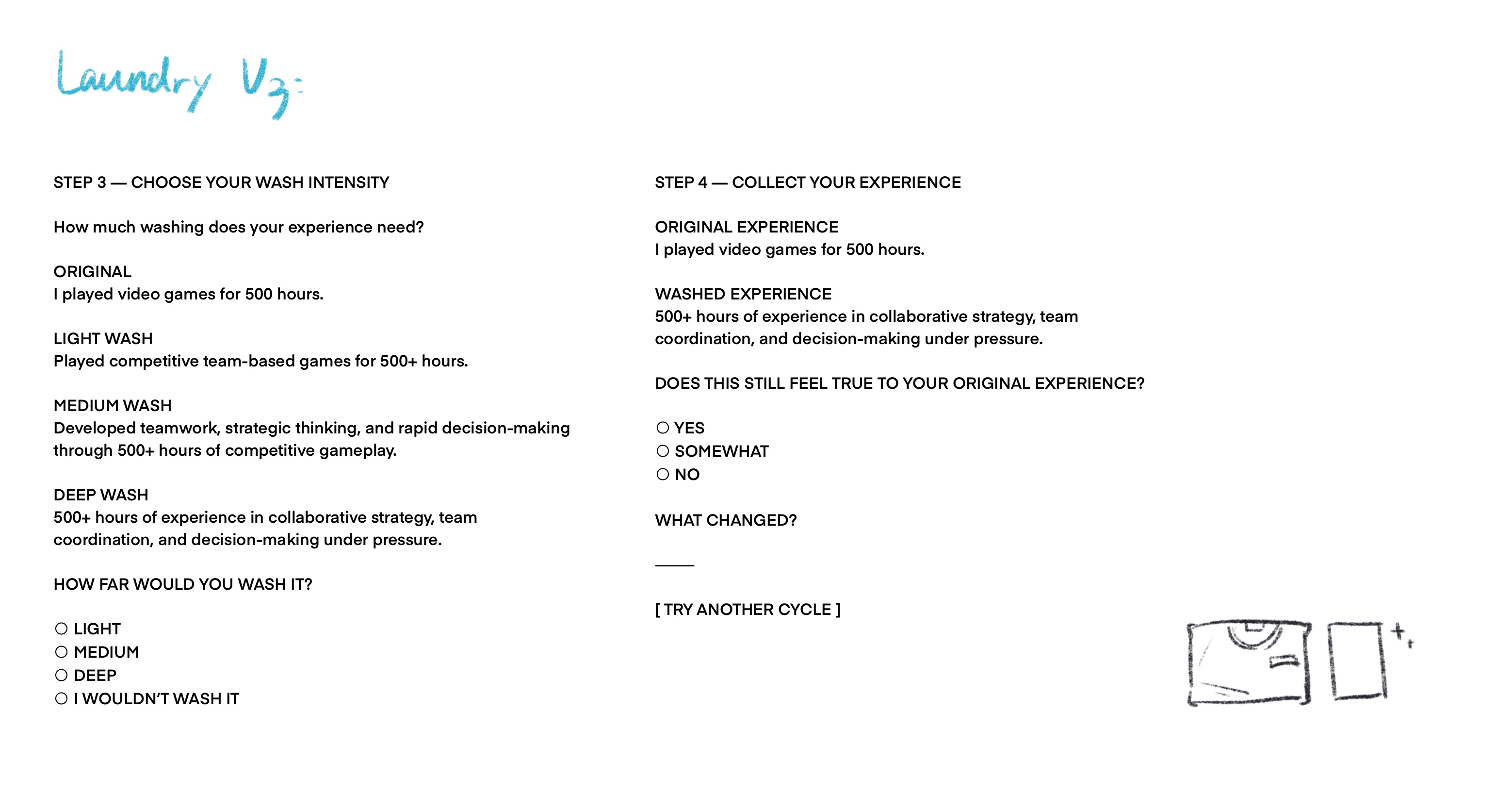
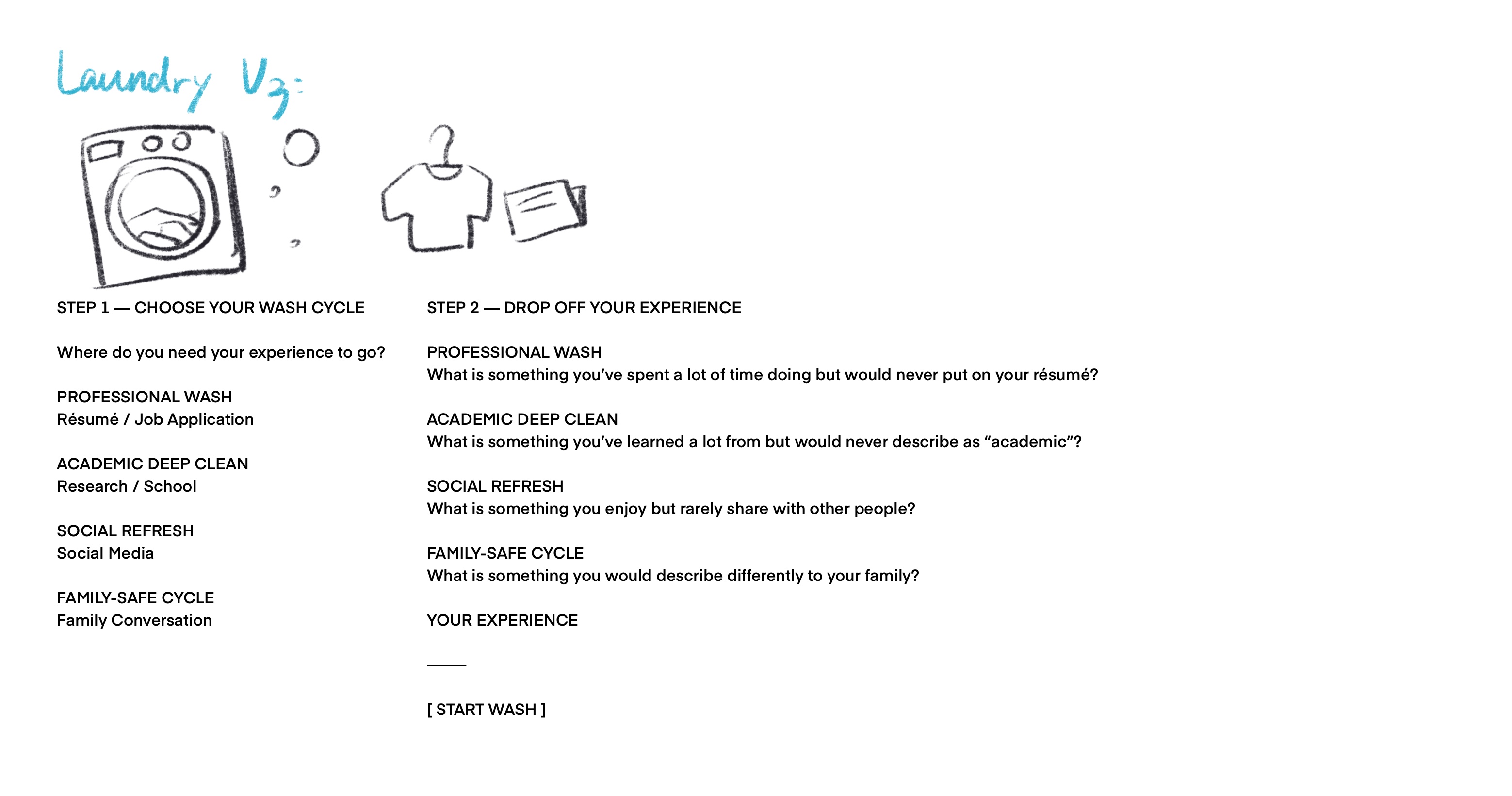
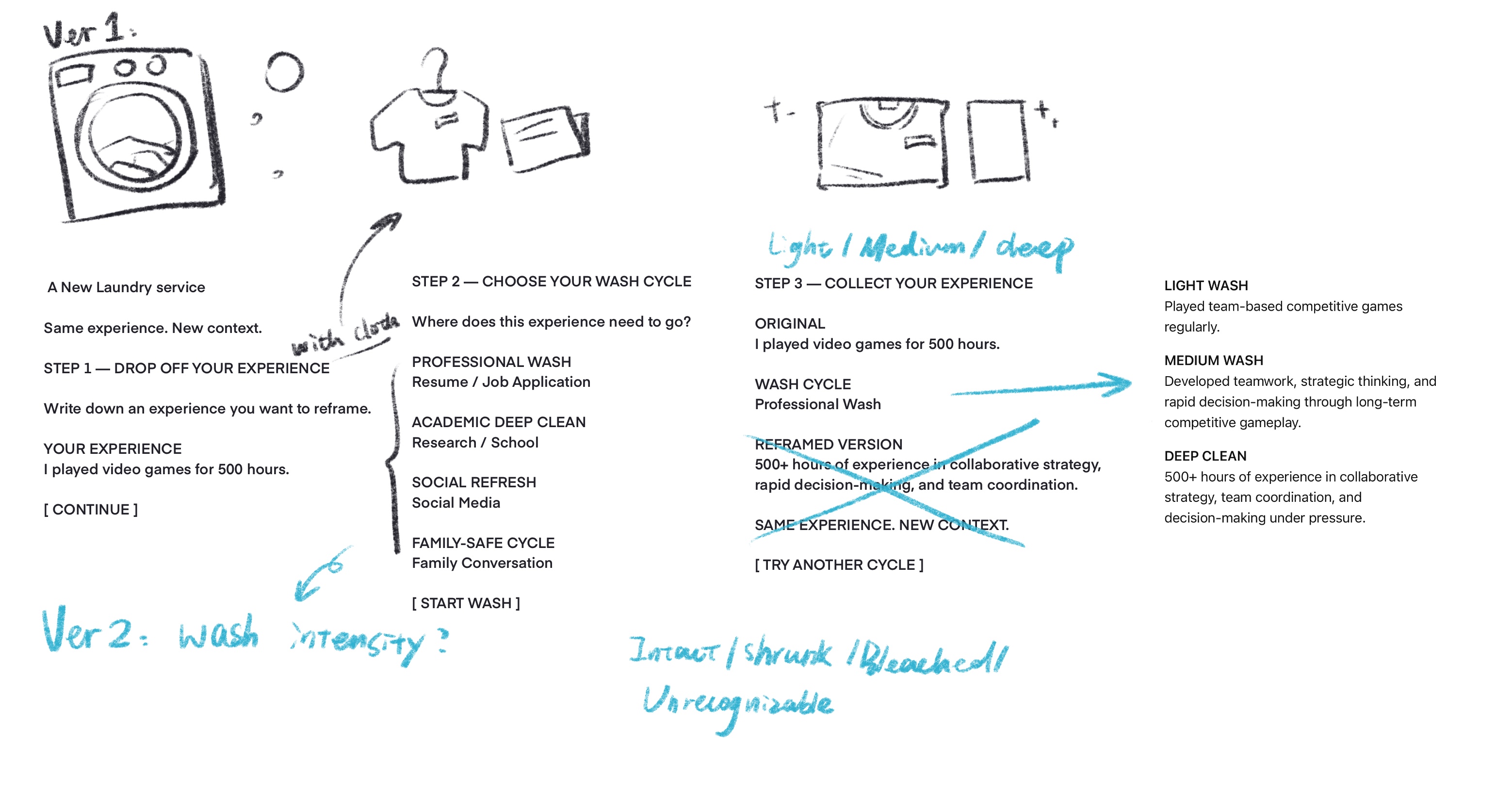
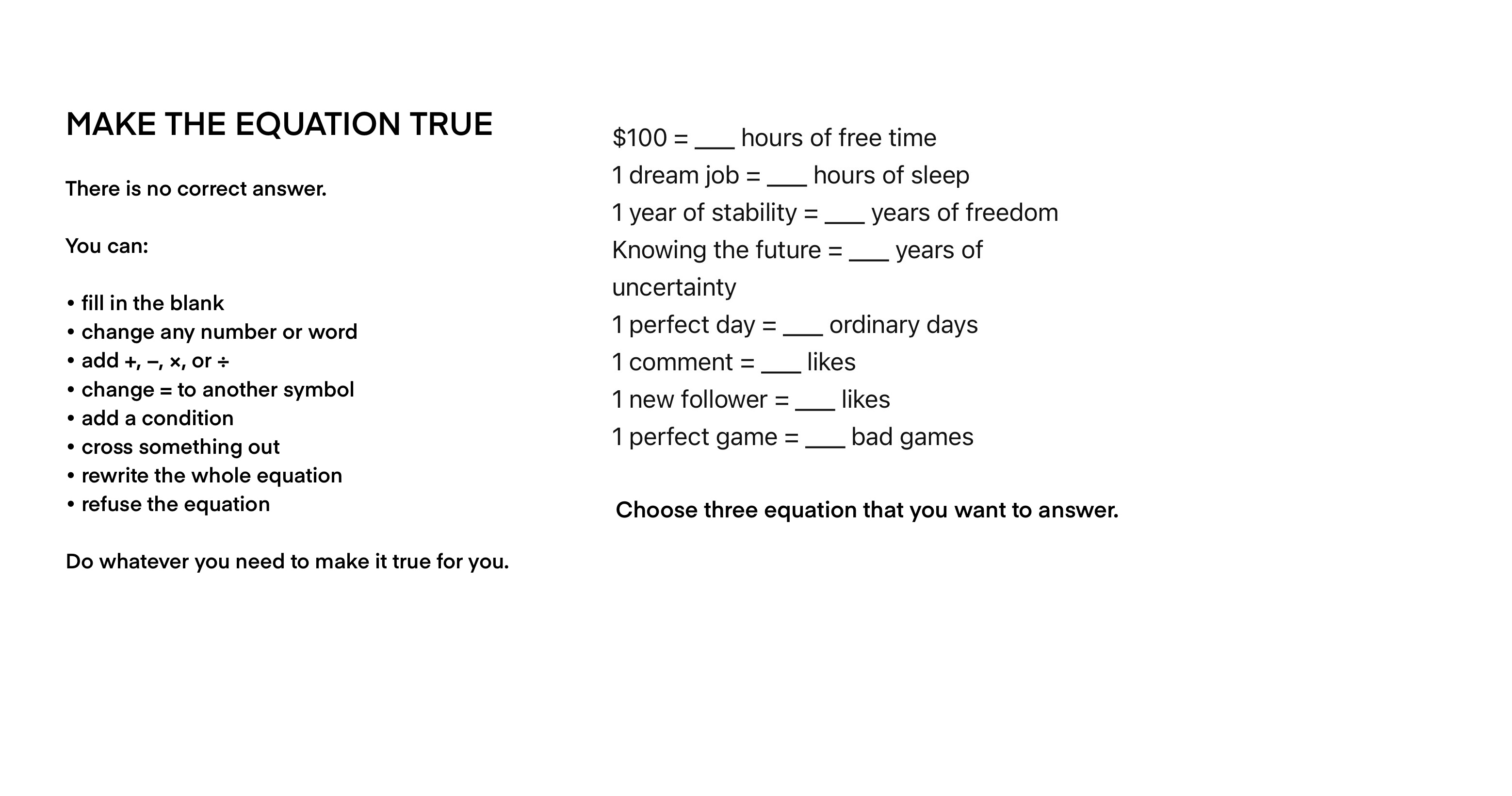
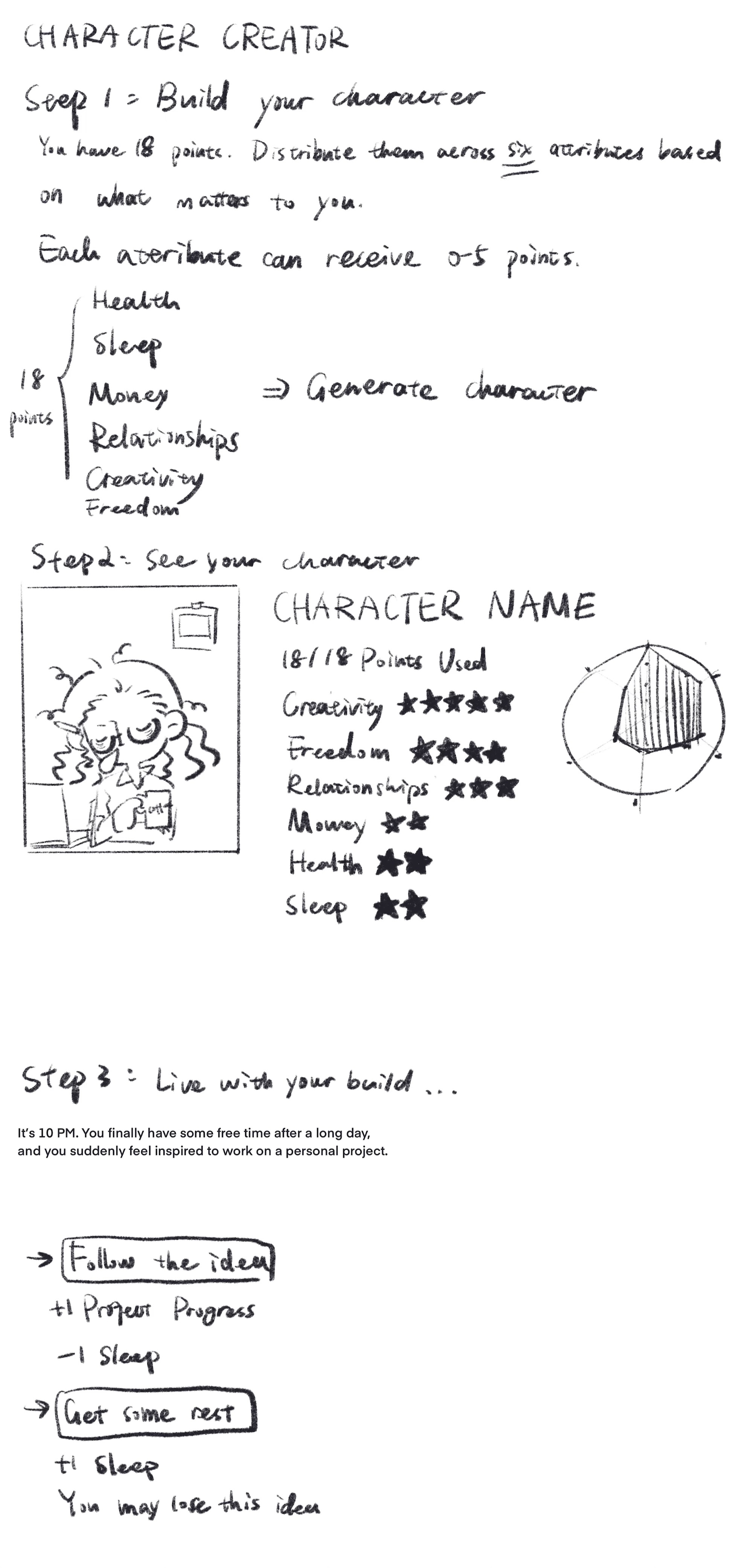
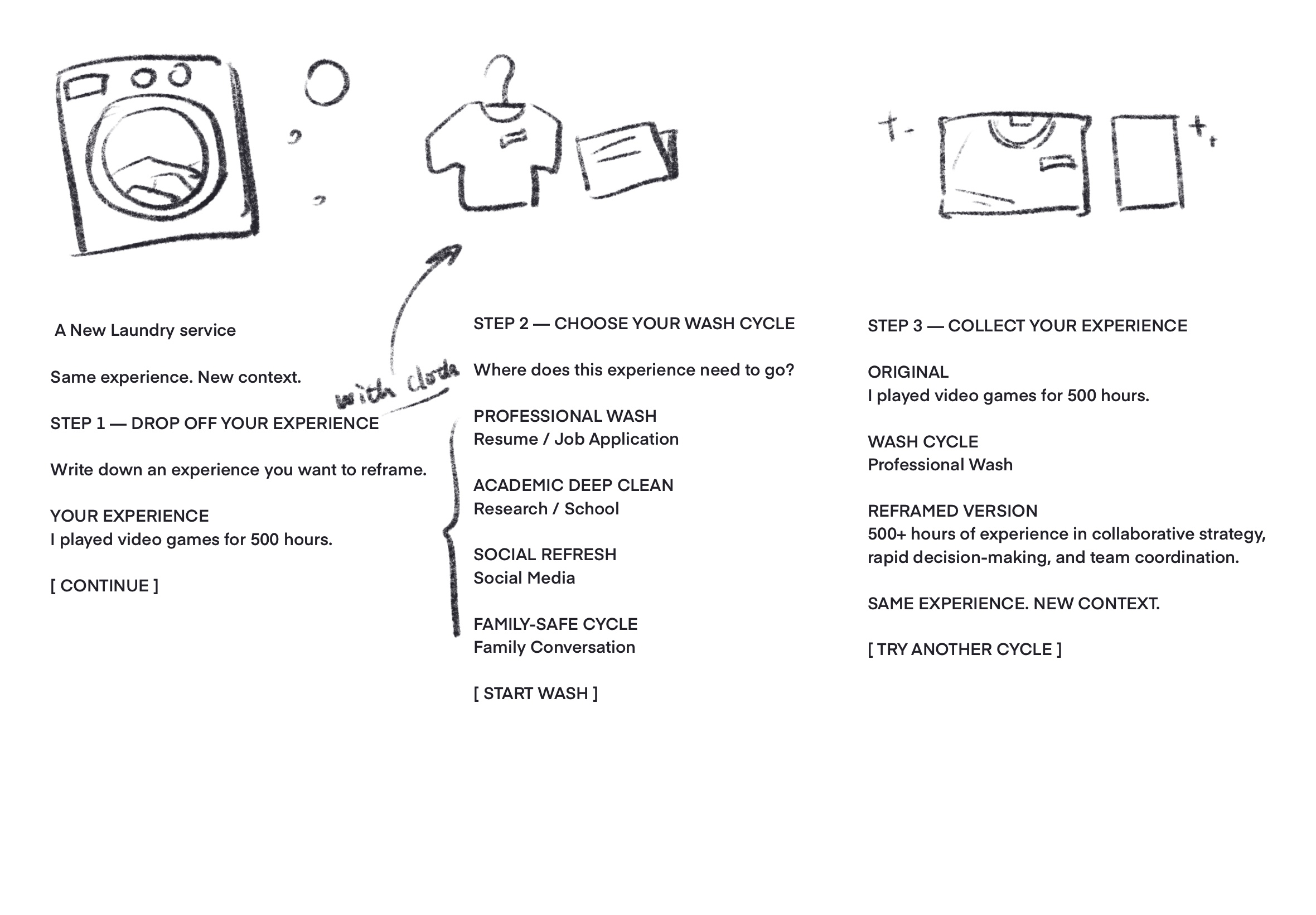
This week I continued developing ideas from the Life Auction and started generating different provocations from the questions that came out of the critique. I also began translating some of them into small prototype ideas, including a character creator based on limited points, a fictional market where personal values can be exchanged, and an experiment about how the same experience can be presented differently in different contexts.
I am still figuring out how to move from these ideas into visual forms. This is probably the most difficult part for me right now. Instead of deciding which direction is the final one, I want to use these small prototypes to see which ideas are worth continuing.
Week 4
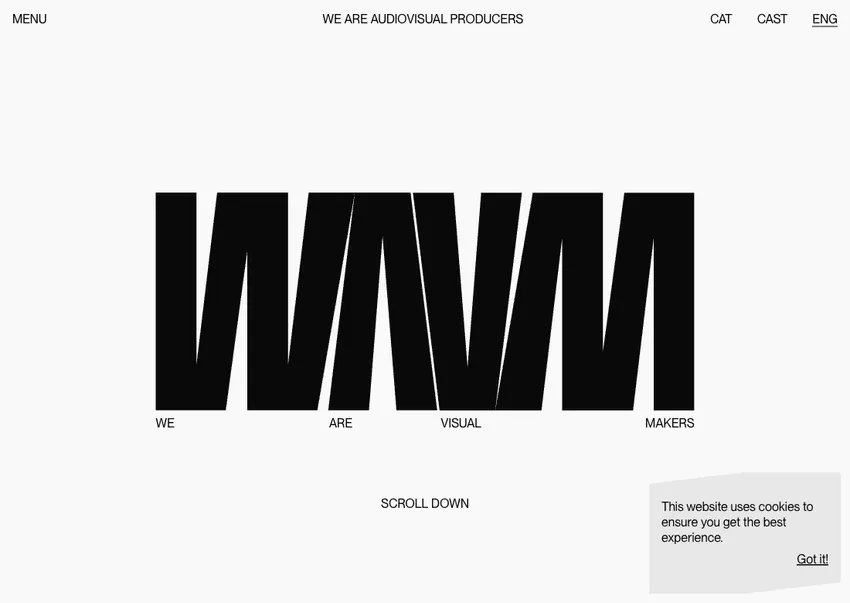
This week, I kept thinking about what kind of prototypes I actually want to make. I realized that I am very attracted to small playful things, like online tests, mini games, and interactive websites. I am not really interested in making a large game. I am more interested in borrowing small systems or mechanics and putting them into everyday life.
My previous Save Point prototype was one experiment with this. I originally thought people might use it to revisit a decision or experience, but the responses were very different. Some people wanted to take risks, some wanted to preserve a happy moment, and some did not want to go back at all. This made me realize that I do not need to prove that a game mechanic can make life better. I can use it as a way to create a situation and see what people do with it.
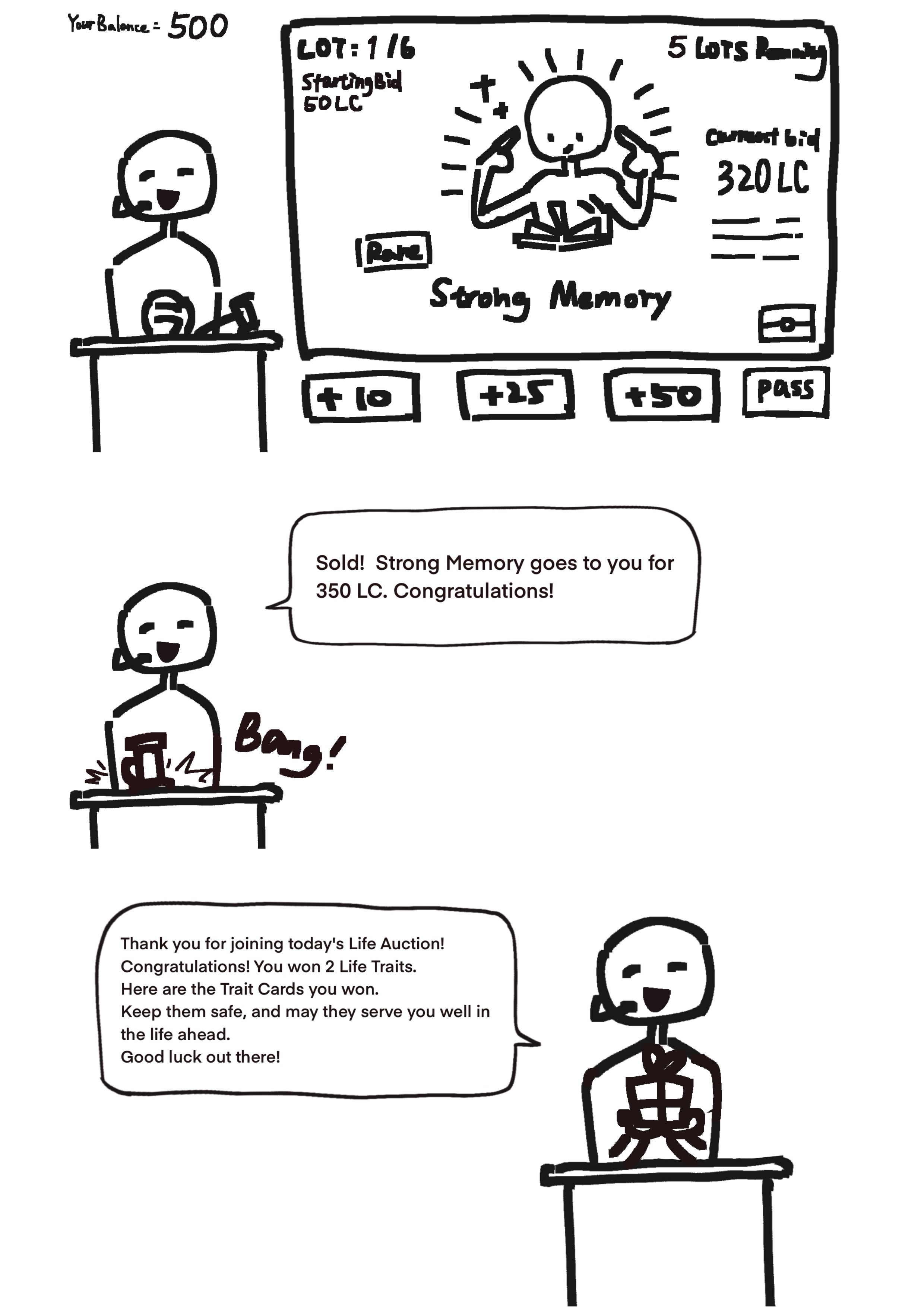
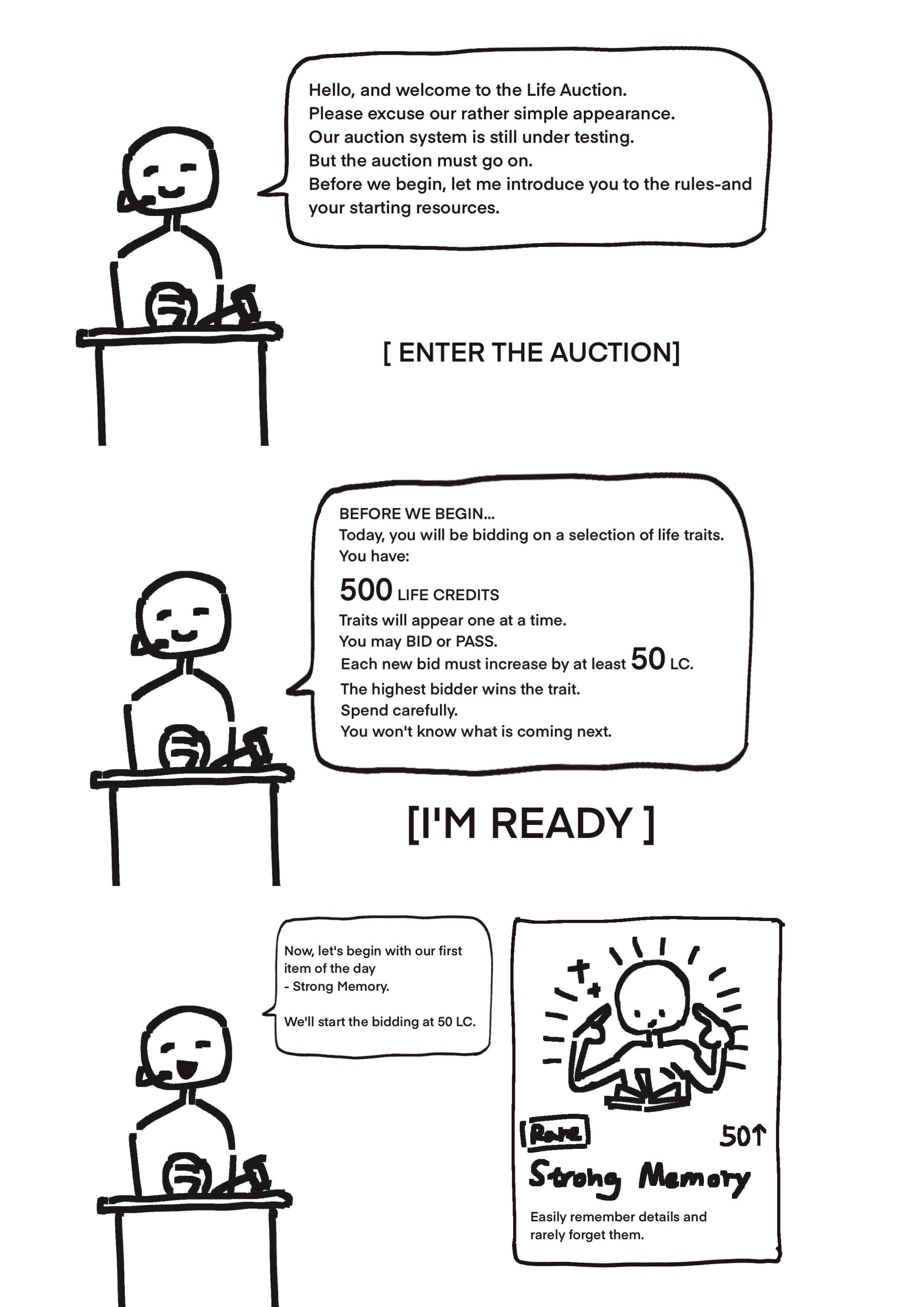
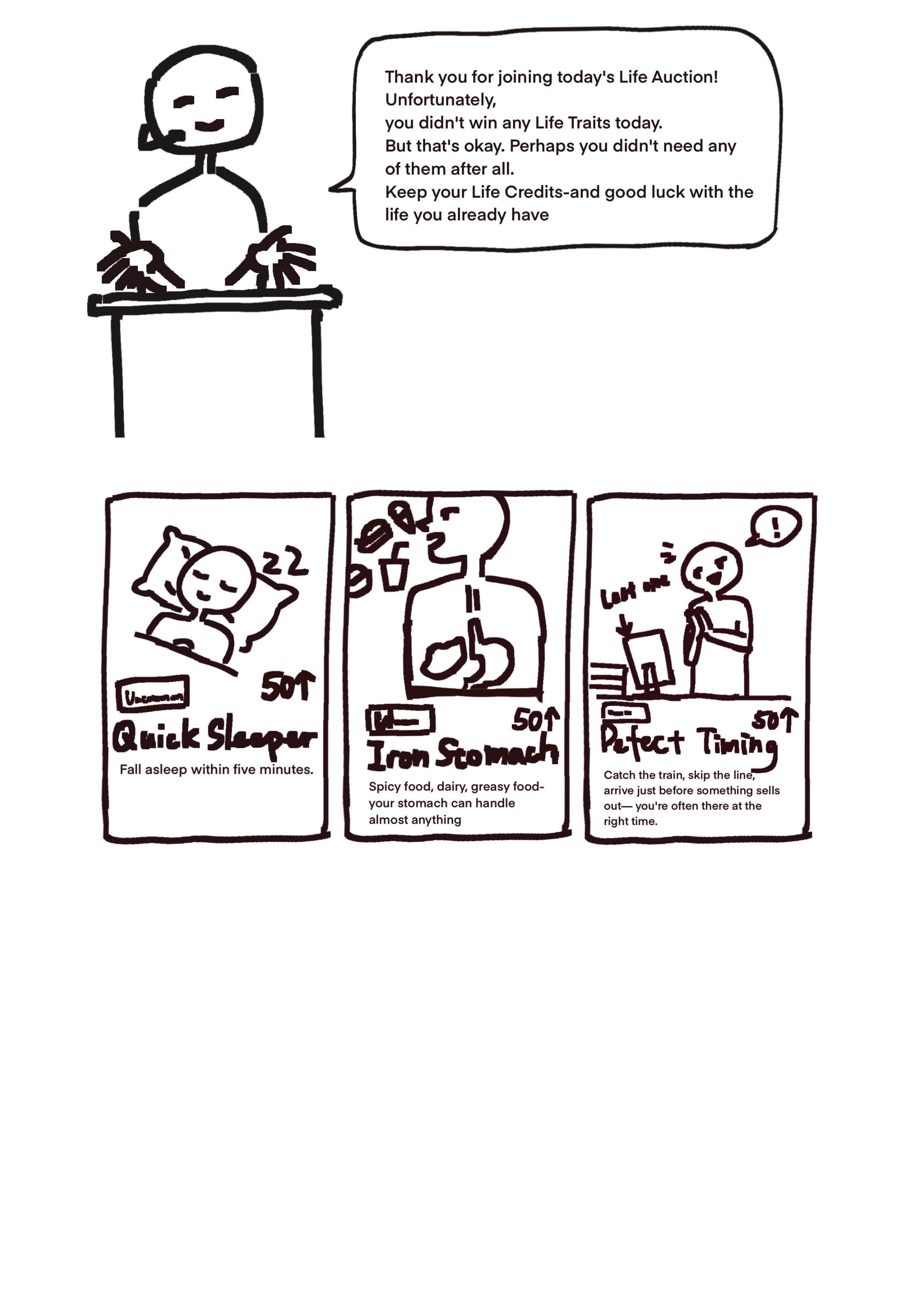
This led me to a new prototype, Life Auction. I asked friends what small abilities they would want in everyday life, and many answers came from very specific personal experiences: better sleep, less anxiety during presentations, getting concert tickets, good memory, luck, or being liked by animals.
In the auction, these personal desires become traits with rarity levels and prices in Life Credits. I am interested in what happens when things that normally cannot be bought are translated into the same system. What will people spend on? What will they ignore? And will competition, rarity, or limited credits change their choices?
I still do not know exactly what this prototype will reveal. For now, I want to make the system playable and see what happens.
Week 2
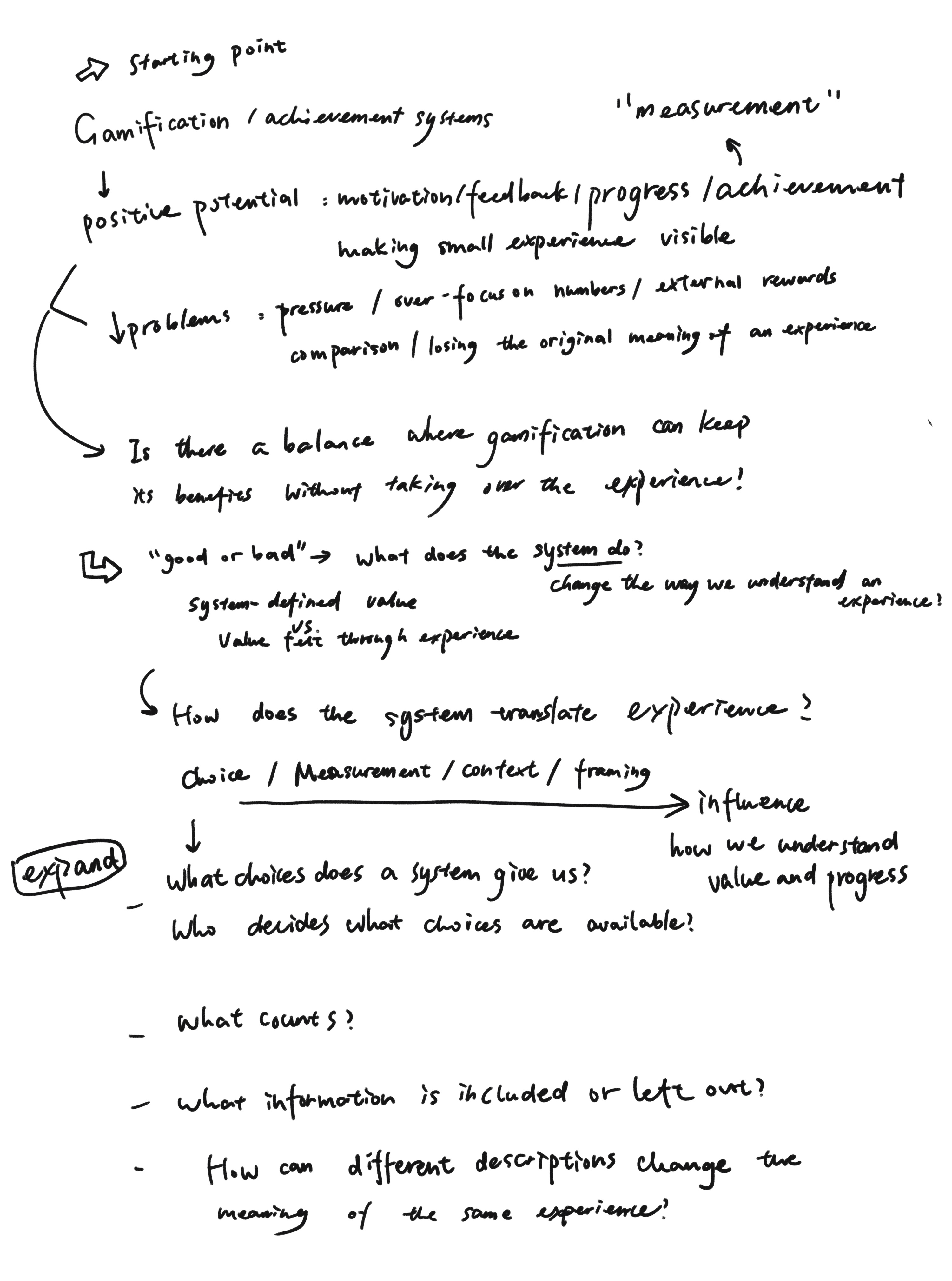
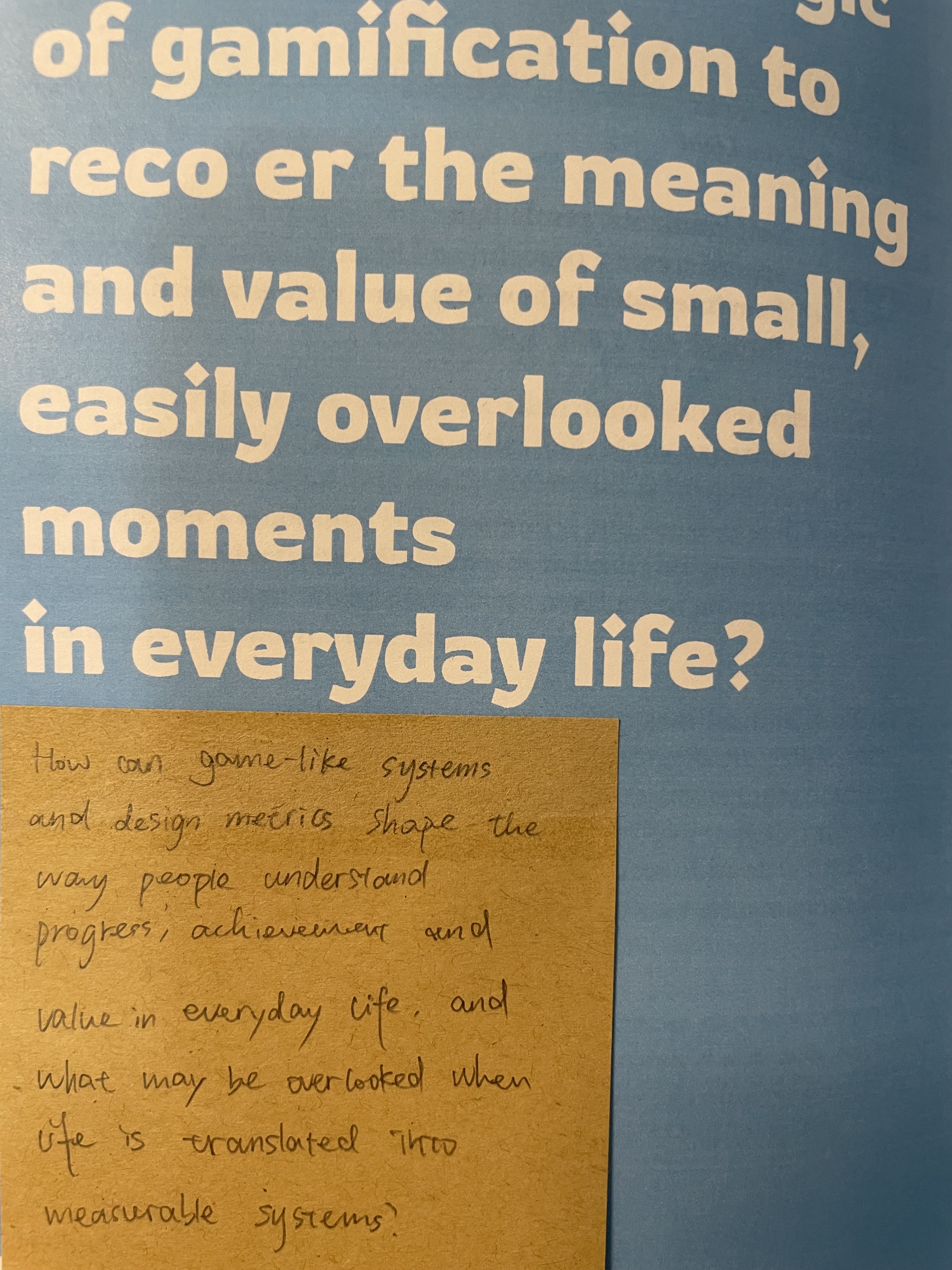
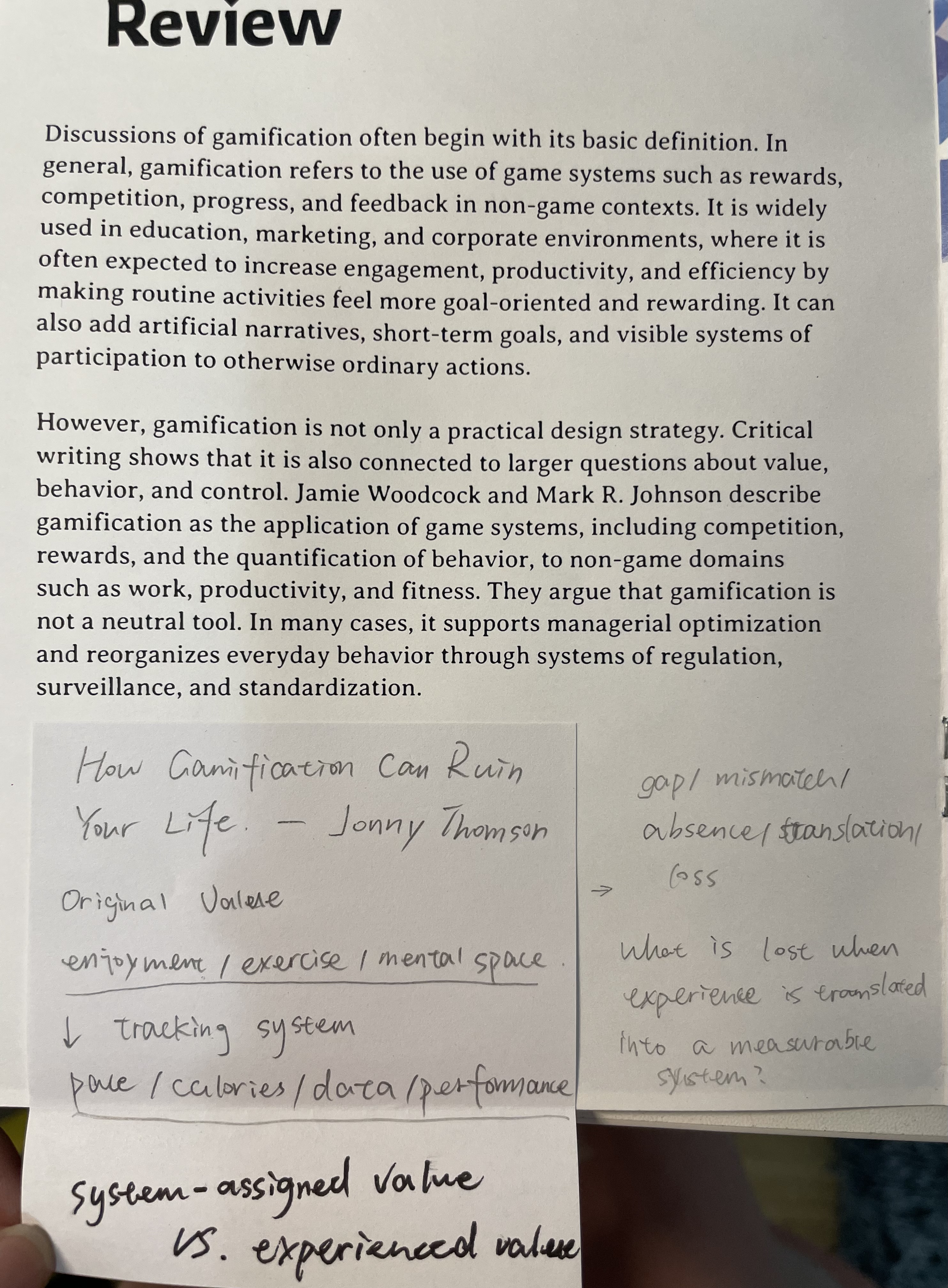
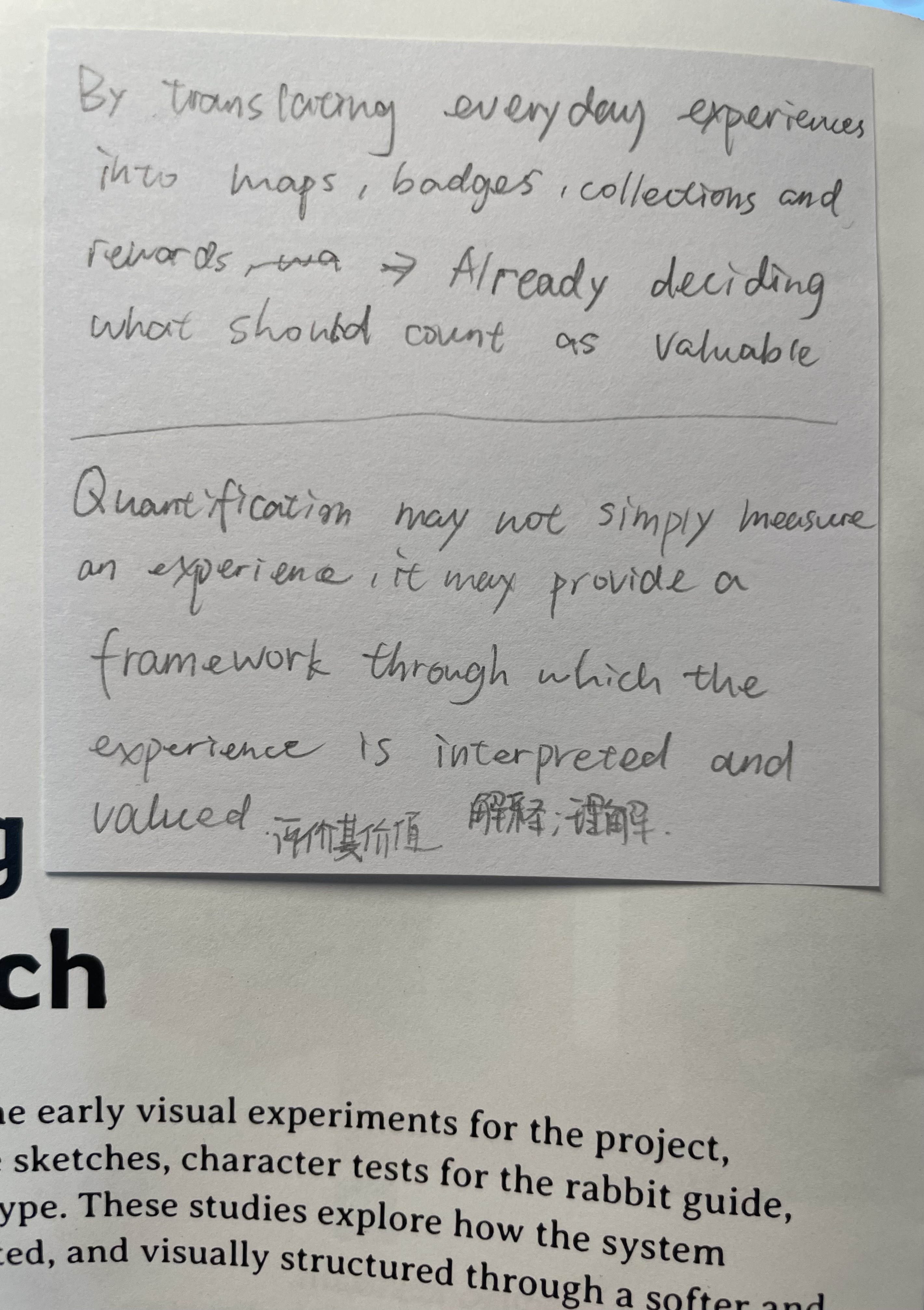
Reading Donna Haraway’s Situated Knowledges gave me another way to think about my topic. I was especially interested in the “god trick” and the idea that there is no completely neutral position for seeing or judging something. I also found the discussion about avoiding simple binary thinking useful. Instead of asking whether measurement or gamification is simply good or bad, I became more interested in the tension between the two sides: When is measurement useful, and when does it begin to reshape or reduce an experience?
These ideas also connect to my experiments with choice and context. I am considering how revealing more information after someone makes a choice might change the way they understand or judge that choice.
Week 1
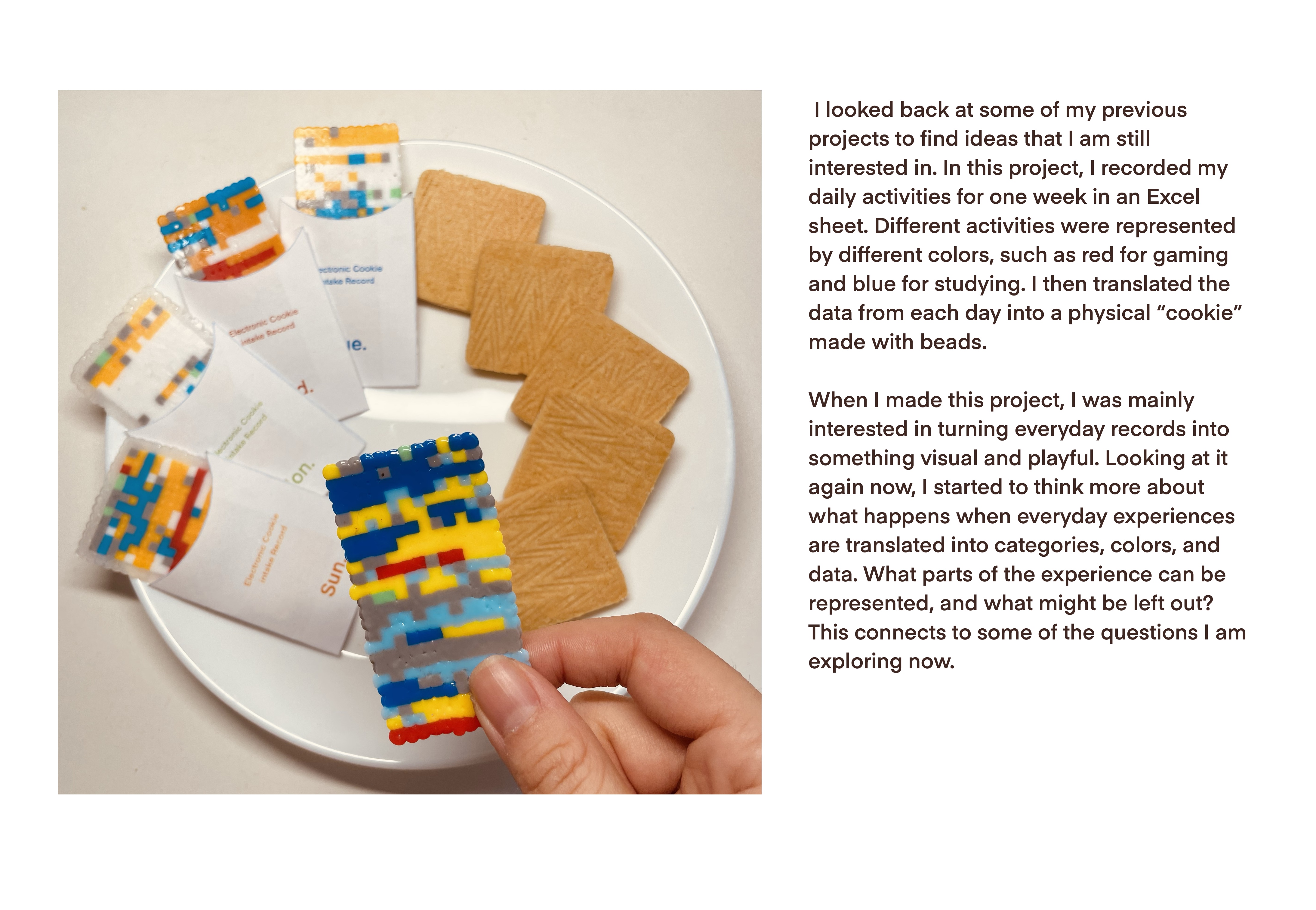
In Seminar, I continued developing my thesis research through discussion and writing. My professor introduced Minard’s visualization of Napoleon’s Russian campaign. It made me think about how a large human loss can be translated into numbers and visual information, while many individual experiences and stories behind the data may become invisible. This gave me another direction to think about quantification and information visualization.
I also reflected on my research process. I realized that I often stay within one area and keep looking for similar examples, instead of asking questions that could lead me somewhere new. I am trying to explore a wider range of ideas and references first, and then gradually narrow them down into questions that I want to understand more deeply.
Weel 6: Provotype
Most of my topics seem to start from things that I am personally interested in. But as I continue researching them, I sometimes realize that I may not be as interested in the topic as I first thought. I often lose the curiosity or motivation to keep asking more questions.
When I look at some of my classmates’ work, such as the projects about hesitation and rituals, the relationship between their topic and their prototypes feels very clear to me. I can understand why they made those experiments and what they are trying to explore through them.
When I look back at my own prototypes, I often have the opposite feeling. I can make an experiment that seems interesting for a moment, but then I start asking myself: Why did I make this? How does it connect to my topic? What am I trying to communicate or understand through it? What did I actually discover? I often don’t know how to answer these questions, and that makes it difficult for me to know how to continue.
 Open reference
 Open reference
 Open reference