Week 8
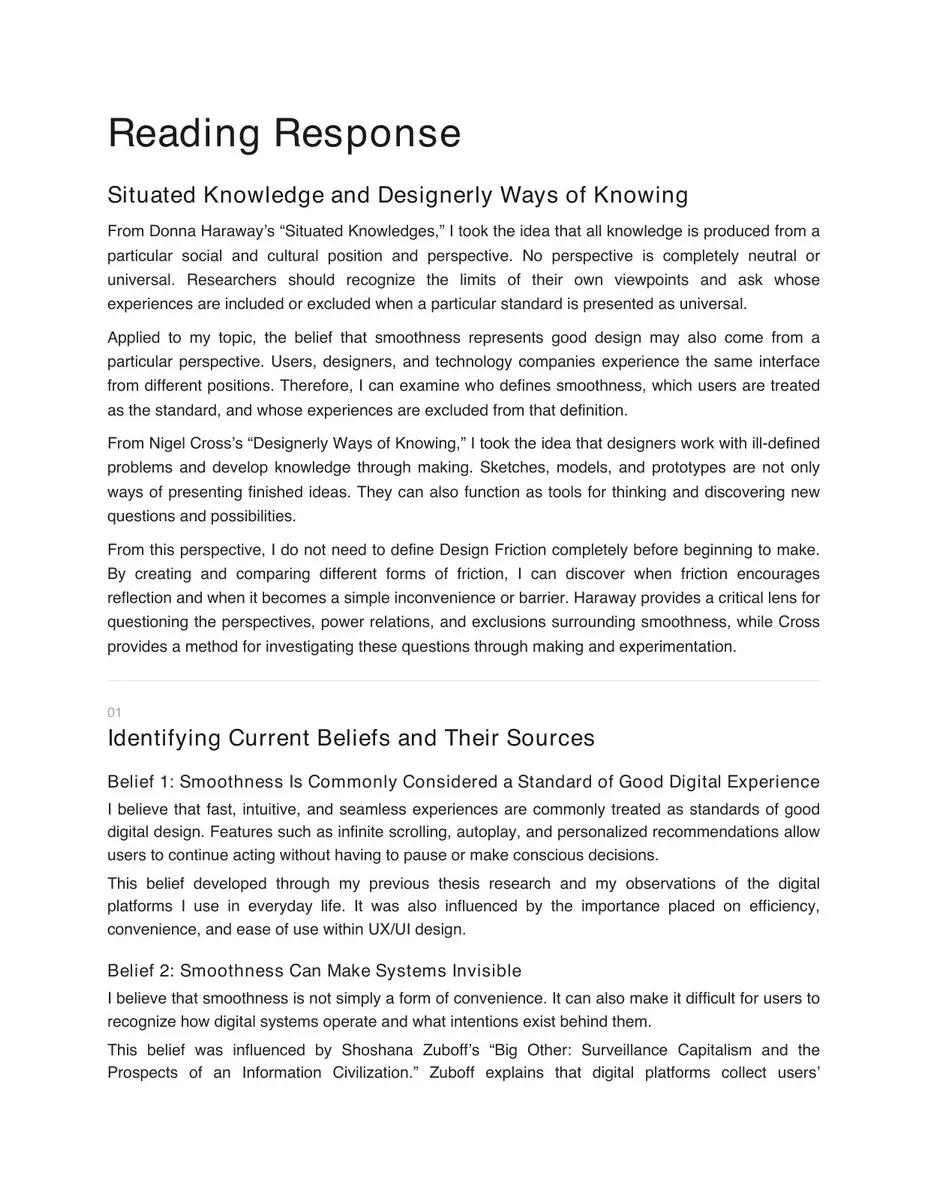
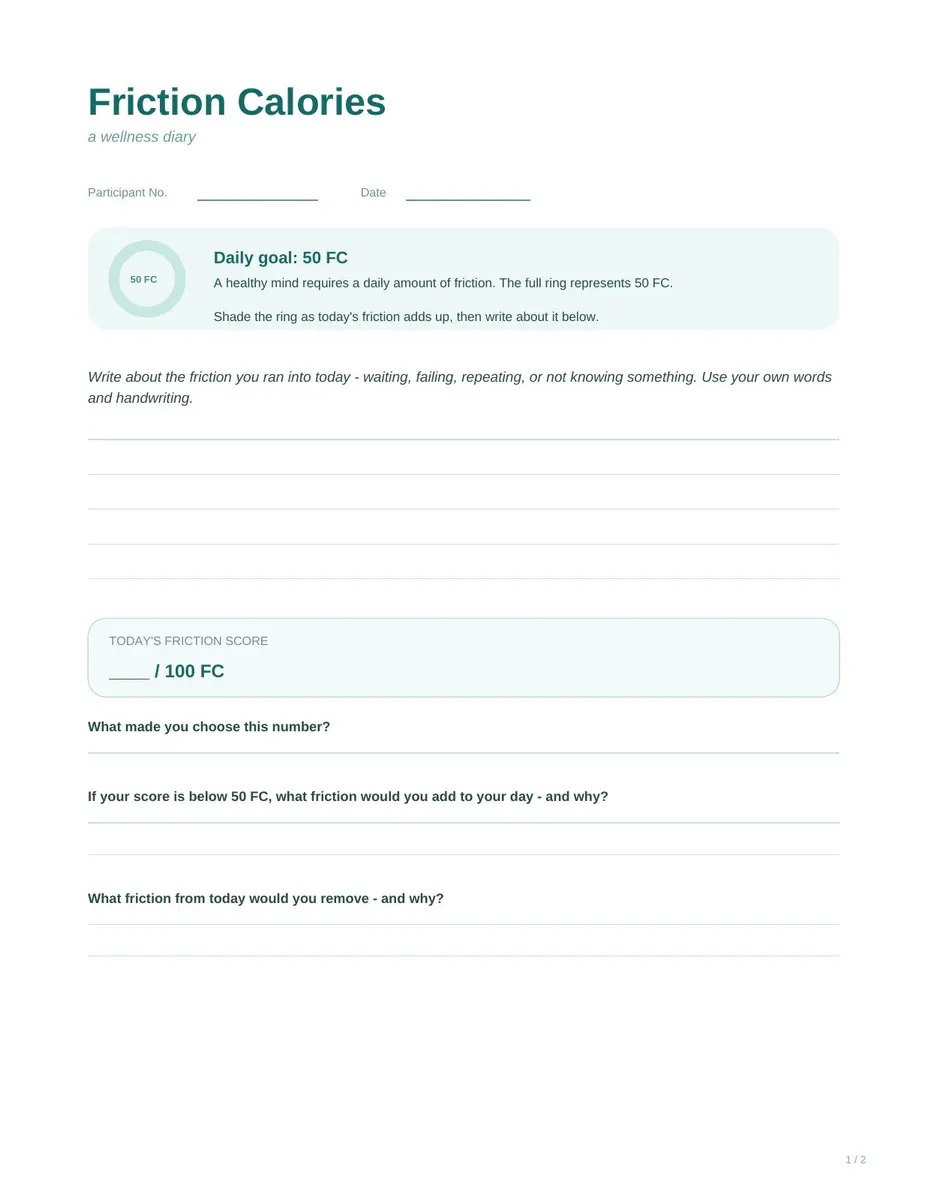
I revisited my earlier experiments—Friction Calories, Brain Gym, Friction Paywall, and the cultural probe Who decided that? Early experiments explored friction through time and effort, but they led me to ask what friction might make visible.
Reflecting on my own LLM-assisted ideation, I noticed that delegation may happen before I accept an answer: the LLM can frame what I consider and which options seem relevant. A polished response can also make it easy to move on without examining the reasoning behind it. This shifted my focus from friction in general to moments when judgment may be delegated during ideation. I’m developing a provisional map of these moments and exploring purposeful friction as a design possibility, not as an already-proven solution.
Week 7
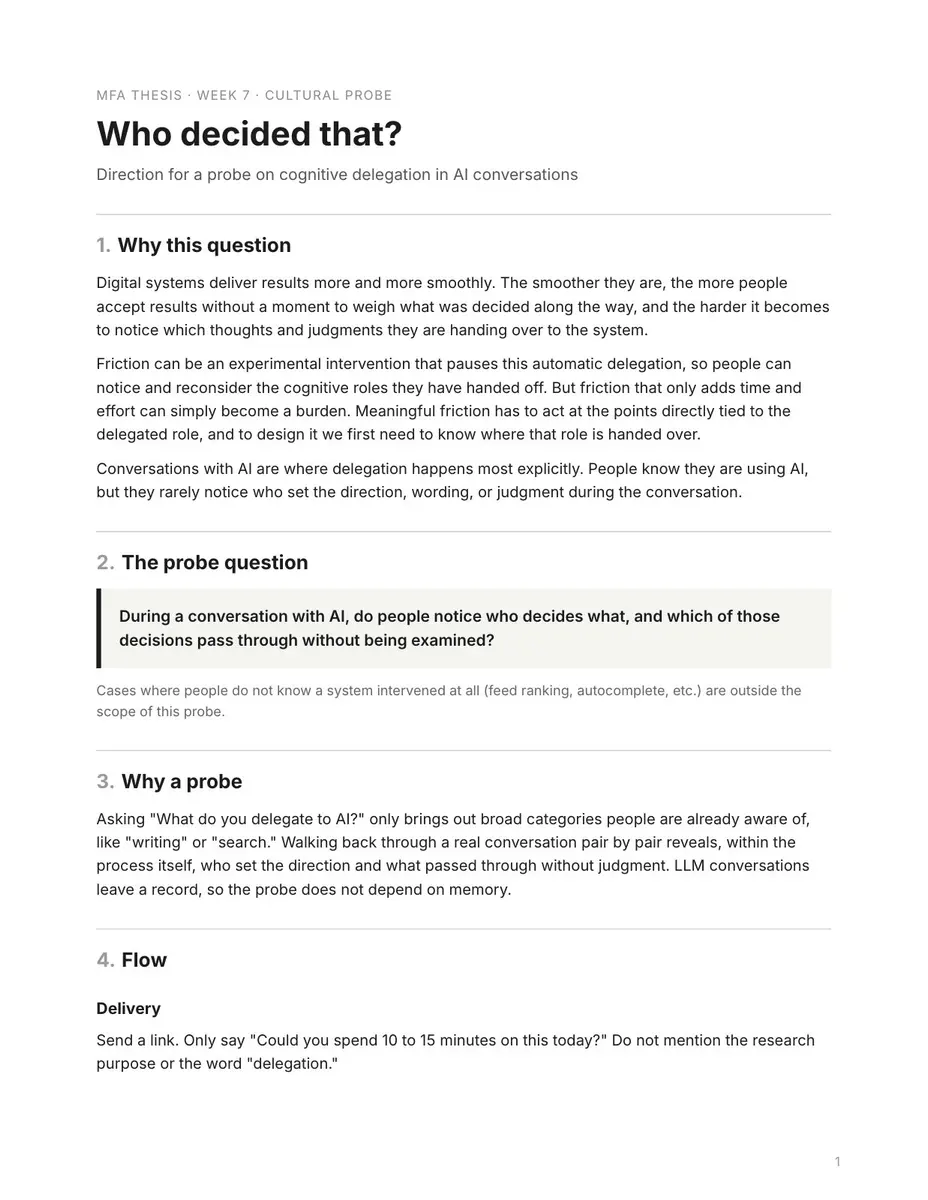
I designed a probe called “Who decided that?” Participants open their most recent AI chat, first describe from memory what the AI did, then walk through the first five message pairs and mark who suggested each direction, whether they reviewed the reply, and what they did with it. Three people returned it, each from a very different domain: coding a web app, checking tax deadlines, and exploring art history.
A few things stood out. When participants picked from options the AI had offered, they recorded the direction as their own decision, so the AI’s closing suggestions quietly set the agenda. Reviewing and accepting moved independently: one participant accepted every reply as is whether she reviewed it or not, because she had no way to verify tax information herself. Rereading the conversation surfaced contributions the AI had made that were missing from participants’ first memory of it.
The biggest surprise came from one participant who wrote that the AI “postponed my choices.” I expected delegation to look like handing a decision to the AI, but here it looked like a decision that never happened, because the options kept widening inside a conversation that felt productive. She described it as a conversation that “looks active but is very passive.” This is pushing me to widen my definition of delegation to include agenda setting and deferral, and to think of friction in different types: friction that shows where a direction came from, and friction that asks the user to commit.
Week 5
I conducted a preliminary interface audit of ChatGPT, Gemini, and Claude using the same neutral text and summarization prompt. I observed recurring patterns: all three minimized the waiting process, presented completed answers without a visible speaker, and separated uncertainty from the response through general disclaimers or peripheral interface elements. The interfaces also suggested possible controls through model labels, source panels, or output settings, but it was not always clear whether these provided meaningful agency.
This research helped me distinguish process visibility from user agency. Showing technical labels or a “Thinking” state does not necessarily explain the process or allow users to change it. I was also surprised by how little of the system needs to be shown for the interaction to feel immediate and complete.
Week 4
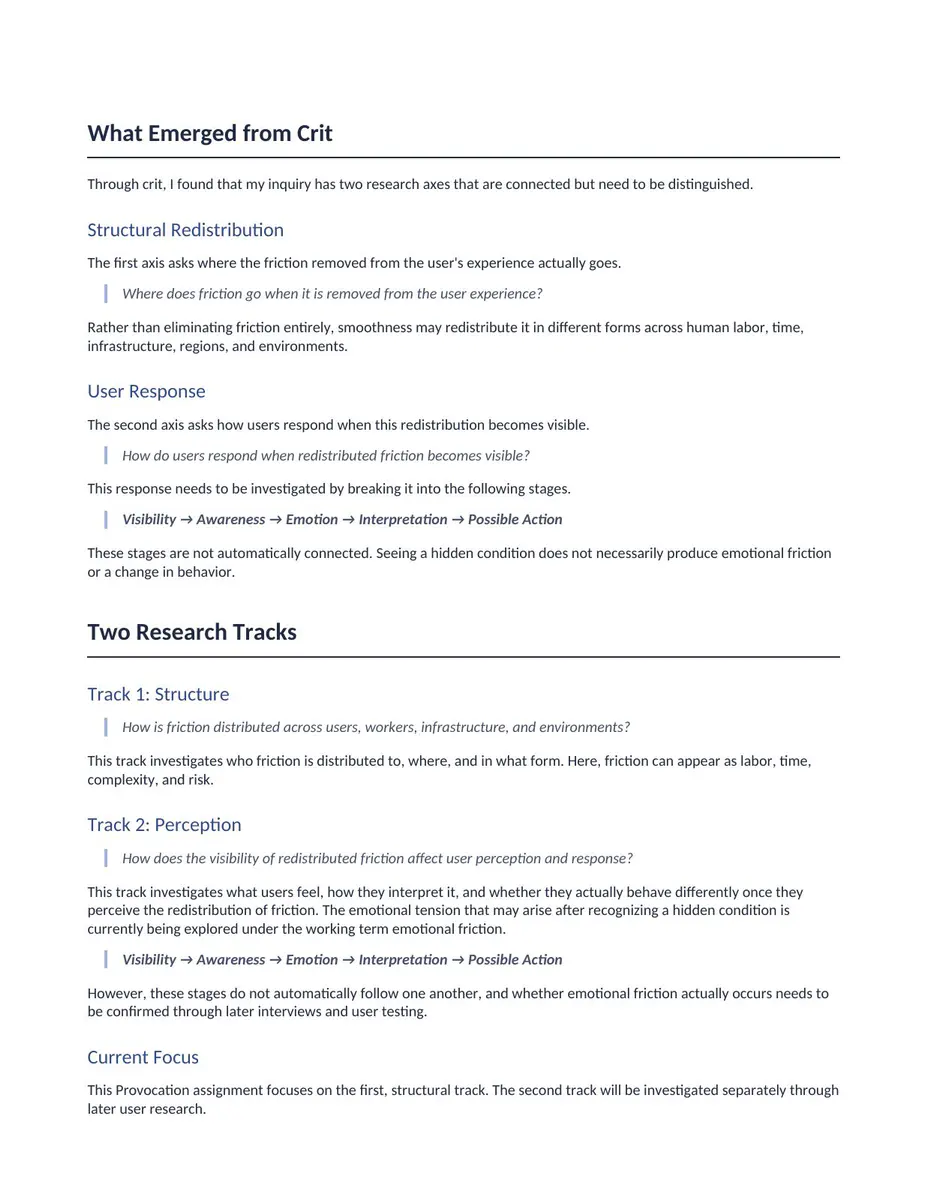
Through my research and 5 prototypes, I found that smoothness may not eliminate friction but redistribute it across human labor, data systems, infrastructure, and the environment. I also began to understand friction as a possible emotional tension that emerges after hidden processes become visible. This remains a working hypothesis that needs to be tested with others.
Week 3
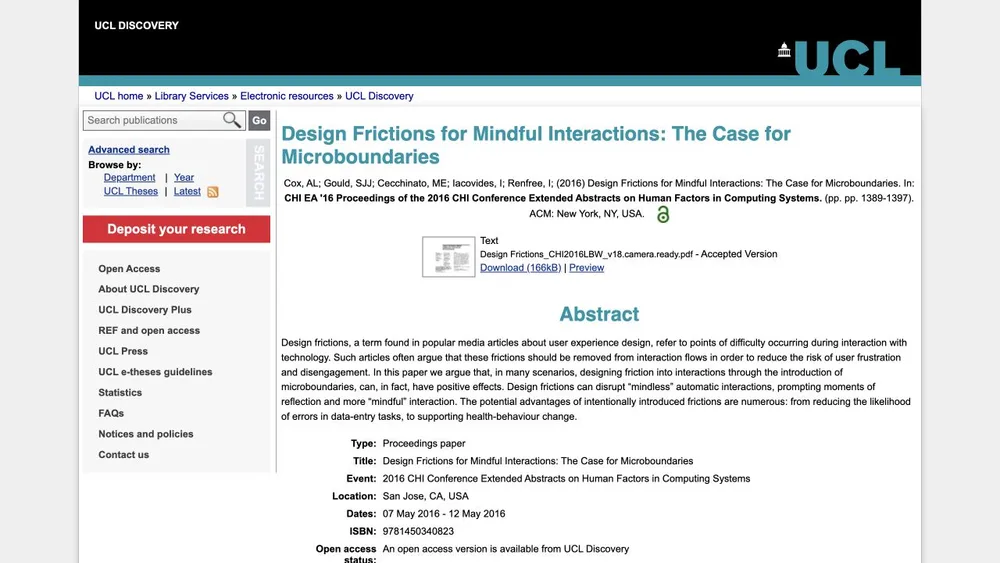
Through this week’s experiments, I realized that smoothness does not necessarily eliminate friction. It can hide it or shift it to other people, systems, and environments. I was surprised by how many actions and processes I usually overlook while using digital platforms. Small interruptions also helped make these hidden structures more noticeable, suggesting that carefully designed friction can create a moment for awareness and reflection.
Week 2
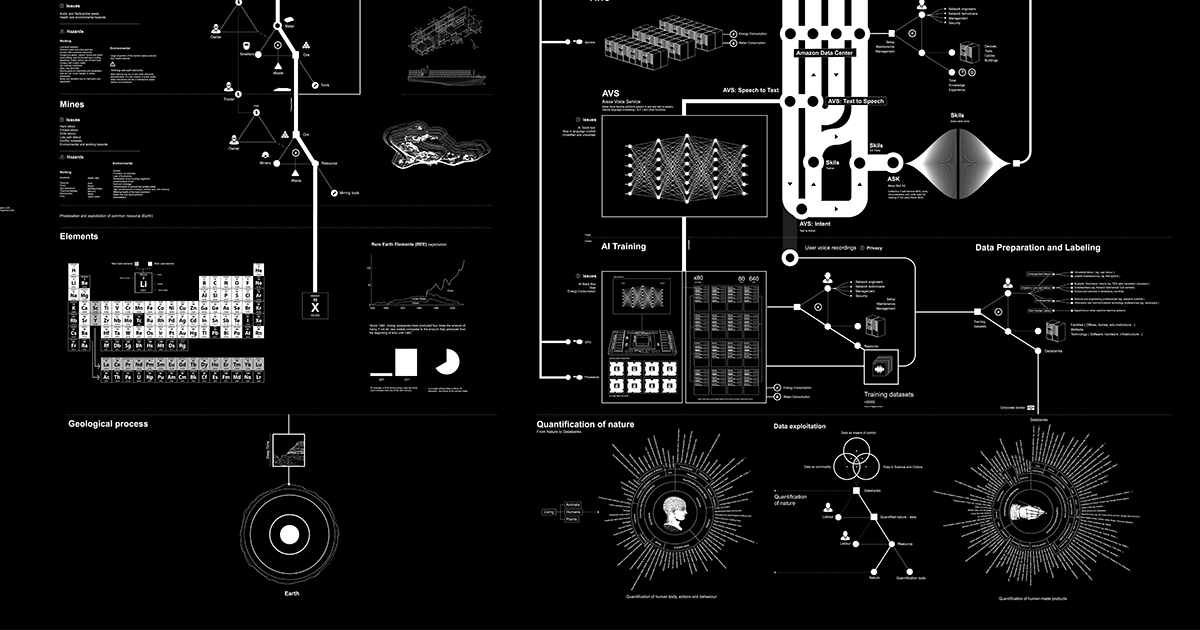
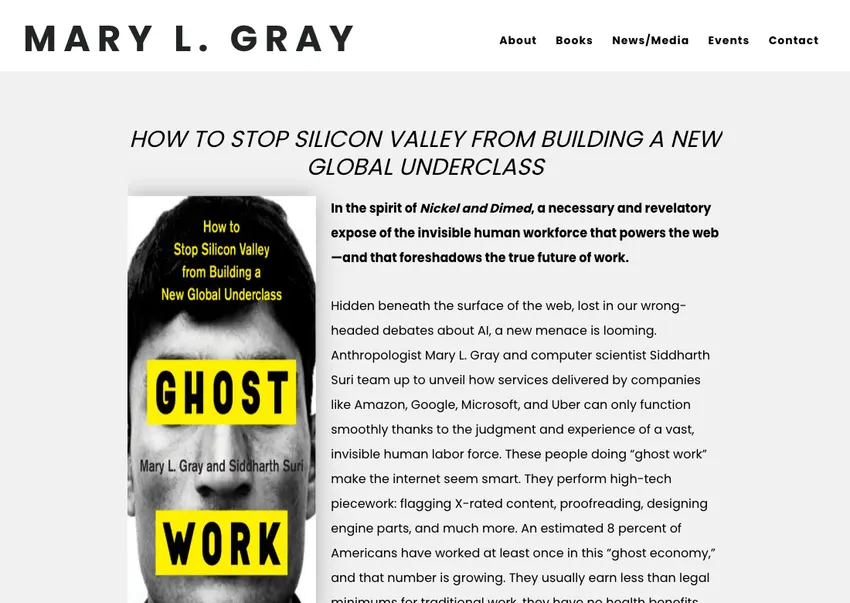
Through this research, I discovered that smoothness and friction are not opposing or separate concepts. Instead, they exist in an interconnected relationship and continuously produce one another within the same system. The smoothness provided to users may not eliminate friction but relocate it to other workers, places, or environments. For example, seamless AI services depend on data-labeling labor, while curated social media feeds rely on workers who directly review harmful content.
I also realized that intentionally visible friction can reveal the data collection, labor, and power relations hidden by seamless experiences. However, friction does not always increase reflection or autonomy. The same interruption may give one user time to think while creating a cognitive burden or accessibility barrier for another. What surprised me most was that the meaning of friction depends on who designs and controls it, who experiences it, and where its burden is distributed.
Week 1
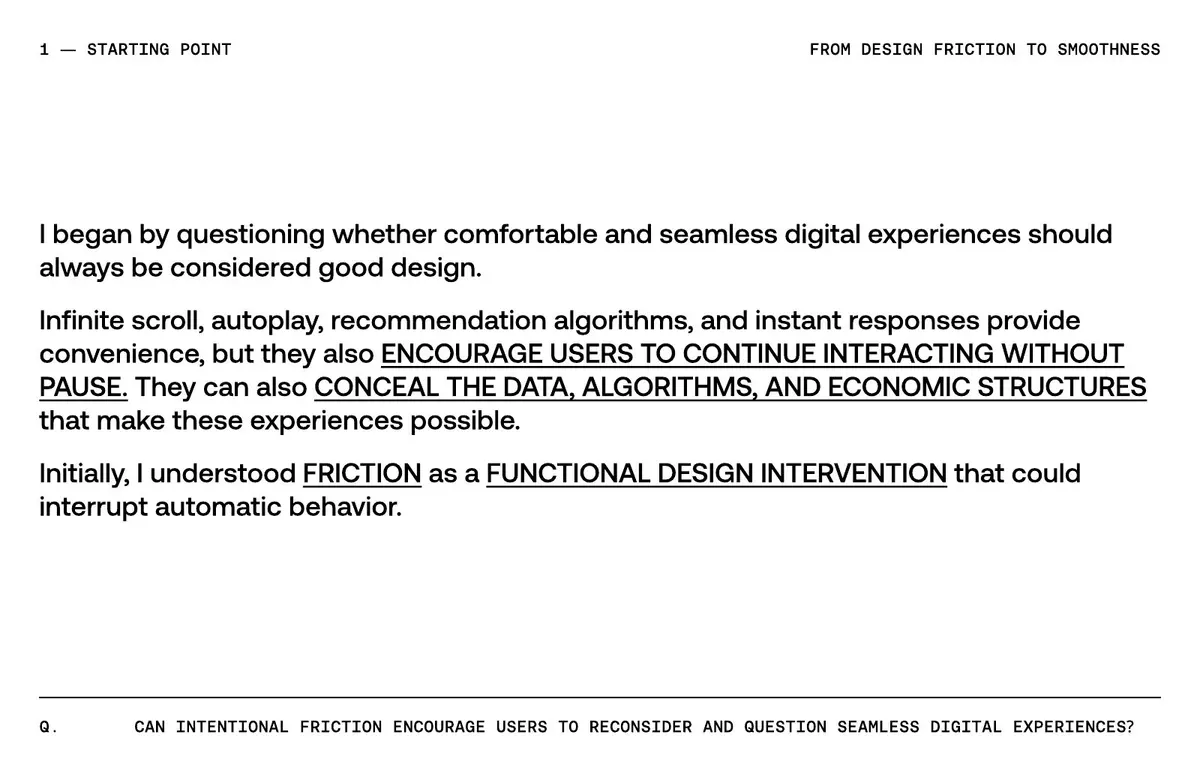
Through my research, I discovered that seamless interfaces are more deeply connected than I had expected to social and economic systems that influence user behavior, collect data, and turn that data into platform operations and profit.
I was particularly interested in how experiences that appear to offer users simple convenience are actually shaped by various technological structures and the economic objectives of digital platforms.
Weel 6: Provotype
This week, I created and tested 3 provotypes:
- Friction Calories: reframes daily friction as something that can be measured and managed like a wellness goal.
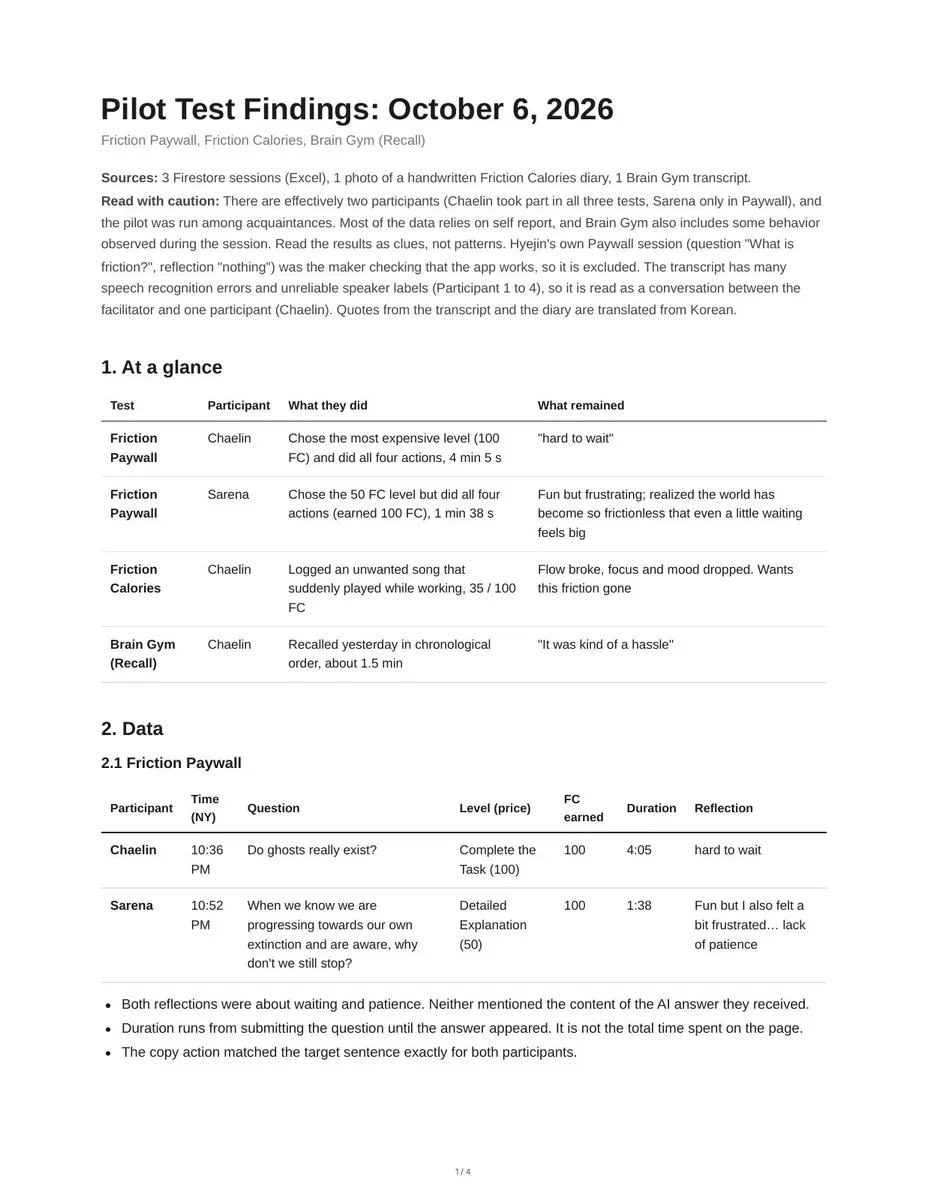
- Friction Paywall: requires users to earn Friction Credits through clicking, copying, loading, and waiting before receiving an AI-generated answer.
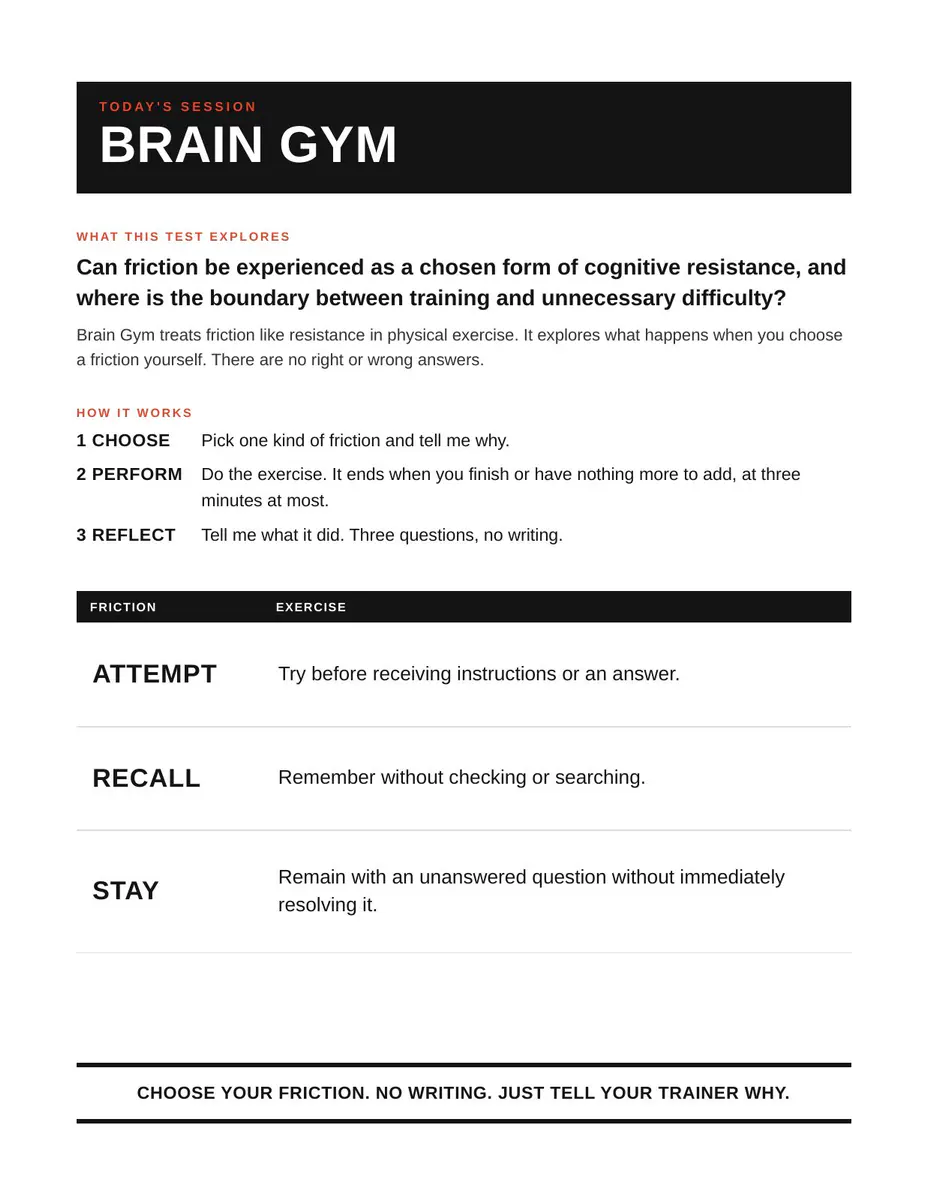
- Brain Gym: treats friction as cognitive resistance through exercises such as attempting, recalling, and staying with a difficult thought.